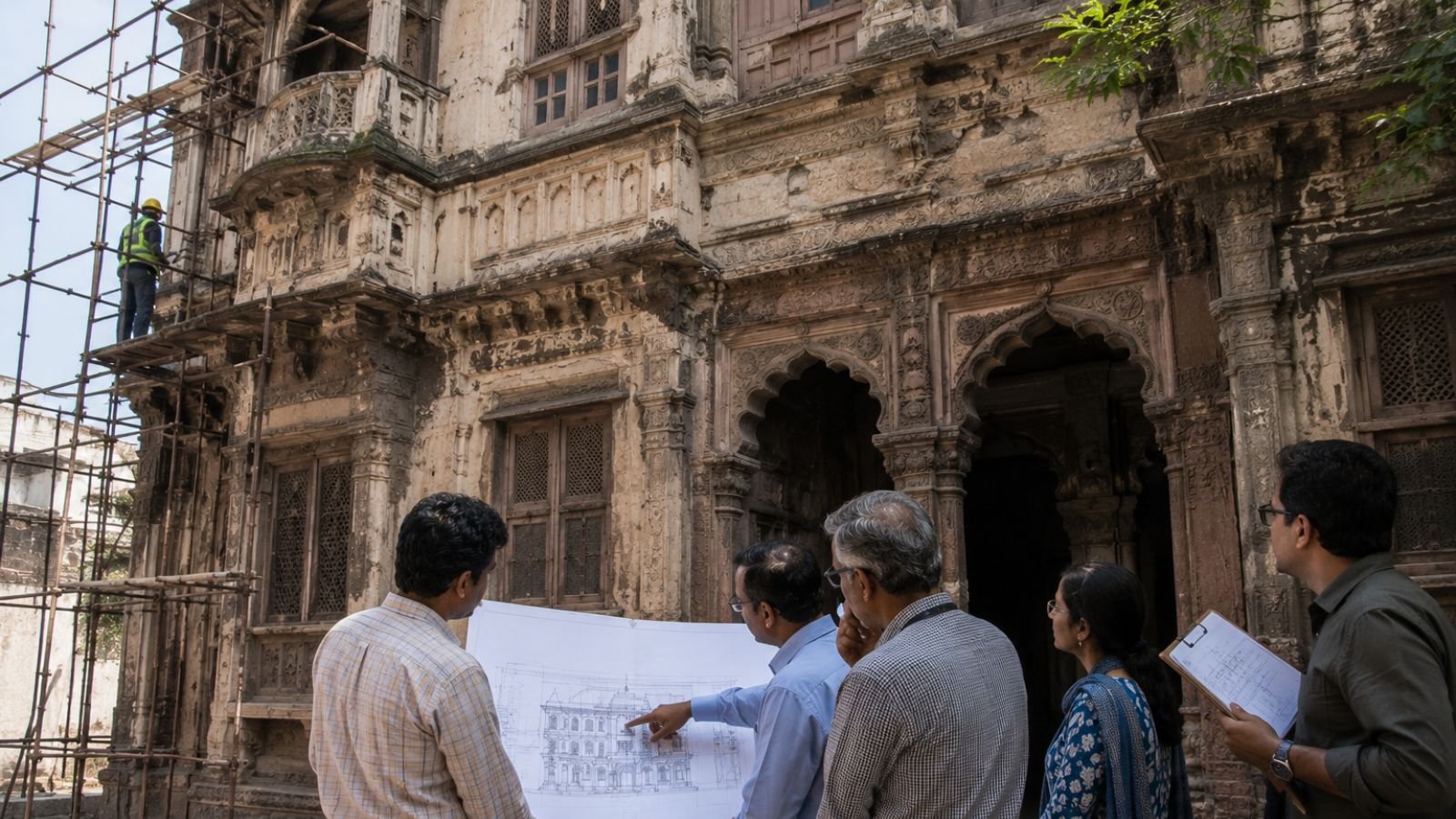
The Ahmedabad Heritage Buildings Protection Rules 2026 mark a major shift in how development, restoration, redevelopment, and construction activities are regulated within the city historic areas. Introduced by the Ahmedabad Municipal Corporation (AMC), the updated framework strengthens heritage conservation requirements while introducing new approval systems, impact assessments, and financial incentives for property owners. The revised regulations were developed following recommendations from heritage conservation authorities and international heritage monitoring bodies concerned about preserving the architectural identity of Ahmedabad. As India first UNESCO World Heritage City, Ahmedabad carries significant cultural and historical importance, making heritage protection a critical planning priority. Under the new framework, no public or private development project within designated heritage zones can proceed without appropriate heritage scrutiny.
Why the Ahmedabad Heritage Buildings Protection Rules 2026 Were Introduced
Ahmedabad historic core contains thousands of heritage structures that contribute to the city identity and global recognition. The updated regulations aim to ensure that future development does not negatively affect heritage buildings, historic streetscapes, traditional neighborhoods, and culturally significant landmarks. The primary objective of the policy is to balance urban growth with heritage conservation. While development remains possible, projects must now demonstrate that they will not damage or diminish the historical character of protected areas. The rules also introduce a structured framework that creates consistency in how heritage related approvals are reviewed and processed.
Heritage Building Rules Explained
The 2026 regulations establish a zoning based system that determines development restrictions according to a property location, heritage significance, and proximity to protected monuments.
| Rule | Description |
|---|---|
| Mandatory heritage compliance | All public and private projects in designated heritage zones or buffer areas must satisfy heritage specific regulations |
| Expert Heritage Approval Committee | Expert Subcommittee for Heritage Approvals (ESHA) reviews applications, restoration proposals, and Heritage Impact Assessments |
| Traditional construction fast track | Projects using traditional materials like lime and timber may qualify for accelerated digital approvals within approximately 30 days |
| Restrictions on modern structural alterations | RCC interventions in core heritage zones face approval delays, rejection, or penalties |
Understanding the Heritage Impact Assessment (HIA) Process
One of the most significant changes introduced by the 2026 regulations is the mandatory Heritage Impact Assessment system. The HIA process evaluates how a proposed development could affect nearby heritage assets, historical streetscapes, and protected structures.
| Project Type | HIA Requirement |
|---|---|
| Properties adjacent to listed monuments | Comprehensive and detailed Heritage Impact Assessment required |
| Projects inside heritage precincts | Screening level assessments required for reconstruction, facade improvements, and restoration |
| Large construction projects | Detailed HIA review required for any project exceeding 500 square meters within heritage zones |
| Small structure exemptions | Projects with ground footprint of 60 square meters or less may receive conditional exemptions |
New Responsibilities for Property Owners
The regulations place greater responsibility on owners of heritage properties and structures located within protected zones.
- Restoration approval requirements: Property owners cannot undertake major repairs, facade alterations, or restoration work without formal approval from AMC Heritage Department
- Mandatory inspections: Residential properties subject to inspection fees, commercial heritage properties face higher baseline review costs
- Heritage expertise requirements: Property owners must engage qualified professionals with substantial heritage conservation experience and technical qualifications
- Facade preservation standards: Changes to building facades, exterior materials, architectural elements, and heritage design features require review to ensure historical authenticity
Financial Benefits for Heritage Property Owners
While the regulations introduce stricter controls, they also provide several financial mechanisms intended to encourage conservation rather than demolition.
| Incentive | Description |
|---|---|
| Heritage Transferable Development Rights (HTDR) | Property owners may monetize unused Floor Space Index (FSI) associated with heritage properties and transfer for use in non heritage development zones |
| Graded incentive structure | Higher grade heritage properties receive greater development rights benefits based on conservation value |
| Hospitality and tourism opportunities | Properties converted into heritage hotels, boutique homestays, cultural tourism facilities may receive operational flexibility |
Why Ahmedabad Heritage Status Matters
Ahmedabad occupies a unique place in India heritage landscape.
- India first UNESCO World Heritage City: In 2017, UNESCO recognized the Historic City of Ahmedabad as India first World Heritage City, highlighting its distinctive urban form, traditional architecture, and historic neighborhoods
- Unique architectural identity: Associated with Traditional Pol neighborhoods, timber framed heritage houses, historic religious structures, traditional streetscapes, and community based urban planning patterns
- Expansion of heritage protection areas: The 2026 regulations expand heritage protection beyond the traditional Walled City to include additional landmarks and historically significant structures outside the original core heritage zone
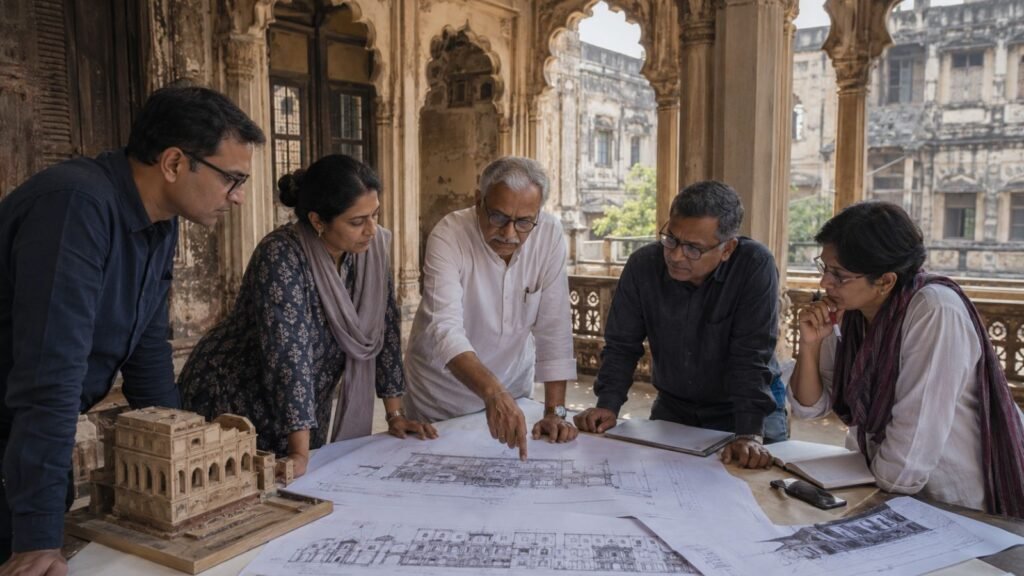
Impact on Future Redevelopment Projects
The regulations will have important implications for future urban development across Ahmedabad.
- Greater scrutiny of major projects: Large infrastructure and redevelopment initiatives near heritage zones will require extensive heritage review processes
- Height and design restrictions: Projects may face limitations related to building height, architectural design, construction materials, visual compatibility, and traffic generation impacts
- Stronger enforcement measures: Unauthorized construction, unapproved alterations, and non compliant heritage interventions may result in stop work notices, regulatory penalties, approval suspensions, and legal action
What the Rules Mean for Residents
For ordinary residents, the regulations primarily aim to preserve the cultural and architectural identity of Ahmedabad for future generations. The policy seeks to protect historic neighborhoods, preserve traditional architecture, encourage heritage tourism, maintain cultural landmarks, and support sustainable conservation. While approval procedures may become more detailed, the long term objective is to ensure that modernization does not come at the expense of irreplaceable heritage assets.
Conclusion
The Ahmedabad Heritage Buildings Protection Rules 2026 introduce one of the most comprehensive heritage conservation frameworks implemented in the city. Through mandatory Heritage Impact Assessments, stricter restoration approvals, expanded protection zones, and financial incentives such as Heritage Transferable Development Rights, the regulations attempt to balance development with preservation. For property owners, developers, architects, and residents, understanding these requirements is essential because future construction, restoration, and redevelopment projects within heritage areas will be governed by these new standards. As Ahmedabad continues to grow, the rules are designed to ensure that its historic identity remains protected while allowing carefully managed urban development.
Frequently Asked Questions
Q1. What are the Ahmedabad Heritage Buildings Protection Rules 2026
A1. These are updated regulations introduced by AMC to strengthen heritage conservation requirements, introducing new approval systems, Heritage Impact Assessments, and financial incentives for property owners in designated heritage zones.
Q2. What is a Heritage Impact Assessment (HIA)
A2. HIA is a mandatory evaluation process that assesses how a proposed development could affect nearby heritage assets, historical streetscapes, and protected structures. It is required for projects adjacent to listed monuments, inside heritage precincts, and for large construction projects exceeding 500 square meters.
Q3. What is the Expert Subcommittee for Heritage Approvals (ESHA)
A3. ESHA is a dedicated committee under the Heritage Conservation Committee that reviews applications, restoration proposals, redevelopment plans, and Heritage Impact Assessments before granting approvals for heritage related projects.
Q4. What are Heritage Transferable Development Rights (HTDR)
A4. HTDR is a financial incentive mechanism allowing property owners to monetize unused Floor Space Index (FSI) associated with heritage properties, which can be converted into tradable certificates and transferred for use in non heritage development zones.
Q5. What happens if I undertake unauthorized construction on a heritage property
A5. Unauthorized construction, unapproved alterations, and non compliant heritage interventions may result in stop work notices, regulatory penalties, approval suspensions, and legal action under the strengthened enforcement framework.