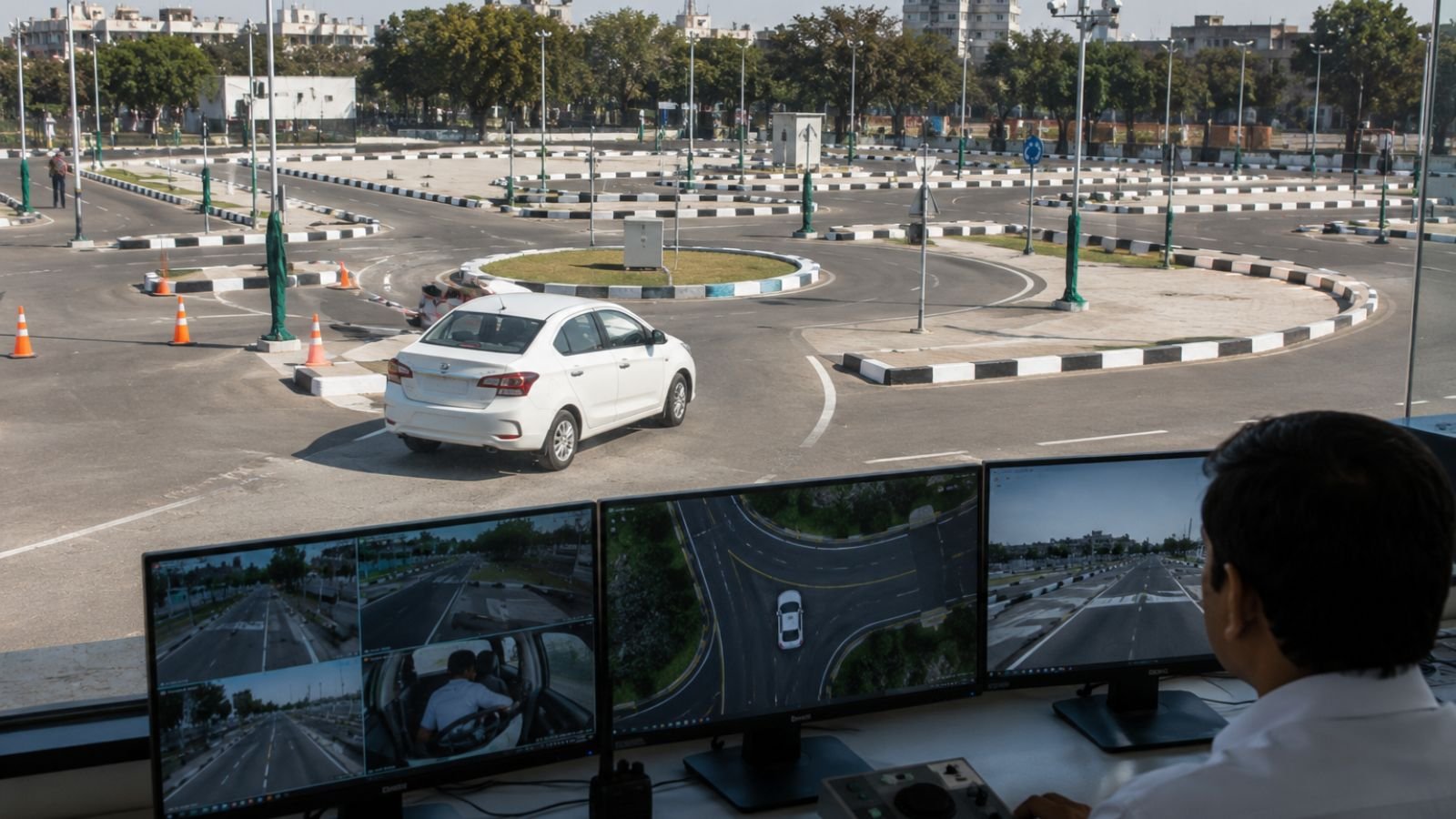
The Surat Regional Transport Office (RTO) has officially launched an AI driven automated driving test track, introducing a fully digital evaluation system designed to improve transparency and accuracy during driving licence tests. With this launch, Surat becomes the 25th RTO in Gujarat to adopt the advanced technology. The new system replaces several manual processes with video analytics based monitoring and automated evaluation. According to the information released, the primary objective is to eliminate middleman interference, reduce human error, and ensure transparent driving assessments for all applicants. The rollout marks a significant change in the driving licence testing process, as candidates are now assessed through an automated technology platform that records and evaluates vehicle movements throughout the test.
Surat RTO AI Driving Test Track Introduced
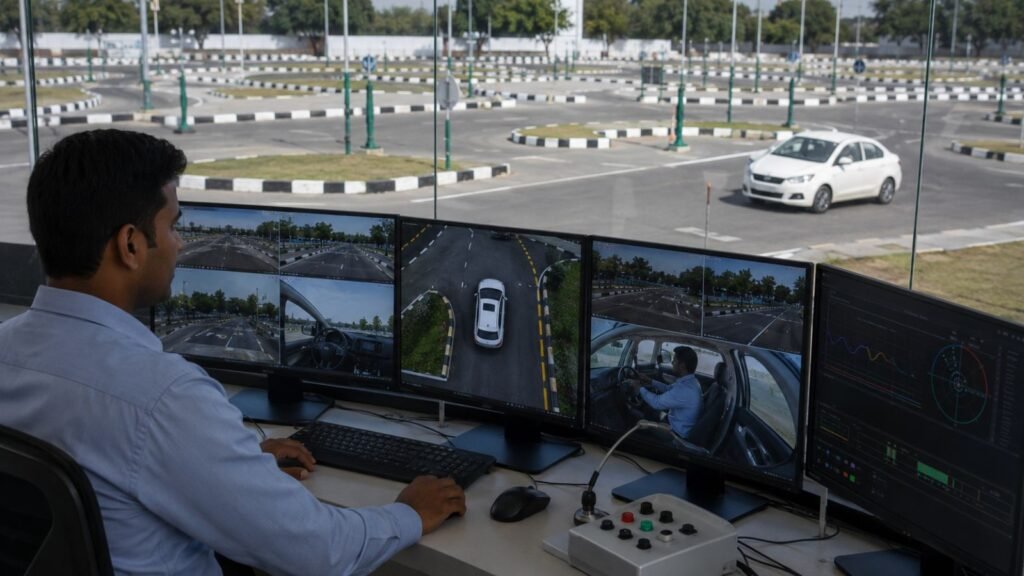
The newly launched facility uses artificial intelligence and video analytics technology to monitor driving performance during licence tests. Instead of relying primarily on traditional ground sensor systems, the new setup utilizes a network of cameras and software that continuously observes vehicle movements on the track. Officials state that the technology is intended to create a fair testing environment where results are determined by actual driving performance rather than manual observation. The launch also places Surat among the growing number of Gujarat RTO offices that have adopted digital governance technologies for licence testing and applicant evaluation.
Key Features of the AI Driven Driving Test System
Several technology upgrades have been incorporated into the new facility to improve monitoring and assessment accuracy.
| Feature | Description |
|---|---|
| Video analytics technology | 19 video analytics cameras and 12 surveillance cameras tracking vehicle movements |
| Instant digital results | AI software evaluates performance and sends pass/fail notification to mobile phone within seconds |
| Strict evaluation matrix | Any traffic rule violation results in automatic rejection; four wheeler test has 4 segments, failing any segment means unsuccessful |
| Dedicated two wheeler tracks | Two separate parallel tracks to reduce waiting periods |
Daily Capacity and Rollout Details
The AI based testing facility was officially rolled out on June 15 and June 16, 2026. Before public launch, the system underwent extensive testing and trial operations.
| Parameter | Detail |
|---|---|
| Trial phase | More than 500 successful trial runs completed |
| Daily capacity (initial) | 25 two wheeler tests, 20 car tests |
| Appointment expansion | Gradually increasing availability on weekly basis |
How the New Applicant Workflow Works
The launch of the automated driving test track also introduces a revised workflow for licence applicants. The entire process follows a structured digital format from beginning to end.
| Step | Action |
|---|---|
| Step 1 | Mandatory video briefing: Scan QR code and watch 14 minute instructional driving video |
| Step 2 | Practical driving test: Drive through smart loops and testing tracks without physical assistance from RTO personnel |
| Step 3 | Automated result notification: System processes recorded information and transmits official result to applicant mobile phone |
How the Technology Improves Transparency
A major objective behind the implementation of the Surat RTO AI Driving Test Track is to improve transparency throughout the driving licence testing process. Since vehicle movements are recorded and analyzed digitally, evaluations are based entirely on performance captured by the technology system. The use of camera based monitoring reduces dependence on manual observation and creates a standardized assessment environment. The automated pass or fail process also ensures that applicants receive results generated directly by the evaluation software. According to the available information, the system was specifically introduced to eliminate middleman corruption, reduce human error, and provide greater confidence in the fairness of driving tests.
Benefits for Driving Licence Applicants
The new system offers several practical advantages for applicants appearing for driving licence examinations.
- Faster result processing: Candidates no longer need to wait for lengthy manual result verification. The system evaluates performance quickly and delivers results directly to mobile phones
- Standardized assessment: All applicants are evaluated using the same digital criteria and testing standards, creating consistency in the examination process
- Reduced waiting time: The addition of two dedicated two wheeler testing tracks increases testing capacity and helps reduce waiting periods for appointments
- Fully digital experience: From instructional briefing to final result notification, the process follows a digital workflow that simplifies the testing experience
Conclusion
The launch of the Surat RTO AI Driving Test Track represents an important step in the modernization of driving licence testing in Gujarat. By combining video analytics technology, automated evaluation software, and digital result delivery, the system introduces a more transparent and technology driven assessment process. With 19 video analytics cameras, 12 surveillance cameras, automated pass or fail notifications, dedicated two wheeler tracks, and structured testing procedures, the facility aims to create a fair and efficient environment for licence applicants. As the 25th RTO in Gujarat to adopt this technology, Surat new system demonstrates the growing use of digital governance tools in public services while focusing on transparency, accuracy, and streamlined applicant experiences.
Frequently Asked Questions
Q1. What is the Surat RTO AI Driving Test Track
A1. It is an automated driving test facility using artificial intelligence and video analytics technology with 19 video analytics cameras and 12 surveillance cameras to monitor and evaluate driving performance.
Q2. When was the Surat RTO AI Driving Test Track officially launched
A2. The AI based testing facility was officially rolled out on June 15 and June 16, 2026, after more than 500 successful trial runs.
Q3. How does the automated evaluation system work
A3. The AI software evaluates driving performance immediately after the test. Any traffic rule violation results in automatic rejection. For four wheelers, failing any of the 4 assessment segments means the test is unsuccessful.
Q4. What is the daily testing capacity of the new facility
A4. Initially, the facility can handle 25 two wheeler driving tests and 20 car driving tests per day, with appointment availability being expanded gradually.
Q5. What are the benefits of the AI driving test system for applicants
A5. Benefits include faster result processing with instant mobile notifications, standardized assessment criteria, reduced waiting time through dedicated two wheeler tracks, and a fully digital experience from briefing to result.