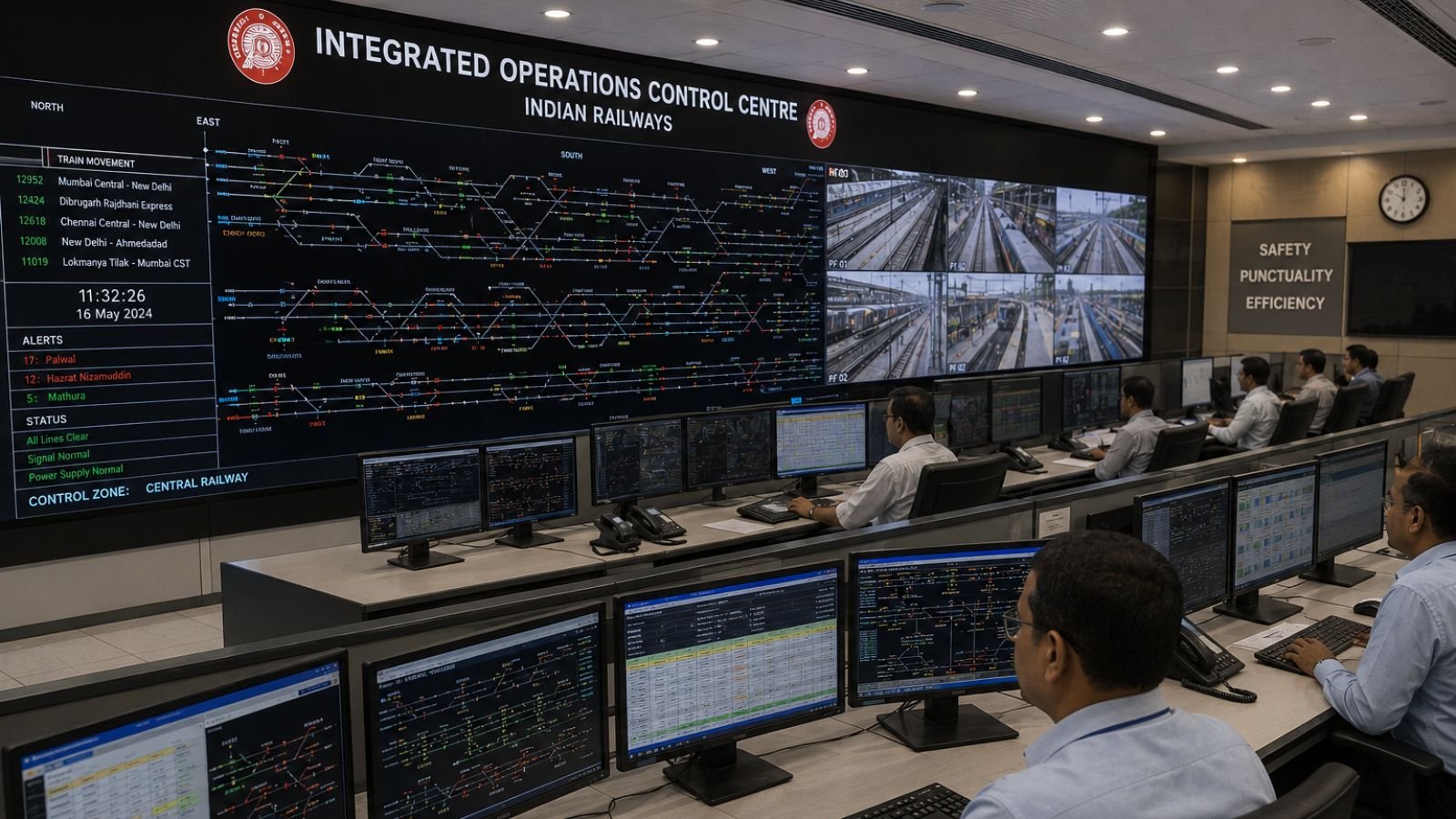
Indian Railways has approved a ₹140 crore project to expand Kavach 4.0 across the Ahmedabad Railway Division, marking a major step toward strengthening train safety across one of Gujarat busiest railway networks. The project will extend the indigenous Automatic Train Protection (ATP) system across remaining routes in the division, helping create a fully protected rail network capable of supporting both high speed passenger services and heavy freight operations. The latest expansion covers 598 route kilometres across 48 block sections and adds to previously sanctioned coverage, taking the Ahmedabad Division protected railway network to approximately 1,300 route kilometres. For passengers, this development means enhanced safety, improved operational reliability, better protection against human error, and smoother train movement during challenging weather conditions.
What Is Kavach 4.0
Kavach 4.0 is an advanced Automatic Train Protection (ATP) system developed in India under the Atmanirbhar Bharat initiative. It is designed to improve railway safety by continuously monitoring train movement, track conditions, signal status, and operational parameters. Unlike conventional safety systems that rely heavily on human observation and manual intervention, Kavach creates a digital safety layer that can automatically intervene whenever a dangerous situation is detected.
| Feature | Detail |
|---|---|
| Technology type | Indigenous Automatic Train Protection (ATP) system |
| Safety certification | Safety Integrity Level 4 (SIL 4) |
| Communication systems | LTE based communication and Ultra High Frequency (UHF) radio networks |
| Speed support | Approved for train operations up to 160 km/h |
| Key improvements | Enhanced location accuracy, precise train monitoring |
How Kavach 4.0 Prevents Train Collisions
One of the primary objectives of Kavach is to prevent collisions and unsafe train movements through continuous monitoring and automatic intervention. The system works by creating a real time digital view of train positions and movement patterns.
- RFID based position tracking: Track mounted RFID tags transmit location information to locomotives, enabling trains to continuously identify their precise position on the railway network
- Real time train communication: Locomotives exchange critical operational information including speed, direction, track identification, and movement status
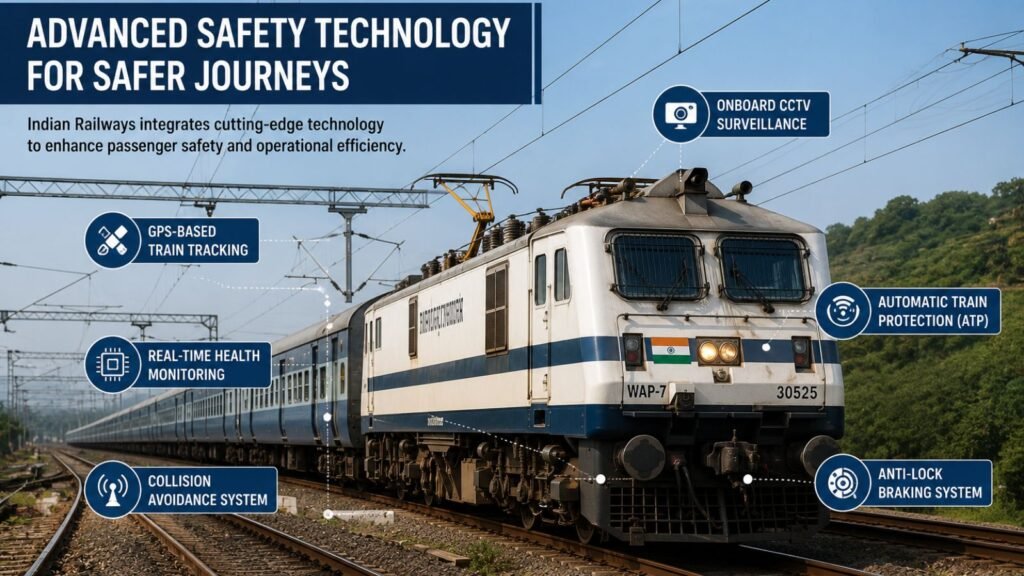
- Automatic emergency braking: When the system detects a dangerous situation involving trains occupying the same track section, it can automatically apply emergency braking even if manual action is not taken
- Anti SPAD protection: If a train attempts to pass a red signal, Kavach can automatically stop the train, reducing the risk of accidents caused by signal violations
Major Passenger Safety Improvements
The expansion of Kavach 4.0 across Ahmedabad Division introduces multiple safety enhancements that directly benefit passengers.
| Safety Feature | Benefit |
|---|---|
| Overspeed protection | Enforces permanent and temporary speed restrictions, reduces risks associated with overspeeding |
| In cab signal display | Trackside signals displayed inside locomotive cab, valuable during heavy rain, dense fog, and low visibility |
| Automatic level crossing warning | Automatically triggers train horn activation when approaching level crossings |
| Emergency network SOS function | Centralized emergency communication for locomotive pilots and station personnel to stop train movement in defined area |
| Roll back protection | Detects unintended reverse movement on gradients and automatically takes corrective action |
Ahmedabad Railway Division: Impact of the Kavach Expansion
The newly approved project significantly expands safety coverage across the Ahmedabad Railway Division.
| Parameter | Detail |
|---|---|
| New coverage | 598 route kilometres across 48 railway block sections |
| Total protected network | Approximately 1,300 route kilometres (including earlier sanctioned sections) |
| Project cost | ₹140 crore |
| High density corridor protection | Vadodara to Ahmedabad section handling Vande Bharat operations and significant freight traffic |
Why This Upgrade Matters for Daily Rail Passengers
While railway technology upgrades often happen behind the scenes, passengers are among the biggest beneficiaries.
- Improved operational reliability: Automation reduces dependence on manual monitoring alone, minimizing operational disruptions caused by human error
- Greater passenger confidence: Advanced train protection systems reduce the likelihood of serious accidents, providing assurance that multiple safety layers are actively monitoring train operations
- Better performance during fog and rain: Signal information provided directly inside locomotive cabins supports safer and more reliable train operations even during adverse weather
- Reduction in seasonal delays: Enhanced train spacing, automated protection, and improved operational control contribute to smoother services during winter and monsoon periods
Future Railway Modernization Plans
The Ahmedabad Kavach project is part of a broader modernization effort underway across Indian Railways.
- Expansion on major railway corridors including Mumbai to Delhi corridor and Delhi to Kolkata corridor
- Nationwide Kavach growth with deployment across more than 2,200 route kilometres and further expansion planned across multiple divisions
- Electronic interlocking modernization through replacement of older mechanical systems with modern electronic interlocking technology
What the ₹140 Crore Investment Means
The approved ₹140 crore investment is not simply an infrastructure expenditure. It represents a long term commitment to railway safety, modernization and operational efficiency. The project strengthens passenger safety, train protection systems, operational reliability, high speed corridor readiness, and future railway modernization efforts. As railway traffic continues growing, advanced technologies such as Kavach 4.0 become increasingly important for maintaining safe and efficient operations.
Conclusion
The approval of the ₹140 crore Kavach 4.0 expansion project marks a significant development for the Ahmedabad Railway Division. By extending advanced Automatic Train Protection technology across an additional 598 route kilometres and taking total protected coverage to nearly 1,300 kilometres, Indian Railways is moving closer to creating a fully protected railway network in the region. With features such as automatic emergency braking, anti SPAD protection, overspeed monitoring, in cab signalling and real time train communication, Kavach 4.0 provides multiple layers of safety designed to reduce risks and improve reliability. For passengers travelling through Ahmedabad and surrounding railway corridors, the project promises safer journeys, better operational consistency and greater confidence in the railway network future.
Frequently Asked Questions
Q1. How much has Indian Railways invested in Kavach 4.0 expansion for Ahmedabad Division
A1. Indian Railways has approved a ₹140 crore project to expand Kavach 4.0 across the Ahmedabad Railway Division.
Q2. How many route kilometres will be covered under the latest Kavach expansion in Ahmedabad
A2. The latest expansion covers 598 route kilometres across 48 block sections, taking the Ahmedabad Division total protected network to approximately 1,300 route kilometres.
Q3. What is anti SPAD protection in Kavach 4.0
A3. Anti SPAD (Signal Passing At Danger) protection automatically stops a train if it attempts to pass a red signal, reducing the risk of accidents caused by signal violations.
Q4. How does Kavach 4.0 help during fog and heavy rain
A4. Kavach 4.0 displays trackside signals directly inside the locomotive cab, allowing pilots to receive critical signal information even when external visibility becomes challenging during fog and heavy rain.
Q5. What is the maximum operational speed supported by Kavach 4.0
A5. Kavach 4.0 has been approved for train operations at speeds of up to 160 km/h, making it suitable for modern railway corridors carrying premium passenger services.