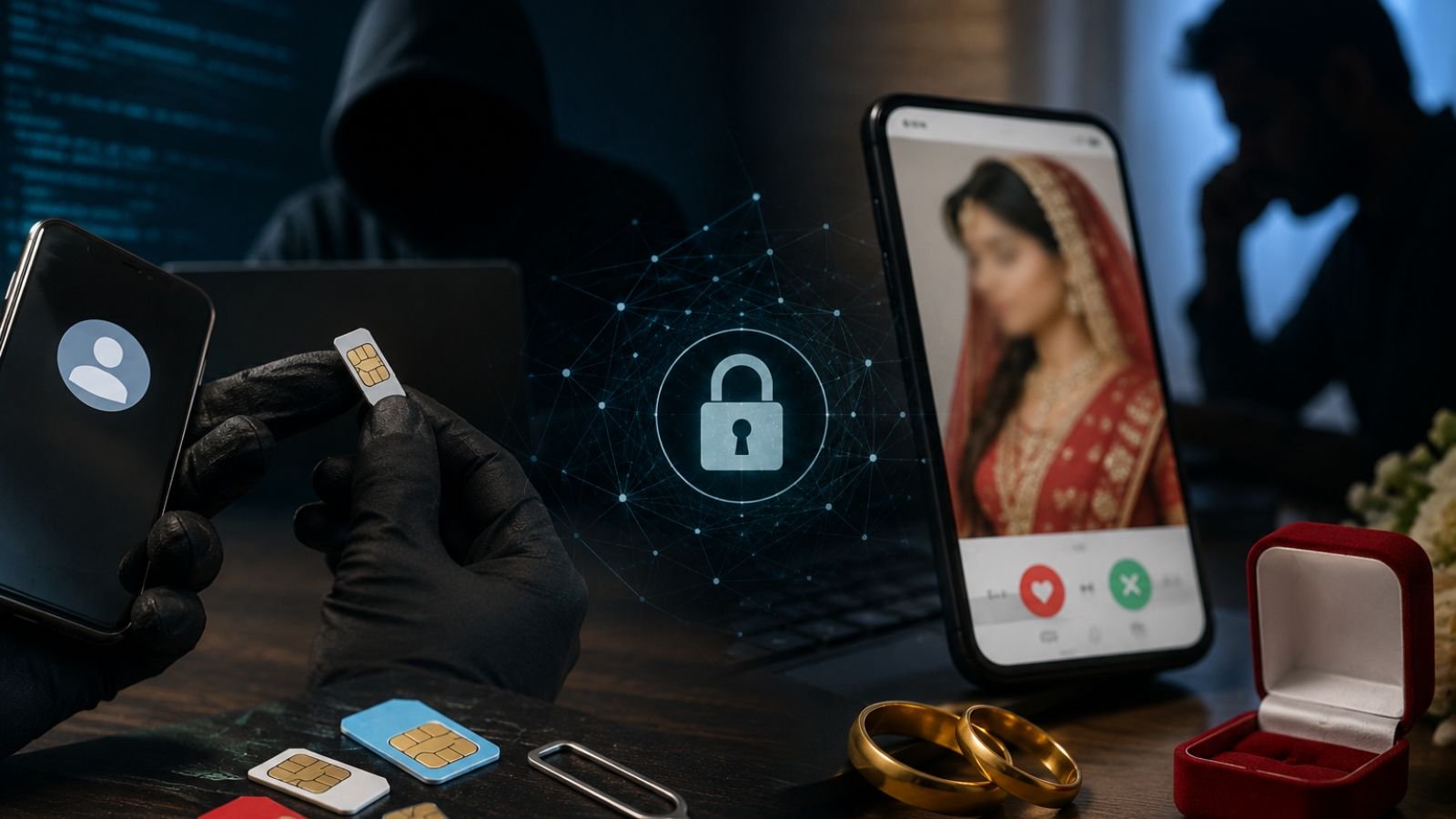
SIM swap fraud and matrimony scams are becoming a growing concern across Gujarat, with several high value financial fraud cases and police investigations highlighting the risks faced by citizens. Recent incidents have shown how cybercriminals are using stolen personal information, fake identities, and emotional manipulation to gain access to bank accounts and steal large sums of money. In Ahmedabad, a well known jeweller reportedly lost ₹83.3 lakh through a SIM swap fraud, while a contractor was cheated out of ₹1.07 crore using similar methods. At the same time, law enforcement agencies uncovered a major matrimony fraud network that allegedly targeted widowed and divorced women through fake marriage proposals and emotional deception. These cases serve as a reminder that cybercriminals are constantly finding new ways to exploit personal information and trust.
What is SIM Swap Fraud
SIM swap fraud is a form of identity theft in which criminals illegally transfer a victim mobile number to a duplicate SIM card under their control. Once the fraudsters gain control of the mobile number, they begin receiving all calls, SMS messages, banking alerts, and One Time Passwords linked to the victim accounts. This allows them to bypass SMS based authentication systems and gain unauthorized access to banking and financial services. Because many online services still rely on mobile numbers for account verification, control of a phone number can provide criminals with access to sensitive financial information and digital accounts.
How SIM Swap Fraud is Executed
SIM swap fraud usually follows a structured process designed to take control of a victim mobile number.
| Stage | Action |
|---|---|
| Data collection | Fraudsters gather personal information such as Aadhaar details, full name, date of birth, mobile number, and banking information through data leaks, phishing links, or social media |
| Identity impersonation | Criminals contact telecom provider pretending to be genuine customer, claiming SIM lost or damaged |
| SIM activation | Duplicate SIM activated after verification manipulation, victim phone shows No Service |
| Account access | Fraudsters receive OTPs and banking alerts, attempt unauthorized financial transactions and account takeovers |
Understanding Matrimony Scams
Alongside cyber fraud, matrimony scams have become another serious threat affecting individuals seeking relationships through matrimonial platforms. These scams rely heavily on emotional manipulation rather than technical hacking.
| Scam Tactic | How It Works |
|---|---|
| Fake professional profiles | Fraudsters create profiles as successful business owners, doctors, wealthy professionals, overseas NRIs, or high income executives |
| Building emotional trust | Scammers target divorced individuals, widowed persons, or single parents, spending weeks building emotional connections |
| Financial manipulation | Fabricated emergencies like medical crises, business losses, travel problems, customs clearance charges, or family emergencies |
| Disappearance | Scammers disappear after receiving cash or valuables connected to marriage arrangements |
Warning Signs of Matrimony Scams
Recognizing suspicious behaviour early can prevent significant financial and emotional losses.
- Refusal to meet in person: Constant refusal to participate in video calls, face to face meetings, or identity verification discussions with excuses related to foreign travel or work commitments
- Urgent requests for money: Requests for immediate transfers related to medical emergencies, customs duties, travel expenses, or business crises
- Inconsistent personal information: Differences between profile information, social media activity, career claims, and family background details
- Pressure for secrecy: Encouragement to keep the relationship secret from family members, friends, or colleagues
Banking and OTP Safety Tips
Protecting banking information is one of the most effective ways to reduce the risk of financial fraud.
| Safety Tip | Action |
|---|---|
| Never share confidential information | Banks do not ask for passwords, OTPs, UPI PINs, or debit card PINs through calls, SMS, or emails |
| Use app based authentication | Consider authentication applications instead of relying only on SMS based OTP systems |
| Enable multiple alerts | Ensure banking transaction alerts are sent to both registered mobile numbers and personal email accounts |
| Avoid public networks | Do not perform financial transactions on unsecured public Wi Fi networks |
Mobile Number Security Checklist
Mobile numbers have become a critical part of digital identity. Protecting them should be a priority.
- Activate a SIM PIN to prevent unauthorized SIM access or porting attempts
- Review registered mobile connections periodically and verify all active connections are legitimate
- Protect biometric information to reduce risk of misuse during identity verification
- Report suspicious calls and links through official channels to help track cybercrime activity
What to Do if Your Mobile Network Suddenly Stops Working
A sudden loss of mobile network service without explanation can be an important warning sign. If your phone unexpectedly shows no network signal, no incoming calls, or no SMS messages while other phones nearby are functioning normally, take immediate action. Contact your telecom provider immediately to verify whether any SIM replacement request has been processed. Quick action can sometimes prevent unauthorized access to financial accounts.

How Citizens Can Protect Themselves
The rise of SIM swap fraud and matrimony scams highlights the importance of maintaining both digital and personal vigilance.
Key precautions include:
- Protecting personal information
- Verifying identities carefully
- Avoiding rushed financial decisions
- Monitoring banking alerts regularly
- Using stronger authentication methods
- Reporting suspicious activities immediately
Awareness remains one of the strongest defenses against modern cybercrime.
Cyber Crime Reporting Options
Victims of financial fraud or matrimonial scams should report incidents without delay.
| Reporting Option | Details |
|---|---|
| National Cyber Crime Helpline | 1930 for reporting financial fraud quickly |
| National Cyber Crime Reporting Portal | Submit online complaints with supporting evidence |
| Local Cyber Crime Police Units | File formal complaints with documentation |
Prompt reporting improves investigation opportunities and can help prevent additional victims from being targeted.
Conclusion
The recent rise in SIM swap fraud and matrimony scam cases across Gujarat demonstrates how cybercriminals are combining technology, stolen personal information, and emotional manipulation to target unsuspecting victims. Whether it involves taking control of a mobile number to intercept OTPs or building trust through fake matrimonial profiles, the objective remains the same: financial exploitation. Citizens can significantly reduce their risk by protecting personal information, strengthening account security, verifying identities carefully, and reporting suspicious activities immediately. Awareness, caution, and timely action remain the most effective tools in protecting money, personal data, and digital identities.
Frequently Asked Questions
Q1. What is SIM swap fraud
A1. SIM swap fraud is a form of identity theft where criminals illegally transfer a victim mobile number to a duplicate SIM card, gaining access to all calls, SMS messages, banking alerts, and OTPs to commit financial fraud.
Q2. How much money was lost in recent SIM swap fraud cases in Gujarat
A2. In Ahmedabad, a well known jeweller lost ₹83.3 lakh and a contractor was cheated out of ₹1.07 crore through SIM swap fraud.
Q3. What are the warning signs of a matrimony scam
A3. Warning signs include refusal to meet in person or do video calls, urgent requests for money, inconsistent personal information, and pressure to keep the relationship secret from family and friends.
Q4. What should I do if my mobile network suddenly stops working
A4. If your phone shows no network while others nearby are working, contact your telecom provider immediately to verify whether any SIM replacement request has been processed. Quick action can prevent unauthorized access to financial accounts.
Q5. What is the national cyber crime helpline number
A5. The national cyber crime helpline number is 1930. Victims can also file complaints through the National Cyber Crime Reporting Portal or approach local cyber crime police units.