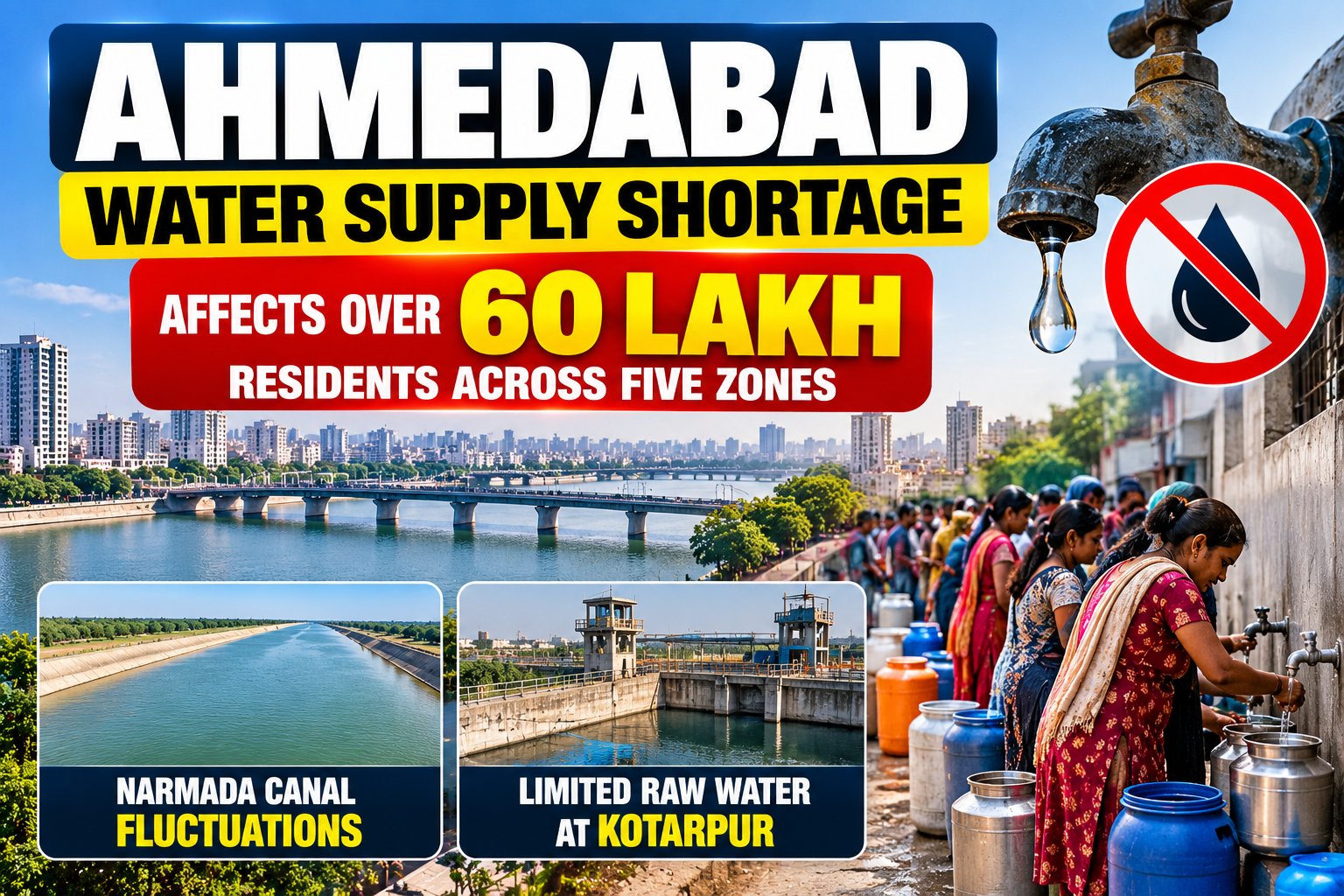
The Ahmedabad water supply shortage is affecting more than 60 lakh residents across five major city zones, with households expected to experience lower water pressure and shorter supply periods. The Ahmedabad Municipal Corporation (AMC) has linked the disruption to fluctuations in water levels at its head regulator on the Narmada main canal, which supplies raw water to the city’s important Kotarpur Water Treatment Plant. With the treatment facility receiving insufficient raw water, its operating capacity has been affected. As a result, the civic body is distributing treated water according to the volume currently available at the plant.
Why Is Ahmedabad Facing a Water Supply Shortage?
The current water supply disruption is mainly linked to two problems affecting the city’s water system. Together, these issues have reduced the amount of water available for distribution across Ahmedabad.
- Narmada canal water fluctuations: Unpredictable drops and changes in water levels at the AMC’s head regulator have affected the inflow of raw water
- Kotarpur plant limitations: The Kotarpur Water Works handles a major share of Ahmedabad’s water requirements. Without enough raw water, its pumping operations face serious restrictions
These issues have reduced the amount of water available for distribution across the city, affecting residential neighbourhoods, commercial areas and older parts of Ahmedabad.
Ahmedabad Water Shortage: Which Areas Are Affected?
The reduction in water supply covers five administrative zones. The areas specifically listed for the West, East, Central and South zones include several densely populated neighbourhoods.
1. West Zone
The affected areas include:
- Paldi
- Vasna
- Naranpura
- Navrangpura
- Sabarmati
- Vadaj
- Chandkheda
2. East Zone
The affected areas include:
- Nikol
- Odhav
- Naroda
- Amraiwadi
- India Colony
- Vastral
3. Central and South Zones
The affected areas include:
- Jamalpur
- Khadia
- Dariapur
- Shahibaug
- Asarwa
- Behrampura
- Narol
- Danilimda
- Maninagar
4. North Zone
The distribution networks supplying the city’s northern sector are also affected by the disruption. Overall, the water shortage impacts five major administrative zones, with residents facing changes in the regular distribution of water.
What Should Ahmedabad Residents Expect?
The AMC has indicated that the available water supply will remain restricted until raw water levels and pipeline pressure stabilise. Residents in affected areas may experience the following issues:
- Low water pressure: Water may flow more slowly from household taps
- Shorter supply periods: Regular morning and evening supply cycles may have reduced distribution times
- Limited water availability: Households may receive less water than usual during scheduled supply periods
The extent of the disruption may vary depending on the local distribution network and the water available for supply.
AMC Advisory: How Residents Can Manage Water
The Ahmedabad Municipal Corporation has urged residents to use water carefully while the situation continues. Key recommendations include:
- Store an adequate quantity of water for essential household needs
- Use stored water sparingly until normal pipeline pressure returns
- Avoid unnecessary water consumption during the disruption
- Follow local water supply updates as conditions improve
These steps can help households manage temporary reductions in water availability.
What Is the AMC Doing to Address the Shortage?
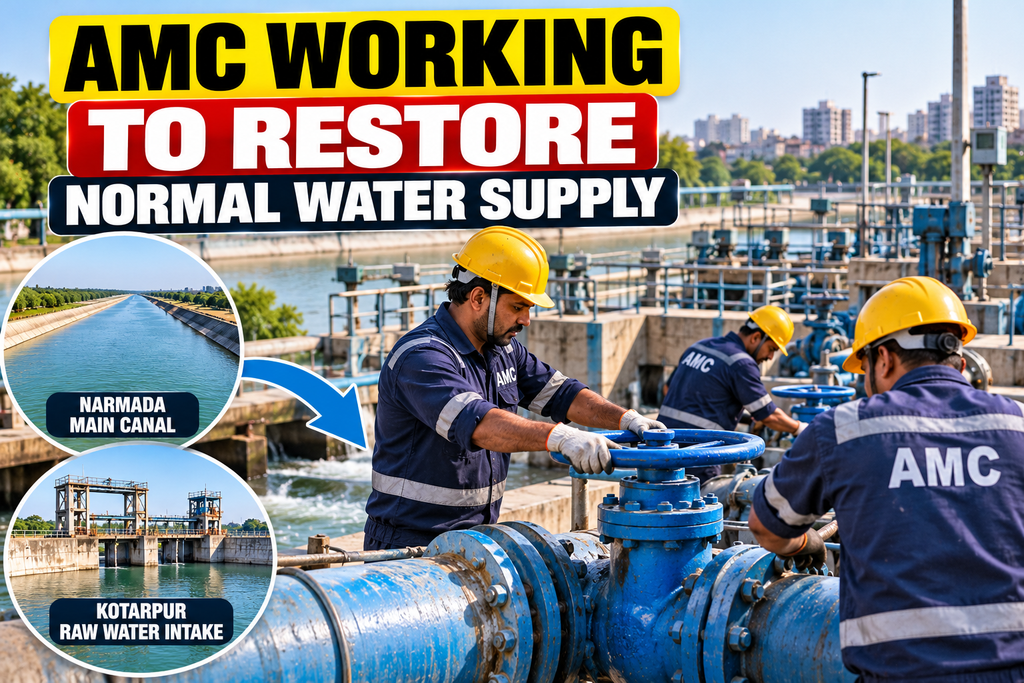
Engineering teams are working around the clock to balance distribution lines and restore normal water intake from the Narmada main canal. The main focus is on managing the available water and improving distribution while the raw water levels stabilise. The performance of the Kotarpur Water Treatment Plant remains important because the facility manages a major portion of Ahmedabad’s water requirements.
Conclusion
The Ahmedabad water supply shortage has created a significant challenge for more than 60 lakh residents across five major zones. Fluctuating water levels in the Narmada main canal have reduced raw water availability at the Kotarpur Water Treatment Plant, affecting the city’s water distribution capacity. Until water levels and pipeline pressure stabilise, residents should prepare for reduced pressure and shorter supply periods. Storing adequate water and using it carefully can help households manage the disruption.
Frequently Asked Questions
Q1. What is the Ahmedabad water supply shortage?
A1. It is a disruption affecting more than 60 lakh residents across five major zones, caused by fluctuations in the Narmada main canal that have reduced raw water availability at the Kotarpur Water Treatment Plant.
Q2. Which areas of Ahmedabad are affected by the water shortage?
A2. The affected areas span five administrative zones, including West Zone areas like Paldi, Vasna, Naranpura and Navrangpura, East Zone areas like Nikol, Odhav and Naroda, and Central and South Zone areas like Jamalpur, Khadia, Maninagar and Danilimda.
Q3. What should residents expect during the water supply disruption?
A3. Residents may experience low water pressure, shorter supply periods and limited water availability during scheduled supply times. The extent of disruption may vary depending on the local distribution network.
Q4. What has the AMC advised residents to do during the shortage?
A4. The AMC has advised residents to store adequate water for essential needs, use stored water sparingly, avoid unnecessary consumption and follow local water supply updates as conditions improve.
Q5. What is the AMC doing to restore normal water supply?
A5. Engineering teams are working around the clock to balance distribution lines and restore normal water intake from the Narmada main canal, focusing on managing available water and improving distribution while raw water levels stabilise.