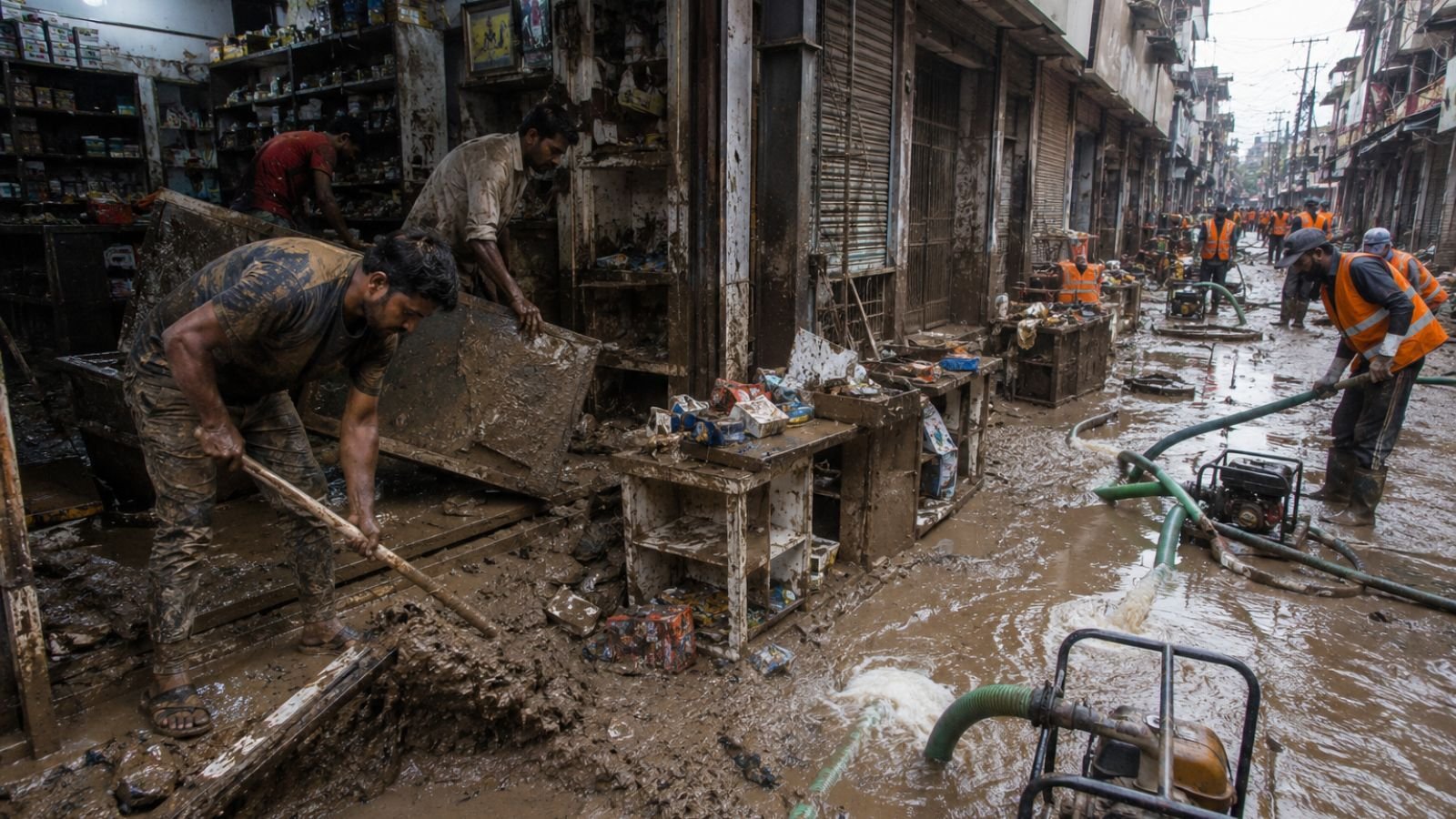
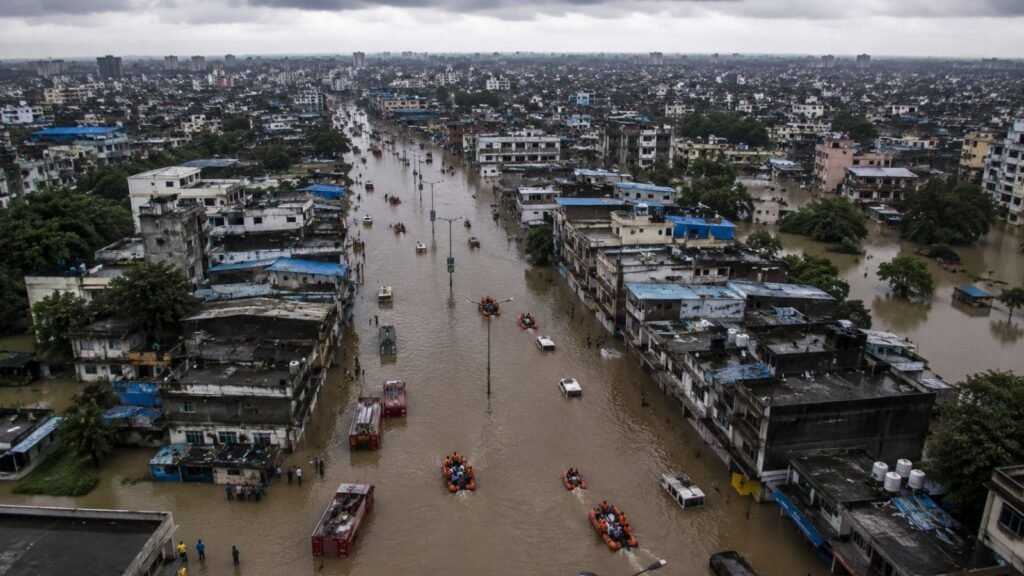
Surat is facing one of its most severe flood situations in recent decades after continuous heavy rainfall caused widespread waterlogging across the city. The intense rain reportedly broke an 85-year rainfall record, with some areas receiving up to 18 inches of rain over a 36-hour period. The sudden flooding affected residential neighbourhoods, commercial markets and industrial zones, disrupting daily life and causing significant losses to businesses. Several important business centres remained underwater for hours, leaving shopkeepers and traders with damaged stock, interrupted business operations and costly recovery work. At the same time, the Surat Municipal Corporation (SMC) and the Gujarat Government have started relief measures to support affected areas and speed up recovery.
Heavy Rain Triggers Widespread Flooding Across Surat
The continuous rainfall caused flash flooding in many parts of Surat. Water quickly entered low-lying roads, market basements and ground-floor shops, making it difficult for businesses to protect their goods. Many commercial establishments had little time to move inventory before floodwater entered their premises, resulting in extensive damage to goods and equipment. The flooding also disrupted transportation, business activities and industrial operations across several parts of the city.
The Flood Timeline: How the Disaster Unfolded
The flood situation in Surat developed rapidly over a span of just a few days, leaving little time for preparation or evacuation.
July 6 to July 7, 2026 (The Downpour)
Relentless torrential rain began on Monday evening, continuing without interruption through the night and into the next day. The city received up to 18 inches of rain over a 36-hour period, breaking an 85-year-old record dating back to July 1941. The intensity of the rainfall overwhelmed drainage systems across the city, setting the stage for the widespread flooding that followed.
July 7, 2026 (The Flash Flood)
On Tuesday afternoon, the situation worsened dramatically. Poddar Arcade, one of Surat’s major electronics markets, was entirely submerged within just 30 minutes as drainage systems collapsed under the pressure of continuous rainfall. At the same time, four of Surat’s five major creeks (khadis) overflowed simultaneously, flooding the textile clusters and commercial areas across the city. The sudden overflow caught many traders and shopkeepers off guard, leaving them with almost no time to protect their valuable stock.
July 8, 2026 (The Shutdown)
Extreme waterlogging forced the complete closure of all textile markets, schools and colleges across the city. Business operations came to a standstill as floodwater continued to inundate commercial premises, and authorities advised residents to stay indoors. The shutdown affected thousands of workers, traders and students across Surat.
Most Affected Commercial and Industrial Areas
Some of Surat’s busiest business locations were among the worst affected by the flooding. Varachha and Sarthana experienced some of the most severe flooding, with Poddar Arcade remaining submerged under several feet of water for more than 24 hours. This caused major losses to traders who had little time to protect their valuable stock. Ring Road, Saroli, Parvat Patiya and Limbayat also witnessed extensive waterlogging after local creeks overflowed. Several textile shops, warehouses and commercial buildings were affected as floodwater entered business premises. Baroda Prestige Market and Kamela Darwaja also suffered heavy flooding, with many shops remaining underwater and affecting daily business operations. Industrial units located in Sachin GIDC and Bhestan also reported extensive waterlogging, with flooded roads and factory premises affecting industrial activity and delaying business operations across these important manufacturing zones.
Key Areas Affected by Flooding
- Varachha and Sarthana: Poddar Arcade electronics market submerged for over 24 hours
- Ring Road, Saroli, Parvat Patiya and Limbayat: Textile markets flooded after creek overflow
- Baroda Prestige Market and Kamela Darwaja: Retail and wholesale markets underwater
- Sachin GIDC and Bhestan: Industrial units affected by extensive waterlogging
Extent of Commercial Damage
The sudden nature of the flooding left many traders with almost no opportunity to shift valuable stock to safer locations. At Poddar Arcade, damaged electronic products, including smartphones, premium gadgets and accessories, reportedly resulted in estimated stock losses ranging between ₹150 crore and ₹200 crore. Many shopkeepers have started selling water-damaged products at heavily reduced prices to clear affected inventory and begin restoration work.
The flood also affected Surat’s textile sector significantly. More than 100 textile markets and over 1,000 underground warehouses reportedly experienced flooding. An estimated one crore sarees and dress materials were damaged during the rainfall, resulting in an estimated ₹200 crore loss for the textile industry.
Floodwater also affected hundreds of two-wheelers and commercial delivery vehicles parked near business areas. Many vehicles suffered engine and electrical damage after remaining submerged in water for long periods. Commercial buildings, basements and warehouses also require extensive cleaning before normal business operations can resume.
Surat Flood Impact at a Glance
| Impact Category | Details |
|---|---|
| Electronics Market Loss | ₹150 crore to ₹200 crore at Poddar Arcade |
| Textile Industry Loss | Approximately ₹200 crore, over 1,000 warehouses flooded |
| Vehicles Damaged | Hundreds of two-wheelers and commercial vehicles affected |
| Affected Areas | Varachha, Sarthana, Ring Road, Saroli, Parvat Patiya, Limbayat, Sachin GIDC, Bhestan |
The Recovery and Survey Timeline
As floodwaters began to recede, authorities launched a coordinated recovery effort to restore normalcy across the affected areas.
July 8 to July 9, 2026 (The Recede and Cleanup)
Floodwaters began to recede gradually, revealing the extent of damage to commercial properties and infrastructure. The Surat Municipal Corporation immediately launched a massive 72-hour emergency dewatering and cleanup drive using heavy pumps to clear water from commercial basements and flooded markets. Sanitation workers were deployed across the city to remove mud, debris and waterlogged waste from affected areas.
July 9 to July 11, 2026 (Residential Cash Aid)
Door-to-door surveys for residential spaces were fast-tracked to assess damage to households. The government disbursed ₹1.5 crore in immediate cash aid, providing ₹6,800 per family to over 2,500 affected households. This relief was intended to help families manage immediate needs such as food, water and essential supplies during the recovery period.
July 10, 2026 and Ongoing (Commercial Loss Claims)
District Collector Tejas Parmar officially directed insurance companies to expedite commercial insurance claims for affected businesses. A centralized system was introduced to help traders process claims more efficiently, with a designated nodal officer coordinating between insurance companies, local traders and industrial associations to reduce delays in claim settlements.
How the Flood May Affect Local Businesses
Flood damage may continue affecting businesses even after water levels recede. Many shopkeepers may require additional time to clean their premises, inspect damaged stock and restore electrical systems before reopening. Customers may also experience temporary delays in product availability as businesses complete recovery work. The restoration process may take several days or even weeks in the most severely affected commercial areas, as shopkeepers work to salvage usable inventory and repair damaged infrastructure.
Relief Measures Announced by Authorities
The Gujarat Government and Surat Municipal Corporation have started several measures to support flood-affected areas. Officials have started surveying commercial and industrial losses across affected markets. While the initial financial assistance announced earlier focused on residential households, the state government is preparing a separate policy for commercial trader compensation. This survey will help authorities assess the scale of damage before further decisions are taken.
To speed up recovery, the administration has introduced a centralised system to help process insurance claims more efficiently. A designated nodal officer is coordinating with insurance companies, local traders and industrial associations to reduce delays during the claim settlement process.
The Surat Municipal Corporation has deployed more than 4,500 sanitation workers along with over 50 heavy dewatering pumps. Teams are removing water, mud and debris from flooded markets and commercial basements. Cleaning and disinfection work is also being carried out inside affected commercial complexes to improve hygiene and prepare businesses for reopening.
Authorities have also announced strict action against unfair pricing during the recovery period. The district administration has warned that repair workshops, machinery service providers and emergency suppliers should not charge unreasonable prices from flood-affected traders. Businesses found taking advantage of the situation may face legal action.
Advice for Shopkeepers and Business Owners
Business owners whose shops have been affected by flooding should carefully inspect their premises before restarting operations. Electrical equipment should be checked before use, damaged stock should be separated from usable inventory, and all business records should be kept safely for insurance and damage assessment purposes. Following official instructions during the recovery process may help businesses complete restoration more smoothly. Shopkeepers are also advised to document all losses with photographs and maintain detailed records for insurance claims.
What Residents Should Know
Flood recovery work may continue for several days in the affected areas. People visiting commercial markets should expect cleaning operations, temporary traffic restrictions and slower business activity while restoration work continues. Residents are also advised to avoid waterlogged roads until local authorities confirm that the areas are safe for normal movement. Cooperation with municipal authorities during the cleaning and restoration process can help speed up recovery efforts across the city.
Conclusion
The recent heavy rainfall has caused widespread flooding across Surat, affecting major commercial markets, textile hubs and industrial areas. The flood timeline shows how quickly the situation escalated from torrential rain on July 6 to complete shutdown by July 8, followed by ongoing recovery efforts. Businesses in locations such as Varachha, Sarthana, Ring Road, Saroli, Sachin GIDC and Bhestan have reported significant losses as floodwater damaged stock, vehicles and infrastructure. Government agencies and the Surat Municipal Corporation have begun surveys, cleaning operations and relief measures to help affected businesses recover. As restoration work continues, traders and residents are advised to stay updated through official announcements and follow safety instructions issued by local authorities.
Frequently Asked Questions
Q1. How much rainfall did Surat receive during the recent floods
A1. Surat received up to 18 inches of rain over a 36-hour period, reportedly breaking an 85-year rainfall record dating back to July 1941.
Q2. What is the flood timeline for Surat in July 2026
A2. Torrential rain began on July 6, flash flooding occurred on July 7 when creeks overflowed, and a complete shutdown of markets and schools took place on July 8. Recovery and cleanup efforts began on July 8 and continue through July 11.
Q3. Which areas in Surat were most affected by the flooding
A3. Varachha, Sarthana, Ring Road, Saroli, Parvat Patiya, Limbayat, Baroda Prestige Market, Kamela Darwaja, Sachin GIDC, and Bhestan were among the worst affected areas.
Q4. What is the estimated loss to the electronics market in Surat
A4. Poddar Arcade suffered estimated stock losses ranging between ₹150 crore and ₹200 crore, including damaged smartphones, gadgets and accessories.
Q5. What relief measures have been announced for flood-affected residents and businesses
A5. The government has disbursed ₹1.5 crore in residential cash aid (₹6,800 per family to over 2,500 households), launched a 72-hour cleanup drive, and directed insurance companies to expedite commercial claims. A separate policy for trader compensation is being prepared.