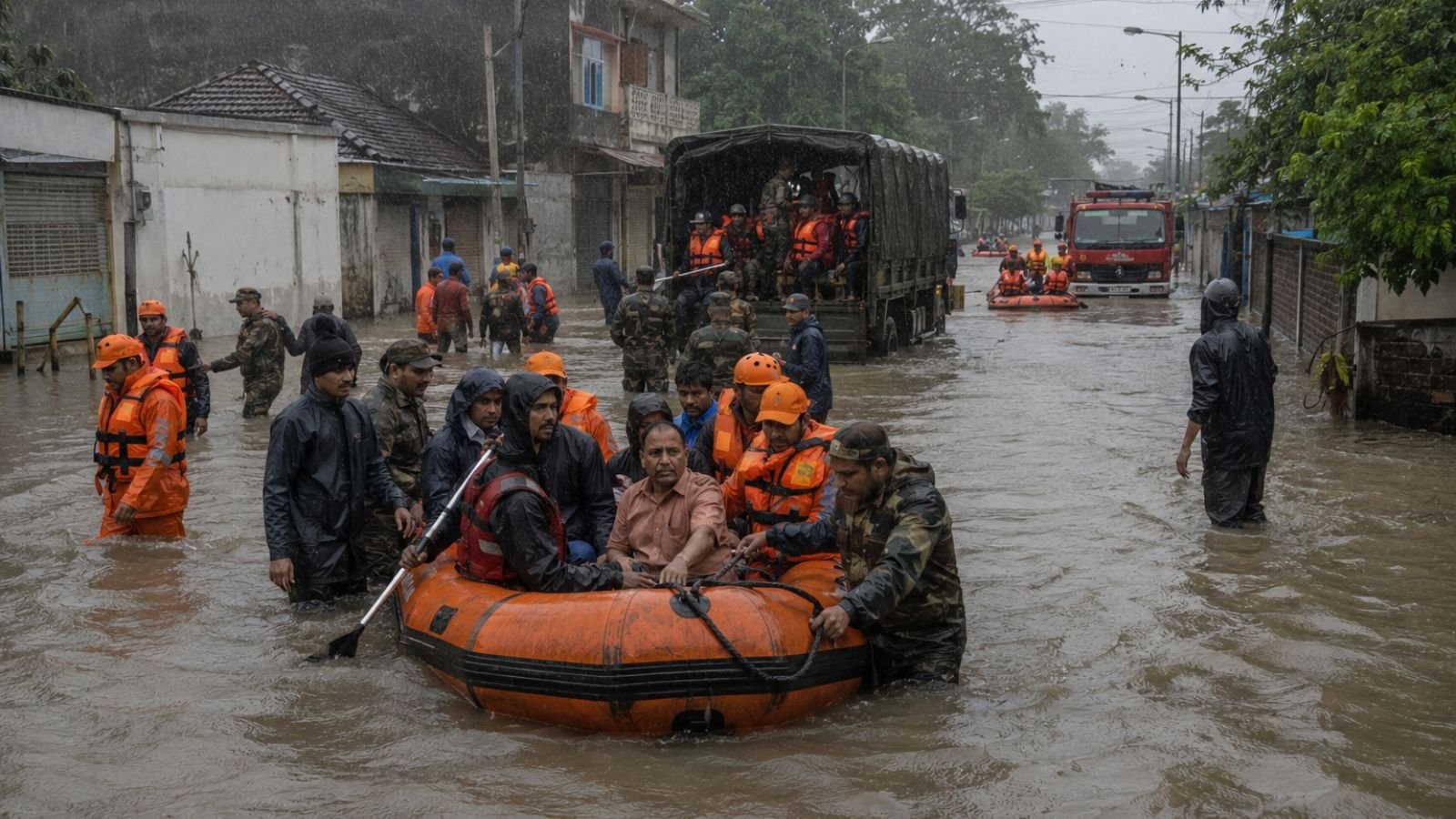
Heavy rainfall has triggered severe flooding across South Gujarat, leading to thousands of evacuations, widespread road closures, and continuous rescue operations by the Army, National Disaster Response Force, and State Disaster Response Force in Valsad and Navsari.
The ongoing South Gujarat flood situation has affected transportation, public infrastructure, educational institutions, and daily life as rivers and dams continue to overflow across several districts. According to the latest flood update for July 24, 2026, emergency agencies remain actively deployed across flood affected regions while rescue teams continue evacuating residents from inundated villages and low lying areas.
Rising river levels, overflowing dams, extensive waterlogging, and transportation disruptions have made the situation one of the most serious monsoon emergencies currently affecting South Gujarat. Authorities continue monitoring river levels while rescue operations, relief distribution, and evacuation efforts remain underway throughout the affected districts.
Heavy Rain Causes Severe Flooding in South Gujarat
Continuous heavy rainfall has resulted in widespread flooding across South Gujarat, particularly in Valsad and Navsari districts. The intense rainfall has caused rivers to rise above danger levels, roads to become submerged, and several villages to remain surrounded by floodwaters.
The South Gujarat flood situation has also resulted in large scale evacuations as emergency agencies continue shifting residents from vulnerable areas to temporary shelters. Rescue teams remain active across multiple locations while authorities continue monitoring weather conditions and flood levels.
South Gujarat Flood Quick Facts
| Quick Fact | Details |
|---|---|
| Affected Districts | Valsad, Navsari |
| People Evacuated (Valsad) | Over 12,000 |
| People Evacuated (Navsari) | Over 10,000 |
| NDRF Rescue | 67 stranded rescued in Sarikhurad, Navsari |
| Army Personnel Deployed | 70 personnel with 5 rescue boats in Valsad |
| Roads Closed (Navsari) | Approximately 250 roads |
| Statewide Road Closures | 500+ panchayat roads, 4 national highways, 3 state highways |
| Submerged Area (Navsari) | Nearly 30% of city inundated |
| Rivers Above Danger Mark | Purna, Ambika, Kaveri |
| Dams Overflowing | Juj and Keliya dams |
| Schools and Colleges | Closed in flood-affected areas |
NDRF Rescues Residents in Navsari
One of the major rescue operations has taken place in Sarikhurad village of Navsari district. According to the available information, the National Disaster Response Force successfully rescued sixty seven stranded residents from floodwaters. The rescue operation included twenty five women and twenty two children who had become trapped because of rising water levels. The successful operation reflects the continued efforts of emergency response agencies working across flood affected villages in South Gujarat.
Large Scale Rescue Deployment in Valsad
Rescue operations have also intensified in Valsad district. According to the available information, seventy Army personnel supported by five rescue boats have been deployed to strengthen local emergency operations. In addition, five National Disaster Response Force teams, five State Disaster Response Force teams, and twenty five Fire Brigade personnel continue operating across flooded locations. The deployment of multiple emergency agencies demonstrates the scale of the ongoing flood response in Valsad. Rescue personnel remain engaged in evacuation, relief, and emergency assistance activities throughout the affected district.
Thousands Shifted to Safer Locations
The latest South Gujarat flood update indicates that large scale evacuations continue across both Valsad and Navsari. More than twelve thousand people have been evacuated from Valsad district. An additional ten thousand residents have been shifted from Navsari district to temporary shelters established in safer locations. The evacuation programme has been implemented to reduce risks associated with rising floodwaters and continuous rainfall. Authorities continue identifying vulnerable areas while assisting residents requiring relocation.
Bus Passengers Safely Rescued
Emergency teams have also carried out successful rescue operations involving stranded commuters. According to the available information, all thirty five passengers travelling on a bus trapped in deep floodwaters at Koparli near Nana Pondha were safely rescued. The operation prevented further risk to passengers as floodwaters continued rising in the affected area. Emergency personnel continue responding to similar situations wherever required.
Hundreds of Roads Closed
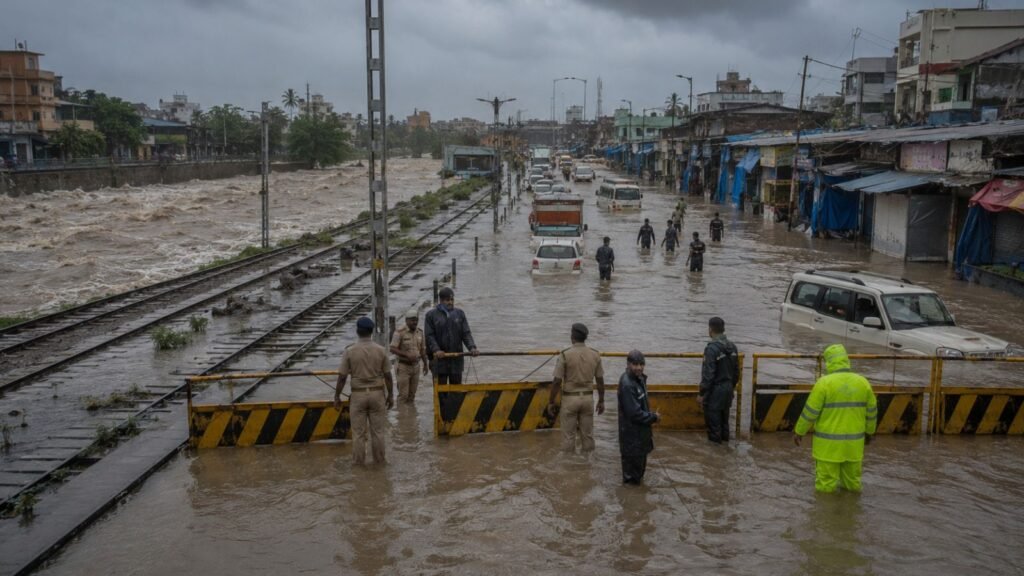
Flooding has significantly disrupted transportation throughout South Gujarat. Approximately two hundred fifty roads across Navsari district have been completely closed because of flooding and overflowing dams. Road closures have affected normal movement while creating additional challenges for emergency services and residents. Authorities continue monitoring road conditions while advising the public to avoid unnecessary travel.
Major Statewide Transportation Impact
The impact of the South Gujarat flood extends beyond district roads. According to the available information, more than five hundred panchayat roads and rural roads have been shut because of severe waterlogging. Across Gujarat, four national highways and three state highways are also experiencing major blockages. The transportation disruption has affected connectivity across several regions while emergency authorities continue monitoring the situation.
Railway Services and Power Supply Affected
Flooding has also disrupted railway operations. Mumbai bound train services have experienced cancellations and route shortfalls because of water accumulation on railway tracks. In addition to transport disruptions, more than thirty five power substations have gone offline. The power outages have left several sectors without electricity while repair and restoration efforts continue. Authorities continue monitoring essential infrastructure during the ongoing flood emergency.
Rivers and Dams Continue to Overflow
River levels remain a major concern across South Gujarat. The Purna, Ambika, and Kaveri rivers are flowing well above their danger marks. The Juj and Keliya dams also continue overflowing. The continued overflow of rivers and dams has maintained flood pressure on nearby villages while increasing the possibility of additional inundation in surrounding areas. Authorities remain focused on monitoring water levels throughout the affected river systems.
Severe Waterlogging Continues
The latest ground assessment indicates extensive flooding across several urban and rural locations. Drone and ground observations show that nearly thirty percent of Navsari city remains inundated. In Valsad, several residential low lying areas, markets, and underpasses continue to remain submerged under waist deep water. The extensive waterlogging has disrupted transportation, commercial activity, and daily life throughout the affected districts. Emergency personnel continue monitoring flood affected neighbourhoods while assisting residents wherever required.
Schools and Colleges Remain Closed
Educational institutions remain closed throughout the affected districts because of the ongoing emergency. According to the available information, all schools, colleges, and educational institutions in flood affected areas continue to remain closed today. The closure has been implemented as a precautionary measure while rescue operations and flood response activities continue. Authorities remain focused on protecting students and educational staff until conditions improve.
Relief and Rescue Operations Continue
Emergency agencies continue coordinating rescue efforts throughout South Gujarat. The Army, National Disaster Response Force, State Disaster Response Force, Fire Brigade teams, and local authorities remain actively engaged in evacuating stranded residents, operating rescue boats, monitoring river levels, and supporting flood affected communities. Relief operations remain focused on ensuring public safety while responding quickly to developing situations across Valsad, Navsari, and surrounding areas. Authorities continue monitoring weather conditions together with water levels to guide ongoing rescue operations.
Conclusion
The South Gujarat flood situation remains critical as heavy rainfall continues affecting Valsad and Navsari on July 24, 2026. Large scale rescue operations by the Army, National Disaster Response Force, State Disaster Response Force, and Fire Brigade personnel continue across flood affected areas. More than twelve thousand residents have been evacuated from Valsad, ten thousand from Navsari, hundreds of roads remain closed, major highways face disruptions, railway operations have been affected, and overflowing rivers and dams continue increasing flood risks. With nearly thirty percent of Navsari city inundated, widespread waterlogging in Valsad, and educational institutions remaining closed, authorities continue prioritizing rescue operations, evacuation efforts, infrastructure monitoring, and public safety until flood conditions improve.
Frequently Asked Questions
Q1. Which districts are most affected by the South Gujarat floods?
A1. Valsad and Navsari districts are the most severely affected by the ongoing flood situation.
Q2. How many people have been evacuated from Valsad and Navsari?
A2. More than 12,000 people have been evacuated from Valsad, and over 10,000 residents have been shifted from Navsari to safer locations.
Q3. What rescue operations are currently underway?
A3. Rescue operations involve 70 Army personnel with 5 boats, 5 NDRF teams, 5 SDRF teams, and 25 Fire Brigade personnel. NDRF rescued 67 stranded residents in Sarikhurad village.
Q4. How many roads are closed due to flooding in South Gujarat?
A4. Approximately 250 roads in Navsari district are closed, with over 500 panchayat roads, 4 national highways, and 3 state highways blocked across Gujarat.
Q5. Are schools open in flood-affected areas?
A5. No, all schools, colleges, and educational institutions in flood-affected areas remain closed today as a precautionary measure.