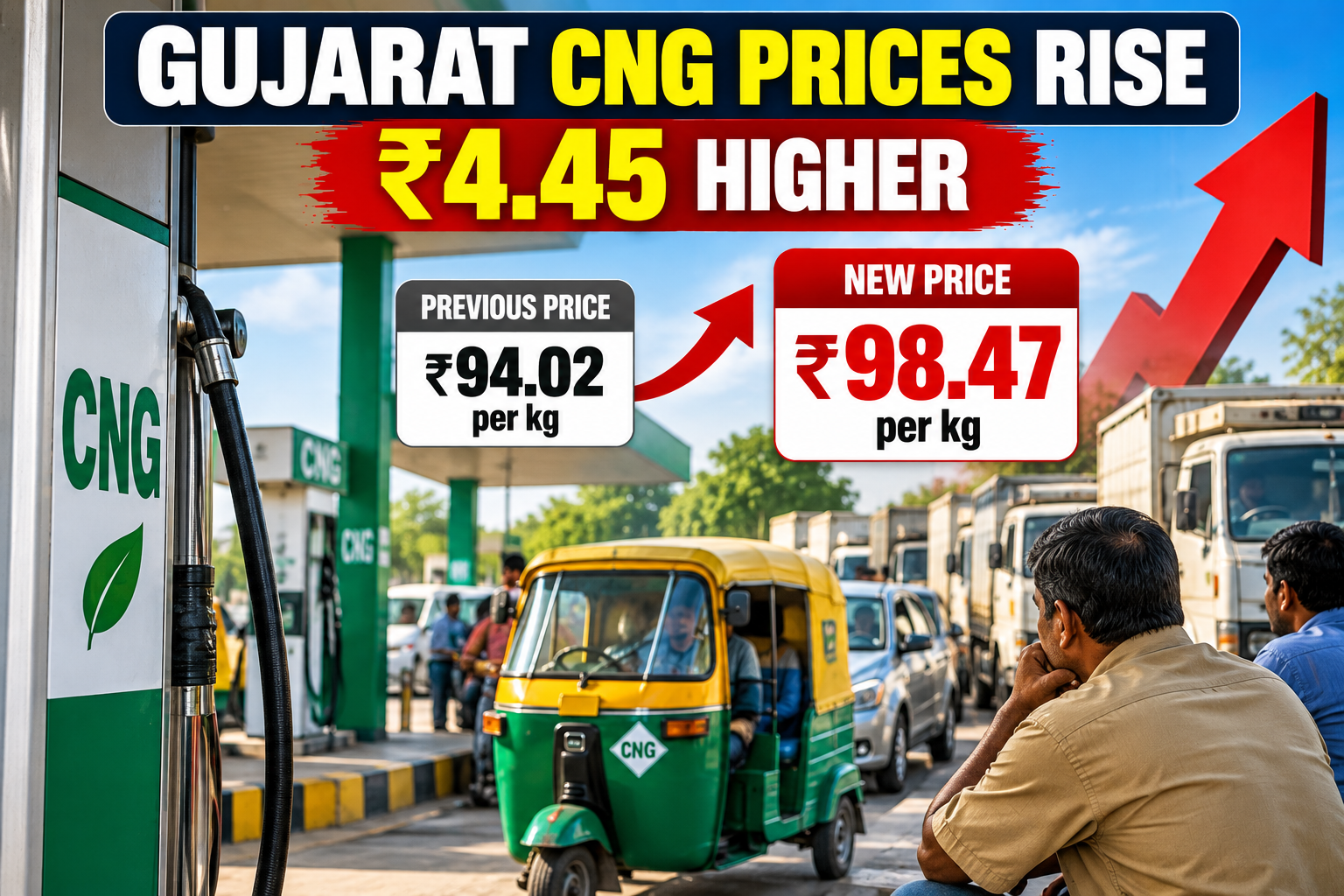
Gujarat CNG prices have climbed close to ₹100 per kg following a sharp increase announced by Adani Total Gas Ltd (ATGL) on October 23, 2026. The latest hike raised the retail price by ₹4.45 per kg in a single day, taking the rate from ₹94.02 to ₹98.47 per kg. The increase has added to the financial pressure on auto-rickshaw and cab drivers, with transport unions demanding relief from rising fuel costs. The timing of the Gujarat CNG price hike has also raised concerns ahead of the Diwali festive season. Drivers say higher fuel expenses are reducing their take-home earnings, while transport unions oppose increasing passenger fares to recover the additional costs.
Gujarat CNG Price Today: Latest Rate and Increase
Adani Total Gas Ltd, a major city gas distributor in the region, increased CNG prices by ₹4.45 per kg on October 23, 2026. The latest price movement is significant for drivers who depend on CNG for their daily work. The rate has moved close to the ₹100-per-kg mark, making fuel expenses a growing concern for commercial transport operators.
Key details of the Gujarat CNG price hike include:
- Previous price: ₹94.02 per kg
- Latest price: ₹98.47 per kg
- Latest increase: ₹4.45 per kg
- Date of increase: October 23, 2026
- Earlier increase: ₹3.75 per kg in August 2026
- Combined increase from these two hikes: ₹8.20 per kg in less than three months
Drivers have also estimated that phased CNG price increases throughout 2026 have raised fuel costs by approximately ₹20 per kg. This steady rise has made it harder for commercial drivers to plan their monthly budgets, especially with the festive season approaching.
Why Are CNG Prices Increasing in Gujarat?
According to ATGL spokespersons, the price increase is linked to changes in domestic gas supply and allocation. Reduced access to lower-cost gas has increased procurement costs for city gas distributors. The main factors behind the Gujarat CNG price hike are explained below.
1. Reduced Supply of Lower-Cost Domestic Gas
Government directives have significantly reduced the availability of lower-cost, state-allocated New Well Gas (NWG) from state-owned enterprises such as ONGC. This reduction means distributors have less access to comparatively cheaper domestic gas supplies. When the cheaper supply shrinks, distributors are forced to look elsewhere for gas, which raises their overall costs.
2. Declining Access to HPHT Gas
ATGL has also experienced reduced access to competitively priced High-Pressure, High-Temperature (HPHT) gas. This has added to the challenges of securing gas at lower costs. HPHT gas was previously a reliable source of relatively affordable supply, and its reduced availability has made the situation more difficult for distributors.
3. Higher Gas Procurement Expenses
As cheaper domestic gas allocations shrink, city gas distributors must source more expensive global inputs or alternative gas supplies. These higher procurement costs contribute to the weighted-average cost of gas and are ultimately passed on to local consumers. This is the main reason why the Gujarat CNG rate today is significantly higher than it was earlier in the year.
How the CNG Price Hike Is Affecting Auto-Rickshaw and Cab Drivers
The latest CNG rate increase has created additional financial pressure for commercial transport drivers, particularly those who depend on daily earnings to support their families. Auto-rickshaw and cab drivers typically earn around ₹200 to ₹300 per day, according to the figures in the available report. With fuel expenses increasing, drivers say very little disposable income remains for household needs and Diwali-related spending.
The main concerns include:
- Lower take-home income: More money must be spent on fuel, leaving less for household expenses
- Pressure during the festive season: Higher running costs are affecting drivers ahead of Diwali
- Change-related concerns: With CNG priced at ₹98.47 per kg, drivers say the effective payment can reach ₹100 when small change is not returned at retail stations
- Passenger fare concerns: Drivers and unions are reluctant to shift the added cost onto passengers through higher fares
Transport unions argue that raising fares would place an additional burden on everyday commuters, including working professionals, students and senior citizens.
Transport Unions Protest Against the CNG Price Increase
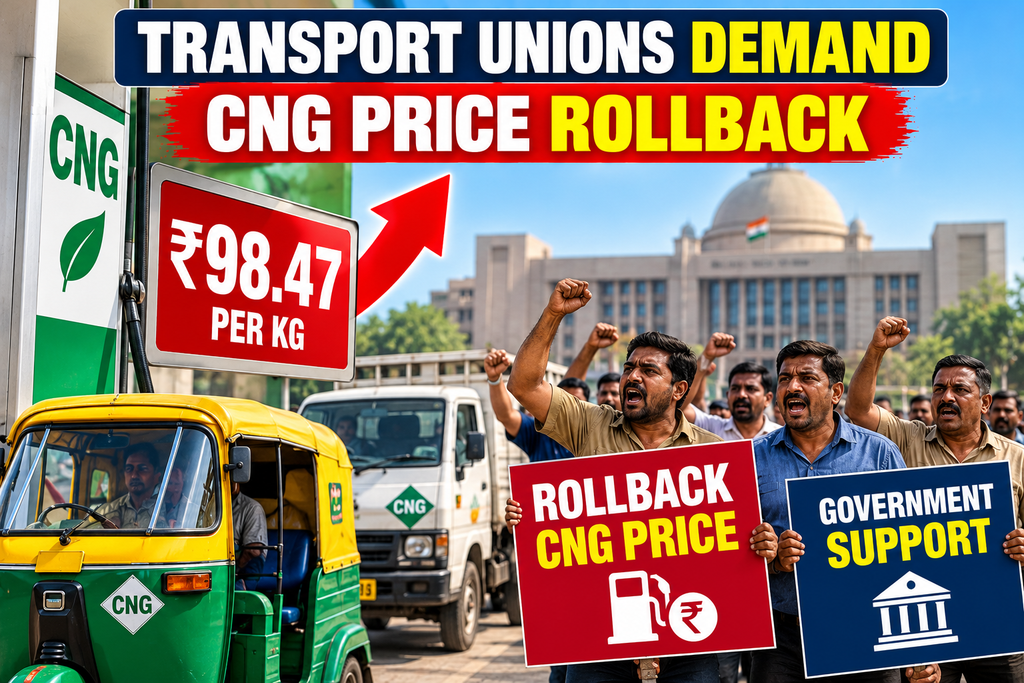
Auto-rickshaw unions, including the Gujarat Sarthi Sangh (GSS) and the Ahmedabad/Gandhinagar Rickshaw Driver Ekta Union, have taken action to oppose the latest increase. The unions have staged demonstrations and demanded an immediate rollback of the ₹4.45-per-kg hike. They have also raised concerns about the pricing mechanism used by private gas distributors.
Their main demands include:
- Rollback of the latest hike: Unions want the ₹4.45-per-kg increase withdrawn
- Targeted fuel subsidy: They have asked the Gujarat government to introduce a subsidy scheme specifically for commercial transport drivers
- Transparent pricing: The Gujarat Sarthi Sangh has urged authorities to review private distributors’ pricing mechanisms and establish clear regulations for successive increases
- Relief without higher fares: Unions want support that reduces drivers’ fuel costs without shifting the burden to passengers
The unions have also held demonstrations at transport offices, including a protest at the local transport office in Gandhinagar, seeking immediate relief.
Will Passenger Fares Increase After the CNG Price Hike?
The latest increase has raised concerns about whether auto-rickshaw and cab fares could rise. However, transport unions have strongly opposed increasing passenger fares to compensate for higher fuel expenses. Their position is that higher fares would unfairly affect commuters who already depend on public transport for daily travel. Students, working-class families, professionals and senior citizens could face additional expenses if fares increase. Instead, unions are seeking a targeted subsidy scheme that would help commercial drivers manage rising CNG costs without placing the entire burden on passengers.
What Happens Next?
The immediate focus remains on the transport unions’ demand for a rollback of the latest CNG price increase and their request for targeted government support. The Gujarat CNG price hike has brought fuel affordability, distributor pricing and the financial position of commercial drivers into focus. Unions are calling for transparent pricing rules and a dedicated subsidy for transport operators rather than higher passenger fares. With the latest rate at ₹98.47 per kg, drivers are concerned about the impact on their daily earnings and festive-season expenses.
Conclusion
The Gujarat CNG price hike on October 23, 2026, increased the rate by ₹4.45 per kg, taking it from ₹94.02 to ₹98.47 per kg. The rise follows an earlier increase of ₹3.75 per kg in August and has intensified concerns among auto-rickshaw and cab drivers. Transport unions are demanding a rollback, a targeted fuel subsidy and greater transparency in gas pricing. They also oppose higher passenger fares, arguing that commuters should not bear the full impact of rising fuel costs. With the rate now close to ₹100 per kg, the issue remains a major concern for both drivers and commuters across Gujarat.
Frequently Asked Questions
Q1. What is the current CNG price in Gujarat after the October 2026 hike?
A1. The Gujarat CNG rate today stands at ₹98.47 per kg, following a ₹4.45 per kg increase on October 23, 2026. The previous price was ₹94.02 per kg.
Q2. Why has Adani Total Gas increased CNG prices in Gujarat?
A2. The Adani Total Gas price hike is linked to reduced supply of lower-cost domestic gas, declining access to HPHT gas and higher gas procurement expenses as distributors are forced to source more expensive alternative supplies.
Q3. How much have CNG prices increased in Gujarat in 2026?
A3. CNG prices have increased by ₹8.20 per kg from the two recent hikes alone, with ₹3.75 per kg in August and ₹4.45 per kg in October. Drivers estimate that phased increases throughout 2026 have raised fuel costs by approximately ₹20 per kg.
Q4. How are auto-rickshaw and cab drivers affected by the Gujarat CNG price hike?
A4. Drivers earning around ₹200 to ₹300 per day are finding less disposable income for household needs and Diwali expenses. They also face change-related concerns, with the effective payment reaching ₹100 when small change is not returned at retail stations.
Q5. What are transport unions demanding after the CNG price increase?
A5. Unions including the Gujarat Sarthi Sangh and the Ahmedabad/Gandhinagar Rickshaw Driver Ekta Union are demanding a rollback of the ₹4.45 per kg hike, a targeted fuel subsidy for commercial transport drivers, transparent pricing mechanisms and relief without higher passenger fares.