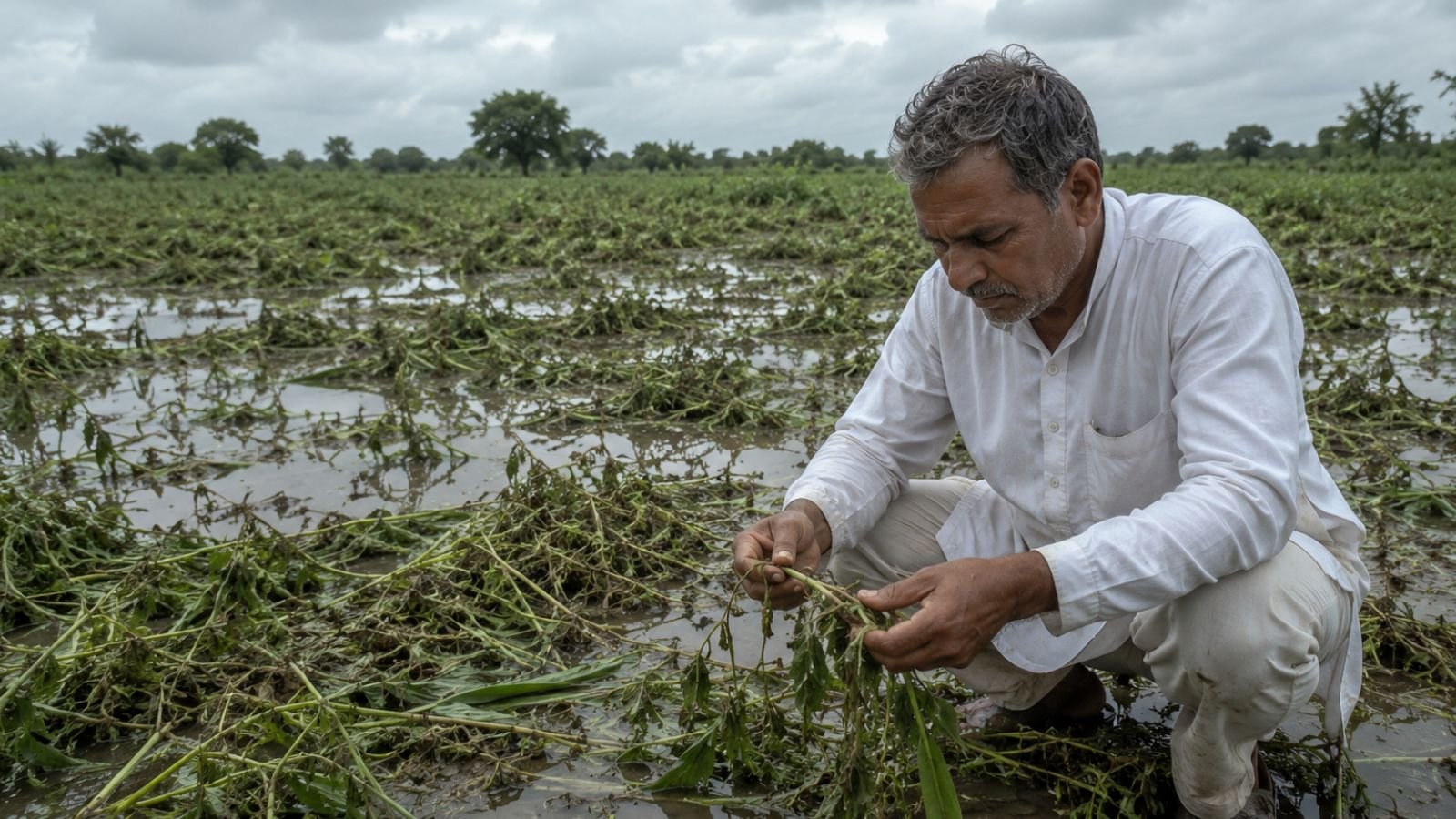
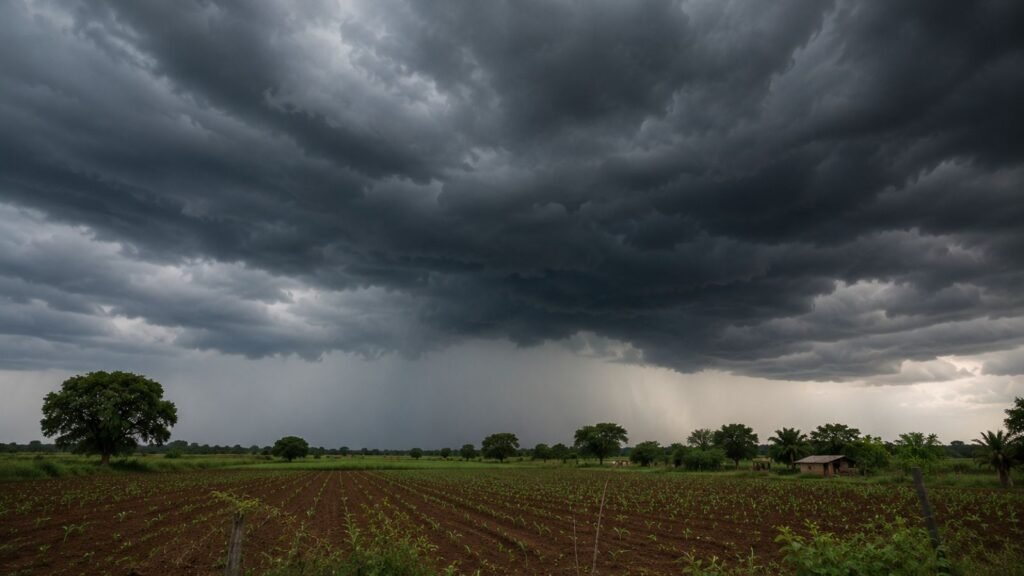
The unseasonal rainfall, locally called “Mavthu,” has intensified across several parts of Gujarat due to cyclonic circulation and western disturbance activity over the region. As of May 6, 2026, rainfall and thunderstorms have affected more than 15 districts and 49 talukas, bringing sudden weather changes, strong winds, and growing concerns for farmers.
The India Meteorological Department (IMD) has issued a yellow alert for multiple districts, warning of thunderstorms, lightning, and wind speeds reaching 40 to 50 km/h over the next 48 hours.
IMD Yellow Alert Issued Across Gujarat
According to the latest IMD forecast, weather conditions are expected to remain unstable between May 6 and May 8, 2026.
Districts Under Weather Alert
Saurashtra & Kutch
Thunderstorm and rainfall alerts remain active for Rajkot, Amreli, Bhavnagar, Botad, Morbi, and Kutch.
North & Central Gujarat
Rain and gusty wind activity is expected in Banaskantha, Sabarkantha, Aravalli, Dahod, Mahisagar, Panchmahal, and Chhota Udepur.
South Gujarat
Rainfall possibilities continue for Dang, Tapi, Narmada, Surat, Navsari, and Valsad.
The IMD has warned that wind speeds may touch 40 to 50 km/h in isolated areas during thunderstorm activity.
Weather Expected to Change After May 8
Officials say the current unstable weather pattern is likely to continue through May 7, after which Gujarat may gradually return to hotter and drier conditions.
Meteorologists expect a 2 to 3°C temperature increase from May 9 onward, reduction in thunderstorm activity, and gradual clearing of cloud cover. However, isolated rainfall may still occur in some regions.
Rainfall Recorded Across 49 Talukas
Rainfall activity was recorded across 49 talukas during the last 24-hour period ending at 8:30 AM on May 6, 2026.
- Sathamba (Aravalli): 2.1 inches (approximately 53 mm)
- Navsari (Navsari): 12 mm rainfall
- Dahod Region (Dahod): Highest district average rainfall
North Gujarat and parts of Saurashtra witnessed the strongest thunderstorm activity.
District-Wise Weather Impact
North Gujarat
Areas including Patan, Chanasma, and Himmatnagar reported stormy weather conditions along with heavy winds and sudden rainfall.
Saurashtra Region
Bhavnagar and nearby regions recorded rainfall activity, while Rajkot and Bhavnagar still remained among the hottest places in Gujarat despite cloudy weather. Temperatures reached 40.7°C in Rajkot and 40.4°C in Bhavnagar.
Central Gujarat
Dahod and Aravalli districts experienced significant agricultural impact due to heavy wind activity, thunderstorms, and sudden rainfall. Wind speeds in some locations touched 40 to 50 km/h.
What Is Causing the Unseasonal Rainfall?
Meteorologists say the sudden weather disturbance is being driven by a western disturbance system, upper-air cyclonic circulation over southwest Rajasthan, and moisture intrusion from nearby regions. This combination has triggered thunderstorm activity across Gujarat during the peak summer period.
Major Impact on Agriculture
Farmers are among the worst affected groups due to waterlogging and wind damage caused by the sudden rainfall.
Crops at Risk
Several summer crops are currently vulnerable, including moong (green gram), sesame, bajra (millet), maize, and groundnut. Excess moisture and strong winds may reduce crop quality and productivity.
Mango Orchard Damage
Strong winds have caused premature fruit drop in mango orchards, especially in Saurashtra. This is creating serious concern for mango growers, seasonal fruit traders, and export-oriented farms.
Livestock Concerns
Animal fodder stored in open areas has reportedly become soaked due to rain, reducing feed quality for livestock owners.
Government Relief Measures for Farmers
The Gujarat government already has compensation support systems for farmers facing significant crop damage Gujarat.
Assistance for Irrigated Crops
Eligible farmers may receive ₹22,000 per hectare, with support available up to 2 hectares.
Assistance for Horticultural Crops
Farmers growing fruits and horticultural produce may receive ₹27,500 per hectare, up to 2 hectares of support.
How Farmers Can Apply
Affected farmers can apply through the iKhedut Portal or nearby e-Gram centers. Applicants must provide valid land ownership and crop-related documents.
Public Advisory During Thunderstorms
Authorities have advised people to avoid standing under trees during lightning, stay indoors during strong winds, secure loose outdoor materials, and avoid unnecessary travel during thunderstorms.
Farmers are also advised to protect stored grains and fodder, avoid irrigation during active rainfall, and monitor official weather updates regularly.
Heat May Return Soon
Although the rainfall has temporarily reduced heat intensity in several areas, temperatures are expected to rise again once the weather system weakens.
Experts believe Gujarat may soon return to high summer temperatures, humid conditions, and heatwave-like weather in isolated regions.
Conclusion
The ongoing unseasonal rainfall across Gujarat has brought temporary relief from extreme summer heat but has also created major challenges for agriculture and rural communities. With thunderstorms, gusty winds, and crop damage affecting multiple districts, authorities continue monitoring the situation closely.
Farmers and residents are advised to stay alert, follow IMD warnings, and prepare for rapidly changing weather conditions over the next few days.
Frequently Asked Questions
Q1. How many talukas in Gujarat have received unseasonal rainfall as of May 6, 2026?
A1. Rainfall has affected 49 talukas across more than 15 districts in Gujarat.
Q2. What is the IMD yellow alert for Gujarat?
A2. The IMD has issued a yellow alert warning of thunderstorms, lightning, and wind speeds reaching 40 to 50 km/h between May 6 and May 8, 2026.
Q3. Which districts in Saurashtra are under weather alert?
A3. Rajkot, Amreli, Bhavnagar, Botad, Morbi, and Kutch are under thunderstorm and rainfall alerts.
Q4. What compensation is available for farmers with crop damage?
A4. Farmers may receive ₹22,000 per hectare for irrigated crops and ₹27,500 per hectare for horticultural crops, up to 2 hectares.
Q5. What crops are at risk due to unseasonal rainfall?
A5. Crops at risk include moong (green gram), sesame, bajra, maize, and groundnut. Mango orchards have also suffered premature fruit drop.