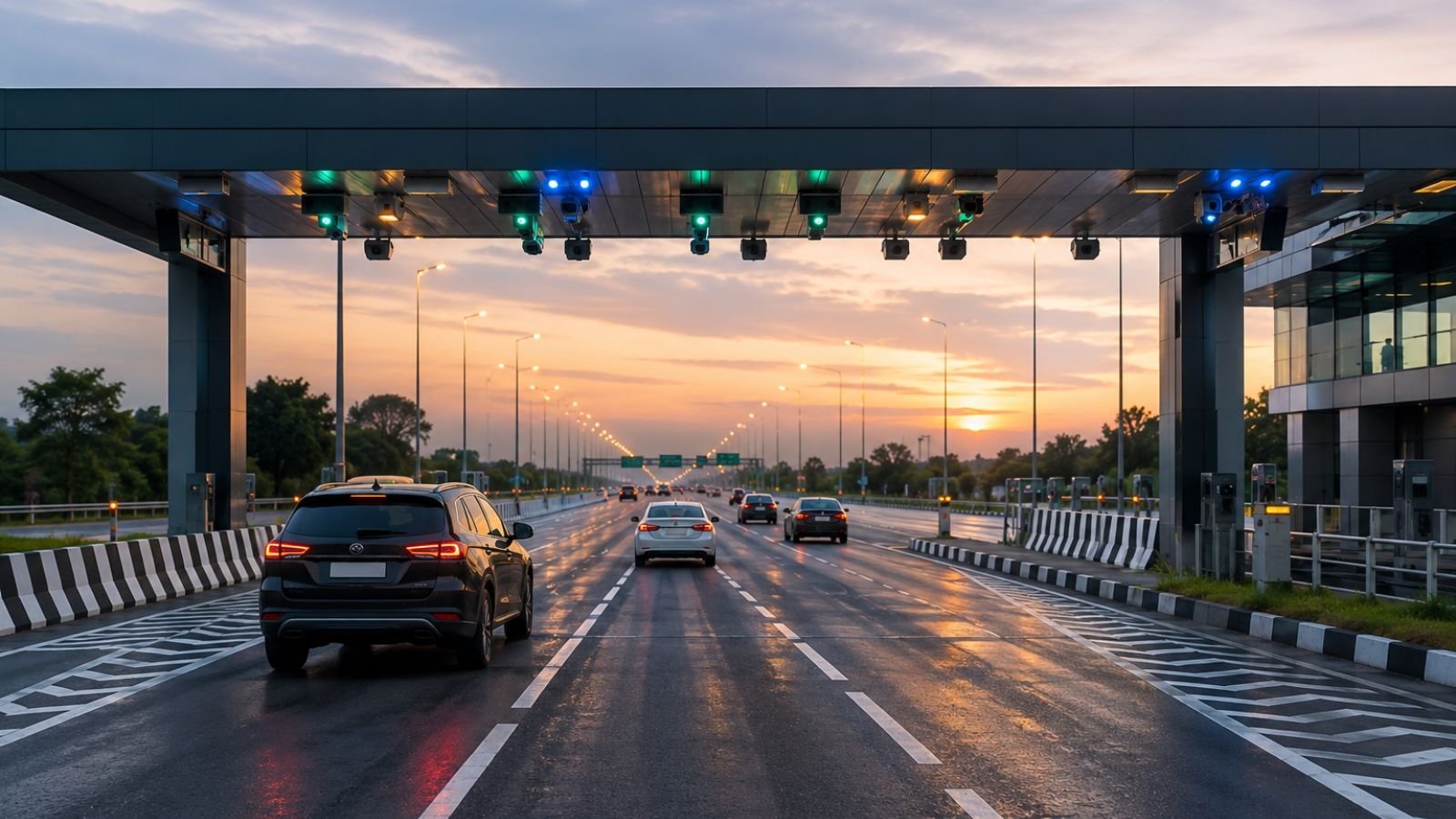
The Choryasi Toll Plaza on the Surat–Bharuch section of NH-48 has officially transitioned to India’s first barrierless Multi-Lane Free Flow (MLFF) toll collection system from May 1, 2026. While the new technology aims to reduce congestion and improve highway travel speed, it has also created confusion among commuters regarding FASTag deductions, e-notices, penalties, and grievance procedures.
Choryasi Toll Plaza Barrierless MLFF System
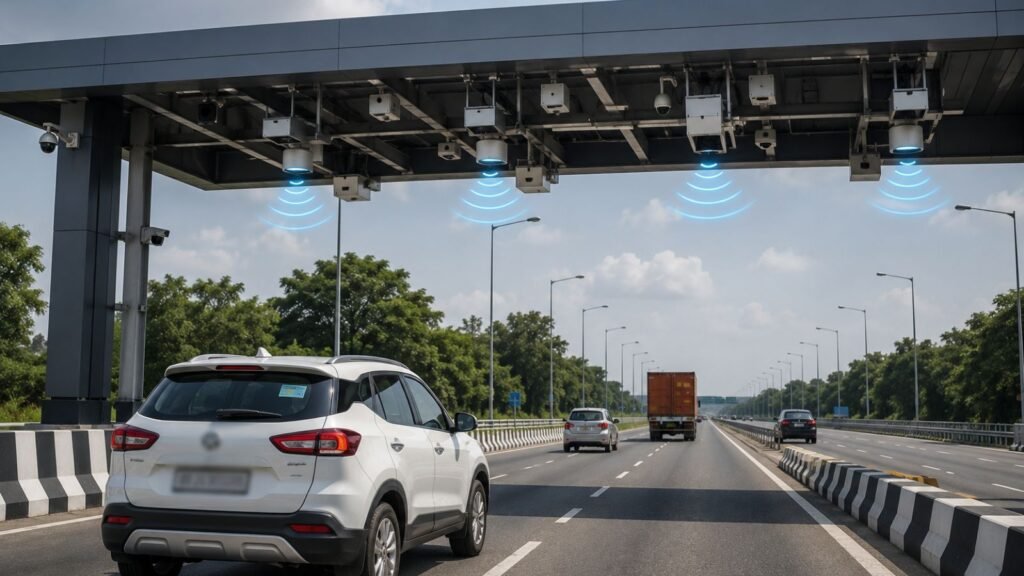
The new MLFF system removes traditional toll barriers and allows vehicles to pass through at highway speeds without stopping. Instead of physical gates, the system uses AI-powered cameras, ANPR (Automatic Number Plate Recognition), RFID FASTag readers, and sensors to detect and deduct toll charges automatically.
Officials say the project is designed to eliminate long queues and reduce travel delays on the busy Surat–Bharuch highway stretch.
How the Barrierless Toll System Works
Under the new system:
- Vehicles no longer stop at toll booths
- FASTag scanners deduct charges automatically
- AI cameras identify vehicle number plates
- Electronic notices are generated for failed payments
- Vehicles can move at speeds up to 80 to 100 km/h
The system relies heavily on synchronized FASTag servers and number plate recognition technology.
Major Public Issues & Challenges
The transition has introduced several operational and public concerns.
Insufficient FASTag Balance
If a FASTag account does not have enough balance, the vehicle is not stopped physically. An electronic notice (E-Notice) is generated automatically. Users must clear dues within 72 hours. Failure to pay within the deadline can result in penalties.
Double Toll Penalty
If payment is not completed within 72 hours, users may be charged double the normal toll amount, and additional enforcement action may begin later. This has become one of the biggest concerns among daily commuters.
Enforcement Linked to VAHAN Database
Unpaid toll dues may be linked electronically to the VAHAN vehicle database. Possible impacts include delay in vehicle ownership transfer, issues with fitness certificate renewals, and problems in permit approvals for commercial vehicles.
Accuracy Concerns in the System
Many commuters have raised concerns about incorrect number plate recognition, FASTag synchronization failures, duplicate deductions, and delayed payment updates. Since the system depends on AI and automated sensors, even small technical mismatches can trigger incorrect notices.
Operational System Summary
- Feature: Barrierless MLFF System
- Operational Date: May 1, 2026
- Technology: ANPR Cameras + RFID FASTag + AI Sensors
- Vehicle Speed: Up to 80 to 100 km/h
- Payment Method: Automatic FASTag deduction
- Non-Payment Action: E-Notice with 72-hour deadline
- Helpline: National Highway Helpline 1033
How to Check Pending Toll Dues
Vehicle owners can verify pending notices through official platforms.
Official E-Notice Portal
Users can check trip details, toll dates, and outstanding amounts.
FASTag Transaction History
Commuters should also review failed transaction logs, deduction history, and bank FASTag statements. This helps identify whether a deduction error triggered an e-notice.
How to Challenge an Incorrect E-Notice
If you believe the toll notice was issued incorrectly, action must be taken quickly.
Important Rule
You must file a grievance within 72 hours of receiving the notice.
Ways to Raise Complaints
- Online Grievance Portal: Users can challenge wrong deductions, duplicate toll charges, and incorrect number plate detection.
- National Highway Helpline: Helpline Number 1033, available 24×7 for toll-related complaints.
- Email Complaint: Users can send detailed evidence including vehicle number, FASTag details, and screenshots or transaction records.
Key Timelines & Penalties
- Within 72 Hours: Pay normal toll or file challenge
- After 72 Hours: Double toll penalty may apply
- After 15 Days: Dues may link with VAHAN records
Authorities are expected to resolve valid disputes within five days.
Impact on Local Residents
One major concern among local commuters is the possible removal of regional toll concessions under future GPS-based toll expansion plans.
Many residents fear that local passes could disappear, distance-based charging may increase travel costs, and daily commuters may lose discounted benefits.
Benefits of the Barrierless System
Despite public concerns, the new toll system also offers advantages:
- Reduced highway congestion
- Faster vehicle movement
- Lower fuel wastage
- Shorter travel time
- Fully digital toll management
Officials believe the system represents the future of highway tolling in India.
Future of Toll Collection in India
The Choryasi MLFF project is being viewed as a pilot model for nationwide expansion. If successful, similar systems could gradually replace traditional toll plazas across major highways.
Future developments may include GPS-based toll charging, fully automated national toll networks, and AI-driven traffic monitoring systems.
Conclusion
The barrierless toll system at Choryasi Toll Plaza marks a major technological shift in India’s highway infrastructure. While the MLFF model promises smoother travel and reduced congestion, it also demands greater awareness from FASTag users regarding balance maintenance, penalties, and grievance timelines.
For commuters using NH-48 regularly, understanding the 72-hour e-notice rule and checking FASTag transactions carefully has become extremely important under the new digital toll framework.
Frequently Asked Questions
Q1. When did the barrierless toll system become operational at Choryasi Toll Plaza?
A1. The barrierless MLFF system became operational on May 1, 2026, on the Surat–Bharuch section of NH-48.
Q2. What happens if my FASTag has insufficient balance?
A2. An electronic notice (E-Notice) is generated automatically, and you must clear the dues within 72 hours. Failure may result in a double toll penalty.
Q3. How can I check pending toll dues?
A3. You can check pending dues through the official E-Notice portal or by reviewing your FASTag transaction history.
Q4. What should I do if I receive an incorrect e-notice?
A4. You must file a grievance within 72 hours through the online grievance portal, National Highway Helpline 1033, or email with supporting evidence.
Q5. What is the speed limit for vehicles under the MLFF system?
A5. Vehicles can move at speeds up to 80 to 100 km/h while tolls are automatically deducted.