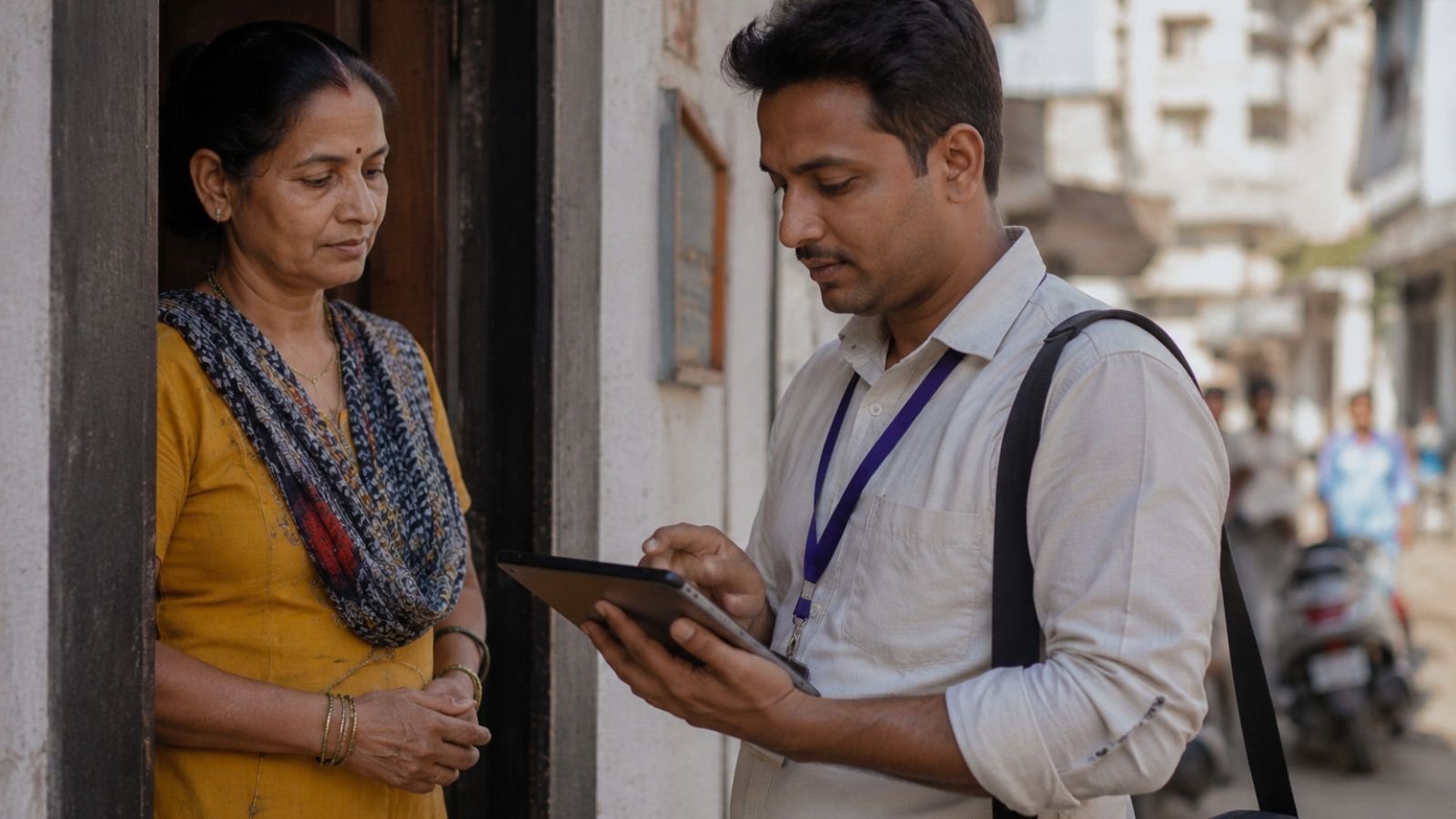
Gujarat Vasti Gantri 2026 refers to the ongoing Population Census operation being conducted across Gujarat as part of the nationwide Census of India 2027 initiative. After facing delays from its original 2021 timeline due to the COVID-19 pandemic, the latest census exercise has officially become the 16th national census of India and is being described as the world first fully digital census. The Gujarat government has launched a technology driven census operation that combines online self enumeration with physical door to door verification. Citizens can now digitally register household and demographic information using the official self enumeration portal from their homes before field officers begin physical validation visits.
What is Gujarat Vasti Gantri 2026?
Gujarat Vasti Gantri 2026 is the Gujarat phase of the upcoming national population census. The census aims to collect detailed demographic, housing, and socio economic data from households across the state. The process focuses heavily on digital data collection, mobile based census operations, faster processing systems, online self registration, and geo tagged household mapping. Officials have divided the operation into multiple phases to ensure smoother execution and more accurate population reporting.
Gujarat Census 2026 Schedule and Important Dates
The Gujarat census operation is currently running in different stages.
| Phase | Timeline | Details |
|---|---|---|
| Online Self Enumeration Phase | May 17 to May 31, 2026 | Citizens can log in to official portal, register family details, enter house information, submit household data digitally |
| Phase 1: House Listing Operations (HLO) | June 1 to June 30, 2026 | Physical door to door surveys with approximately 33 questions per family covering housing conditions, amenities, water access, electricity, toilet facilities, assets |
| Phase 2: Population Enumeration | February 2027 | Individual demographic information, socio economic data, population statistics, caste related information |
The self enumeration phase was officially launched by Gujarat Chief Minister Bhupendra Patel after he submitted his own data on the portal.
Gujarat Population and Demographic Estimates 2026
Although the final census data will take time to be officially released, current administrative projections provide an updated demographic picture for Gujarat.
| Demographic Parameter | 2011 Census | 2026 Projected Estimate |
|---|---|---|
| Total Population | 6.04 crore | 7.43 crore |
| Male Population | 3.15 crore | 3.91 crore |
| Female Population | 2.89 crore | 3.53 crore |
| Literacy Rate | 78.03% | Male: ~85.75%, Female: ~69.68% |
Why Gujarat Census 2026 is Important
The data collected through Gujarat Vasti Gantri 2026 will directly influence several major government decisions.
- Welfare scheme distribution
- Urban infrastructure planning
- Rural development policies
- Public resource allocation
- Electoral constituency boundaries
- Future population planning
The census also helps governments better understand housing patterns, migration trends, population density, and socio economic conditions.
Major Features of the Digital Census
The Gujarat census operation introduces several major technological upgrades compared to previous census exercises.
- No Documents Required: No identification documents need to be uploaded. User data remains confidential and information is protected digitally
- Mobile First Census Operations: Enumerators will use dedicated mobile applications, digital entry systems, and real time reporting tools to reduce paperwork, speed up processing, and improve data accuracy
- Online Self Enumeration Portal: Citizens can complete the online process through se.census.gov.in. Any adult family member can complete the process representing an entire household, usually taking 15 to 20 minutes

Step by Step Gujarat Census Self Enumeration Process
The Gujarat Vasti Gantri online system follows a structured digital registration method.
Step 1: Initial Login
Users must visit the official self enumeration portal, select Gujarat from the state dropdown menu, fill out the security Captcha, and click Verify and Proceed.
Step 2: Household Registration
During registration, users must enter head of household name, valid 10 digit mobile number, and preferred language option. The system supports English, Hindi, and multiple regional languages. An OTP verification process is required before login access is granted.
Step 3: Location and Geo Tagging
Users must select district, taluka or sub district, and village or town. The portal also includes digital map functionality and geo tagging support. Residents can drag and place the digital location marker directly on their house location.
Step 4: Complete the HLO Questionnaire
Citizens must answer 33 House Listing Operation questions. The questionnaire includes details related to house construction materials, water supply, electricity connection, toilet facilities, vehicles, television ownership, and internet availability. Most questions are dropdown based to simplify submission.
Step 5: Final Review and Submission
Before final submission, users can review all entered information and corrections can be verified. After clicking submit, the portal generates an 11 digit Self Enumeration ID (SE ID) that begins with the letter H and is also sent through SMS.
Why the 11 Digit SE ID is Important
Officials have clarified that online submission alone does not fully complete the census process. The generated SE ID becomes extremely important during physical door to door verification. When government workers visit homes during the June 2026 HLO phase, citizens can simply provide the SE ID, enumerators scan the ID using their mobile app, and data gets instantly validated. This avoids repeating the entire 33 question survey physically.
Physical Verification Still Mandatory
Even after online submission, physical verification remains compulsory. Government census workers will still visit registered households to confirm data accuracy, validate house location, and finalize official records. The online process mainly reduces manual paperwork, repeated questioning, and processing delays.
Gujarat Shift Toward Digital Governance
The Gujarat census reflects the broader shift toward digital governance, mobile administration, and smart public infrastructure. The use of mobile apps, geo tagging systems, online registration, and real time validation marks a major modernization effort in India administrative framework.
Citizens Encouraged to Complete Registration Early
Authorities are encouraging residents to complete the self enumeration process before May 31, 2026. Early registration can help reduce verification delays, simplify physical validation, improve census efficiency, and reduce the time required during physical household visits.
Conclusion
Gujarat Vasti Gantri 2026 marks a historic transformation in India census operations as the country moves toward its first fully digital population census. The Gujarat government has introduced a streamlined online self enumeration process combined with mobile based field verification to improve speed, transparency, and accuracy. The census operation, which runs in multiple phases from May 2026 through February 2027, will play a critical role in shaping future welfare policies, infrastructure planning, and demographic analysis across Gujarat and India. Citizens are encouraged to complete their online registration through the official portal before the May 31 deadline and safely preserve their 11 digit Self Enumeration ID for the upcoming physical verification phase.
Frequently Asked Questions
Q1. What is Gujarat Vasti Gantri 2026?
A1. Gujarat Vasti Gantri 2026 is the Gujarat phase of the nationwide Census of India 2027 initiative, representing the world first fully digital census operation.
Q2. What is the online self enumeration portal for Gujarat Census 2026?
A2. Citizens can complete the online process through the official portal at se.census.gov.in.
Q3. What is the deadline for online self enumeration in Gujarat?
A3. The online self enumeration phase runs from May 17 to May 31, 2026.
Q4. What is the House Listing Operations (HLO) timeline?
A4. Phase 1 House Listing Operations will take place from June 1 to June 30, 2026, involving physical door to door surveys with approximately 33 questions per family.
Q5. Do citizens need to upload any documents for online census registration?
A5. No, no identification documents need to be uploaded. The system requires only household details, mobile number, and location information with data remaining confidential.