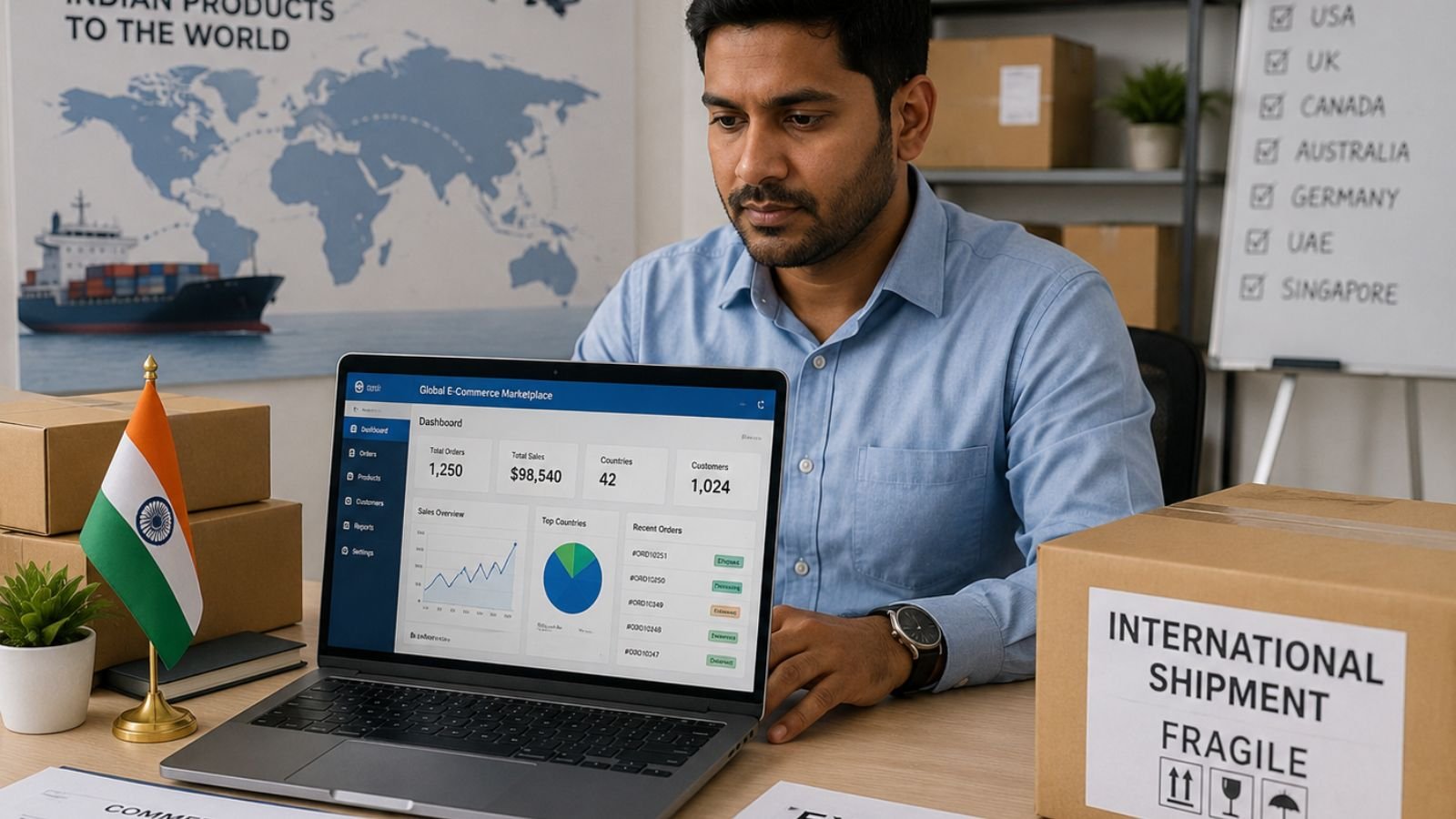
India export ecosystem is becoming increasingly accessible for small businesses, startups, artisans, and MSMEs. To support this transformation, the Directorate General of Foreign Trade (DGFT), operating under the Ministry of Commerce and Industry, has released a free E-Commerce Exports Handbook for MSMEs. This downloadable handbook serves as a practical roadmap for entrepreneurs who want to legally sell products to international customers through e-commerce platforms and export channels. The handbook is designed as a step by step guide that simplifies the export process, covering everything from business registration and obtaining mandatory export licenses to marketplace onboarding, logistics planning, customs clearance, and government financial incentives. For businesses looking to expand beyond domestic markets, the handbook provides structured guidance that helps reduce confusion and improve export readiness.
Official DGFT E-Commerce Exports Handbook Download Links
The free E-Commerce Exports Handbook for MSMEs is available for download through official DGFT channels. Businesses and entrepreneurs can access the handbook using the following official links:
- Direct Handbook Download: Exports Handbook PDF
- DGFT Learning Portal: India Export Guide 2026
An important advantage is language accessibility. The handbook is available in English, Hindi, Gujarati, and Kannada. This multilingual approach improves accessibility for entrepreneurs from different regions of India. Businesses are advised to use official government sources when downloading the handbook to ensure they receive the latest version.
What Is the DGFT E-Commerce Exports Handbook
The E-Commerce Exports Handbook for MSMEs is an educational document published by DGFT to help Indian entrepreneurs understand international e-commerce exports. The handbook acts as a comprehensive export guide covering the entire export journey from business formation to product delivery in foreign markets.
Gujarat Vahli Dikri Yojana 2026
It is particularly useful for:
- MSMEs
- Startups
- Small manufacturers
- Artisans
- Handicraft sellers
- Home based businesses
- District level product entrepreneurs
- E-commerce sellers planning global expansion
The document explains how Indian businesses can establish export operations while complying with applicable regulations and procedures.
Why the Handbook Is Important for MSMEs
Many small businesses hesitate to enter export markets because the process appears complicated. Common concerns include business registration requirements, export licenses, banking procedures, international shipping, customs documentation, product compliance, and marketplace registration.
| Concern | How Handbook Helps |
|---|---|
| Business registration | Step by step legal setup guidance |
| Export licenses | IEC and AD Code application process |
| Banking procedures | Foreign currency payment handling |
| International shipping | Logistics options explained |
| Customs documentation | Clearance workflows simplified |
| Government incentives | RoDTEP, MAI, IES schemes explained |
The handbook simplifies these topics into a structured learning path. Instead of requiring entrepreneurs to search multiple government portals and regulations separately, the guide consolidates key information into one document. This makes it particularly valuable for first time exporters who want a clear understanding of the export process before investing significant capital.
RBI Plastic Currency Notes Pilot
Step 1: Business Setup and Legal Registration
The handbook begins with one of the most important aspects of exporting: legal business setup. Before exporting products internationally, businesses must establish proper legal documentation.
The guide explains how different business structures can operate export activities, including proprietorships, partnerships, and Limited Liability Partnerships (LLPs). The handbook also covers obtaining a Permanent Account Number (PAN) appropriate for the business structure.
Another major requirement explained is GST registration. The guide provides information about obtaining a Goods and Services Tax Identification Number (GSTIN), which plays a critical role in many export related transactions. A properly registered business forms the foundation for successful export operations.
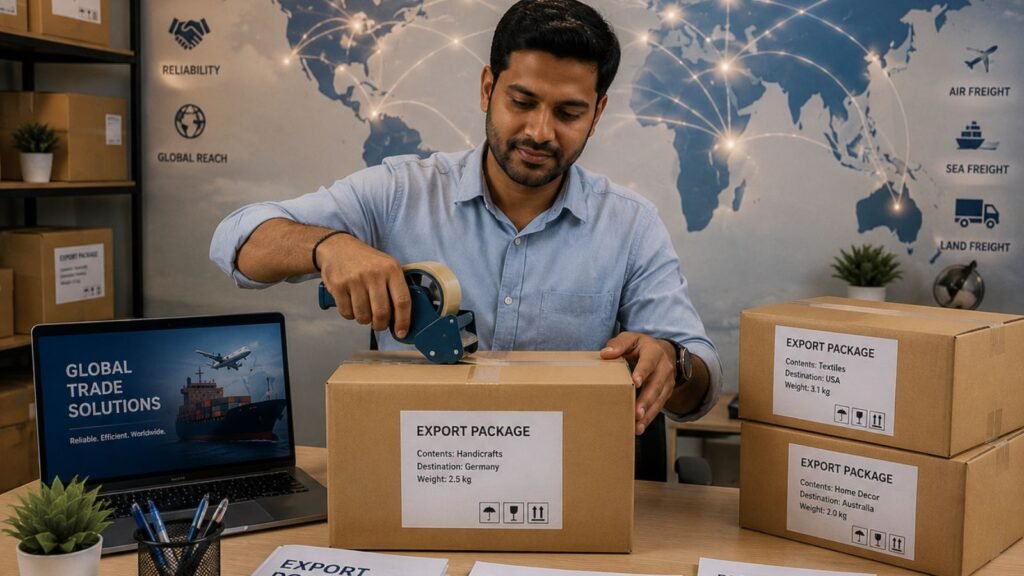
Step 2: Obtaining IEC and AD Code
One of the most important export requirements is the Import Export Code (IEC). The handbook explains how entrepreneurs can apply for the mandatory 10 digit IEC through DGFT procedures. Without an IEC, international export transactions cannot generally proceed through standard channels.
The handbook also explains the significance of the Authorized Dealer (AD) Code. The AD Code is connected with banking processes and helps businesses legally receive foreign currency payments. For exporters, proper registration of both IEC and AD Code is essential because these identifiers connect business operations, banking transactions, and international trade compliance.
Gujarat RTO Registration Rules 2026
Step 3: Market Analysis and Product Selection
Choosing the right product and market is one of the most important export decisions. The handbook includes guidance on evaluating international demand and identifying product opportunities. Rather than attempting to sell products randomly across multiple countries, businesses are encouraged to understand which markets have demand for specific Indian products.
The guide highlights categories such as spices, textiles, handicrafts, traditional products, and local specialty goods. The handbook also references opportunities linked to the One District One Product (ODOP) initiative. This section helps entrepreneurs focus on products that may already possess demand advantages in global markets.
Step 4: International Marketplace Onboarding
For many MSMEs, international e-commerce platforms provide the easiest path to global customers. The handbook explains how businesses can create seller accounts and prepare their products for international marketplaces.
Key focus areas include:
- Marketplace Registration: Businesses are guided on onboarding procedures for major global selling platforms
- Product Catalog Preparation: Accurate descriptions, clear product specifications, proper categorization, and search friendly content
- Product Photography: Quality product images with clear presentation for overseas buyers
- Compliance Requirements: Understanding specific information and documentation needed by international marketplaces
Step 5: Shipping, Logistics and Customs Clearance
Shipping is often one of the most intimidating aspects of exporting. The handbook addresses this challenge by explaining available logistics options.
Businesses are introduced to:
- Public export logistics channels
- India Post export services
- International courier solutions
- Shipment tracking considerations
The guide also discusses customs clearance workflows. Understanding customs procedures is critical because incomplete documentation can delay shipments and increase costs. The handbook aims to help exporters avoid common mistakes that create delays at international borders.
Government Financial Benefits Explained
One of the most valuable sections of the handbook focuses on government support schemes. These programs are designed to reduce export costs and encourage international trade participation.
| Scheme | Benefit |
|---|---|
| RoDTEP Scheme | Helps exporters recover certain embedded duties and taxes not refunded through standard mechanisms |
| Market Access Initiative (MAI) | Supports market development, international promotion, trade participation activities |
| Interest Equalization Scheme (IES) | Reduced interest financing support for export working capital |
| Credit Guarantee Assistance | Support coverage up to ₹15 lakh per beneficiary, improving financing availability |
By reducing hidden cost burdens, these schemes improve export competitiveness. Lower financing costs can significantly improve profitability for small exporters.
Why This Handbook Matters for First Time Exporters
Many Indian entrepreneurs have products capable of succeeding internationally but lack knowledge about export procedures. The handbook addresses this gap by creating a structured roadmap.
Instead of relying on scattered online information, businesses can follow a sequential process that covers:
- Business registration
- Export licensing
- Banking compliance
- Product selection
- Marketplace onboarding
- Shipping management
- Customs procedures
- Government incentives
This approach helps reduce uncertainty and improves preparedness before entering international markets.
Key Takeaways for MSMEs
Businesses planning exports should focus on several major lessons highlighted throughout the handbook:
- Complete legal registration before beginning export activities
- Obtain both IEC and AD Code as early as possible
- Research international demand before selecting products
- Create professional marketplace listings with quality photographs
- Understand logistics and customs procedures before accepting orders
- Utilize government schemes that reduce operational costs
- Explore ODOP linked product opportunities where relevant
These foundational steps can help create a more sustainable export strategy.
Conclusion
The free DGFT E-Commerce Exports Handbook for MSMEs serves as a practical export blueprint for Indian businesses seeking international growth opportunities. By covering legal registration, IEC acquisition, banking compliance, product selection, marketplace onboarding, logistics management, customs procedures, and government support schemes, the handbook simplifies a process that many entrepreneurs find overwhelming. For MSMEs, startups, artisans, and small manufacturers, the guide provides a structured framework that can help transform local businesses into global sellers. With detailed information on export procedures and financial assistance programs, the handbook represents a valuable educational resource for anyone interested in participating in India growing e-commerce export ecosystem.
Frequently Asked Questions
Q1. Where can I download the free DGFT E-Commerce Exports Handbook
A1. The handbook can be downloaded from the official DGFT portal at https://www.dgft.gov.in/CP/?opt=e-commerce-export-handbook-msme or through the DGFT Learning Portal at https://www.dgft.gov.in/CP/?opt=learn.
Q2. In which languages is the DGFT E-Commerce Exports Handbook available
A2. The handbook is available in English, Hindi, Gujarati, and Kannada to improve accessibility for entrepreneurs from different regions of India.
Q3. What are the key export requirements explained in the handbook
A3. The handbook explains business registration, Import Export Code (IEC), Authorized Dealer (AD) Code, GST registration, banking compliance, and customs documentation.
Q4. What government schemes for exporters are covered in the handbook
A4. The handbook covers RoDTEP (duty refund), Market Access Initiative (MAI), Interest Equalization Scheme (IES), and credit guarantee assistance up to ₹15 lakh per beneficiary.
Q5. Who is the target audience for the DGFT E-Commerce Exports Handbook
A5. The handbook is designed for MSMEs, startups, small manufacturers, artisans, handicraft sellers, home based businesses, district level product entrepreneurs, and e-commerce sellers planning global expansion.