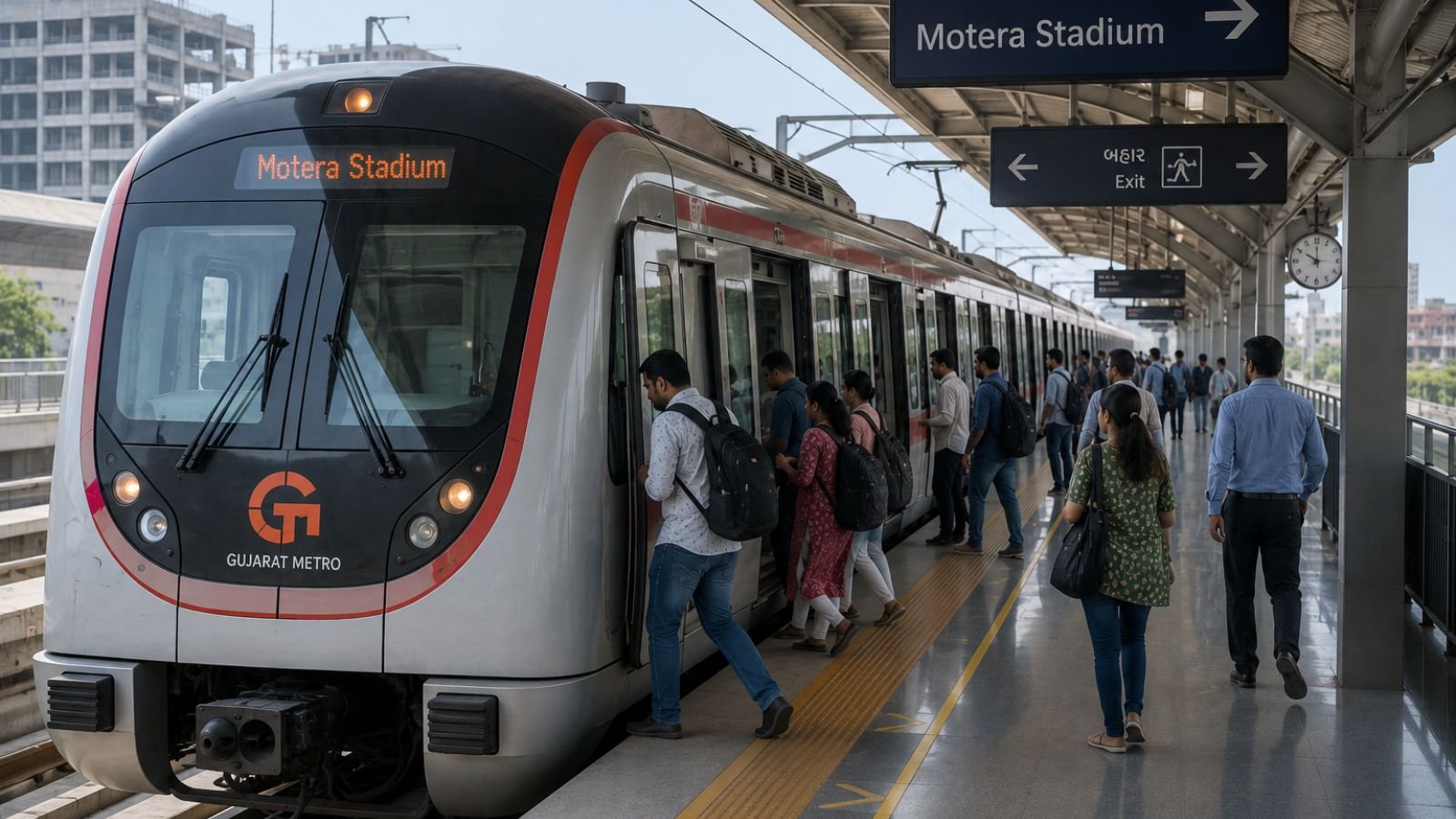
Ahmedabad and Surat are rapidly transforming their public transportation systems in 2026 through a unified, technology driven mobility framework designed to improve connectivity, reduce travel time, and make daily commuting more convenient. Under the newly established Unified Metropolitan Transport Authority (UMTA), both cities are integrating Metro Rail, Bus Rapid Transit Systems (BRTS), feeder services, digital ticketing, and last mile transportation options into a single coordinated network. The objective is to create a seamless travel experience where commuters can move across different modes of transport using interconnected routes, common payment systems, and improved station access. From Ahmedabad Metro expanding network to Surat Metro ongoing trial runs, and from electric BRTS fleets to app based ticketing solutions, Gujarat two largest cities are witnessing a significant shift in urban mobility.
Ahmedabad and Surat Move Towards Integrated Urban Mobility
The transportation ecosystem in Ahmedabad and Surat is no longer being developed as separate systems. Instead, Metro Rail, BRTS networks, feeder buses, e bikes, and intermediate public transport options are being integrated under a single mobility framework. The establishment of UMTA represents a major step toward coordinated urban transportation planning. The focus is on creating easier transfers between transport modes, reducing congestion, improving passenger convenience, and supporting future population growth. For daily commuters, this means fewer travel disruptions, better route options, and easier access to destinations across both cities.
Ahmedabad Metro Connectivity Updates
Ahmedabad Metro has become one of the most important pillars of the city public transportation network.
| Metro Line | Route | Key Coverage |
|---|---|---|
| Blue Line | Thaltej Gam to Vastral Gam | East west corridor |
| Red Line | APMC to Motera Stadium | North south alignment |
| Yellow Line | Sector 1 to Mahatma Mandir, Gandhinagar | Ahmedabad Gandhinagar connectivity |
| Violet Line | GNLU to GIFT City | Financial and institutional hub |
The Ahmedabad Metro network currently spans approximately 77.63 kilometers, providing connectivity across Ahmedabad and Gandhinagar. The extensive network supports travel across major residential, commercial, institutional, and government zones.
Ahmedabad Metro Expansion Plans
Metro expansion continues to remain a priority. A major development has been approved under Phase 2(A) for airport connectivity. The project includes a 6.032 km dedicated metro line from Koteshwar Road directly to Sardar Vallabhbhai Patel International Airport, with four elevated stations and one underground airport station. This expansion is expected to strengthen airport connectivity and reduce travel time for passengers.
Surat Metro Progress Report
Surat Metro is steadily moving toward operational readiness under Phase 1 development.
| Parameter | Detail |
|---|---|
| Phase 1 network length | 40.35 km |
| Number of corridors | 2 |
| Trial run status | Active on 8.5 km elevated section between Dream City and Althan Tenement |
| Testing activities | Speed trials, braking tests, technical system evaluations |
Surat Metro Corridor Details
- Corridor 1 (Red Line / Diamond Corridor): 21.61 km connecting Sarthana to Dream City, serving several high demand urban zones
- Corridor 2 (Green Line / Textile Corridor): Connecting Bhesan to Saroli, designed to improve connectivity across textile and residential areas
- Major Interchange Point: Both corridors intersect at Majura Gate, allowing passengers to switch lines efficiently
Ahmedabad Janmarg BRTS Updates
Ahmedabad Janmarg BRTS continues to play a major role in urban commuting.
| Parameter | Detail |
|---|---|
| Total buses | Nearly 380 buses |
| Electric buses | Around 150 |
| Network length | Approximately 160 km |
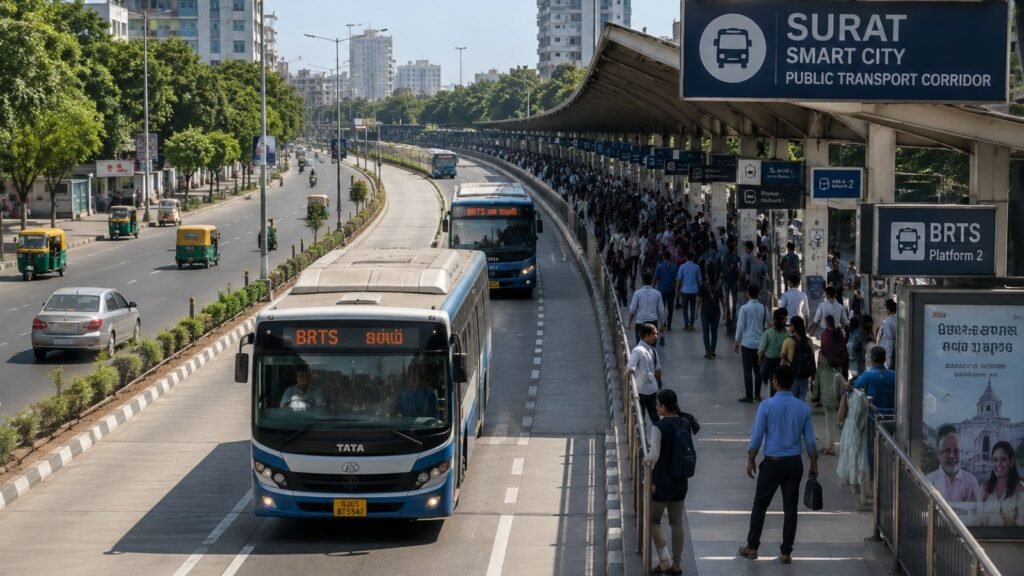
Popular high frequency services include Circular Route (Shivranjani to Ranip, Kalupur, Narol) and Line 12U (Chandkheda Gam to CTM Cross Road). Passengers enter through median platform stations and must purchase tickets or scan smart cards before entering the platform area, helping maintain operational efficiency.
Surat Sitilink BRTS Overview
Surat Sitilink BRTS system continues to support high demand travel corridors connecting Dumas Resort, Puna Jakatnaka, and Ring Road. The system features air conditioned buses, low floor vehicles, electric buses, and segregated bus corridors, which help maintain reliable travel times by avoiding traffic congestion.
Last Mile Connectivity Improvements
One of the biggest challenges in urban transportation is the distance between transit stations and final destinations. To address this issue, UMTA has approved multiple multimodal transport solutions.
| Solution | Details |
|---|---|
| E bike and bicycle sharing | Dedicated facilities at Motera Stadium, Thaltej, Althan |
| Feeder bus services | Electric AMTS feeder services in Ahmedabad, Sitilink feeder buses in Surat |
| E auto and IPT facilities | Designated pickup zones with geo fenced locations at Surat Metro stations |
Digital Ticketing and Fare System
Gujarat is moving toward a digital first transportation ecosystem.
- National Common Mobility Card (NCMC): Passengers can use a single card across Ahmedabad Metro, Surat Metro, Janmarg BRTS, and local city buses, eliminating the need for separate tickets
- Mobile App Based Ticketing: Surat Sitilink Mobile App supports route planning, live bus tracking, digital ticket purchases, and cashless travel. Digital QR based ticketing is available through GMRC applications and Janmarg transport applications in Ahmedabad
Transport Subsidies and Passenger Benefits
Several commuter focused benefits have also been introduced in Ahmedabad AMTS including 50 percent fare concession for widows, free transport for orphaned students, and discounted passes for female students. These initiatives aim to make public transportation more accessible and affordable.
Benefits for Daily Commuters
The integration of Metro, BRTS, feeder buses, and digital ticketing provides multiple advantages.
- Reduced travel time of approximately 30 to 45 minutes during cross city travel
- Improved safety through centralized command and control centers with real time monitoring and AI assisted CCTV surveillance
- Lower transportation costs compared to regular private vehicle usage
Peak Hour Travel Suggestions
Passengers can improve their travel experience by planning trips strategically. Heavy passenger movement generally occurs during 9:00 AM to 11:30 AM and 6:00 PM to 8:30 PM. Travel outside these periods may offer a smoother experience. Passengers can save time by using NCMC cards or purchasing QR tickets in advance through official transport applications.
Future Transport Development Plans
Urban transportation expansion remains a long term priority.
- Ahmedabad Metro Phase 3: Design tenders floated for approximately ₹2,825 crore project connecting Thaltej to Godhavi
- Infrastructure for global events: Preparing transportation systems for World Police Games 2029 and Commonwealth Games 2030
- Transition to green fleets: Complete phase out of diesel buses and fully electrified municipal transport fleets by 2030
Conclusion
Ahmedabad and Surat are entering a new phase of urban transportation development through integrated Metro, BRTS, feeder bus, digital ticketing, and last mile connectivity solutions. Ahmedabad Metro 77.63 km network, Surat Metro ongoing trial operations, expanding electric bus fleets, common mobility cards, and future metro expansion projects highlight the scale of transformation underway. For commuters, these developments promise faster travel, improved safety, reduced transportation costs, easier ticketing, and better access to public transit. As both cities continue expanding their transportation infrastructure, integrated mobility is becoming a central part of Gujarat urban growth strategy.
Frequently Asked Questions
Q1. What is the total network length of Ahmedabad Metro
A1. Ahmedabad Metro network currently spans approximately 77.63 kilometers connecting Ahmedabad and Gandhinagar.
Q2. What is the status of Surat Metro Phase 1
A2. Surat Metro Phase 1 covers 40.35 km with two corridors. Trial runs are active on an 8.5 km elevated section between Dream City and Althan Tenement, including speed trials and braking tests.
Q3. What is the National Common Mobility Card (NCMC)
A3. NCMC is a single card that passengers can use across Ahmedabad Metro, Surat Metro, Janmarg BRTS, and local city buses, eliminating the need for separate tickets for different services.
Q4. What last mile connectivity options are available at metro stations
A4. Options include e bike and bicycle sharing at Motera Stadium, Thaltej, and Althan; feeder bus services; and designated e auto pickup zones with geo fenced locations at Surat Metro stations.
Q5. What are the future expansion plans for Ahmedabad Metro
A5. Ahmedabad Metro Phase 3 is a proposed ₹2,825 crore project connecting Thaltej to Godhavi. Design tenders have been floated for this expansion.