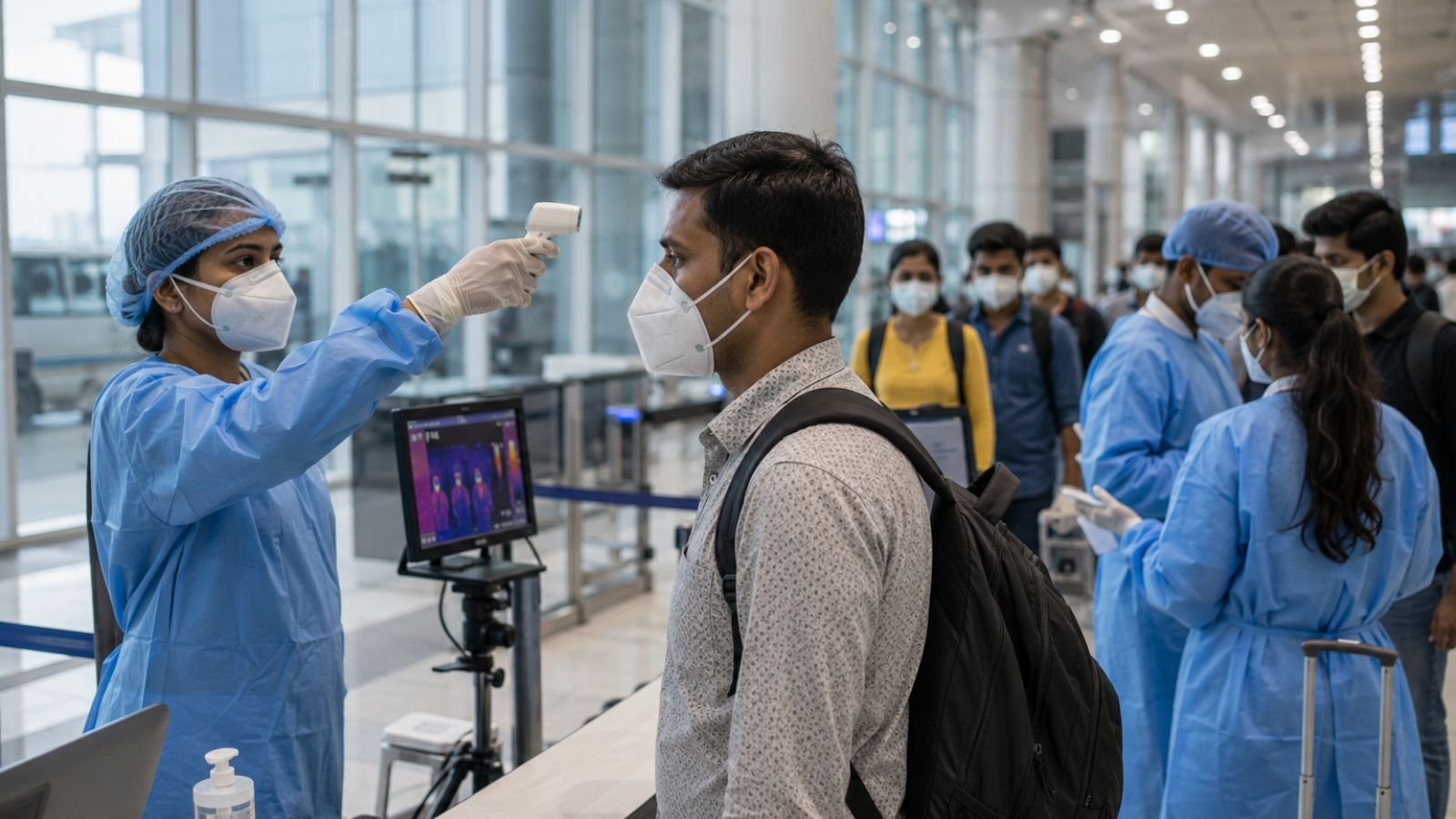
A major health scare in Gujarat came to an end after the suspected Ebola patient admitted to Ahmedabad Civil Hospital tested negative for the deadly virus. According to Gujarat Health Minister Praful Pansheriya, laboratory reports confirmed that the 36 year old foreign national from the Democratic Republic of Congo was not infected with Ebola. Instead, doctors diagnosed the patient with Falciparum malaria, a severe form of malaria known to cause high fever, chills, body pain, and serious complications if not treated promptly. The case had triggered heightened alertness among health authorities due to the patient international travel history and symptoms that initially resembled Ebola related illness. However, officials have now confirmed that there are currently zero confirmed Ebola cases in Gujarat or anywhere else in India.
Suspected Ebola Patient Tested Negative
The patient was admitted to Ahmedabad Civil Hospital after showing severe symptoms that raised concerns about possible Ebola infection.
| Laboratory Testing Result | Status |
|---|---|
| Ebola virus infection | Negative |
| Falciparum malaria | Positive |
The National Institute of Virology (NIV), Pune conducted laboratory testing on the patient blood samples and officially ruled out Ebola virus infection. The negative report significantly reduced public concern and confirmed that the suspected case was not linked to any Ebola outbreak. Health authorities emphasized that the patient condition was caused by Falciparum malaria rather than a viral hemorrhagic fever.
Actual Diagnosis: Falciparum Malaria
Doctors confirmed that the patient was suffering from a severe case of Falciparum malaria. The patient reportedly experienced high grade fever, chills, severe headache, and body aches. These symptoms initially raised suspicion because Ebola and malaria can sometimes present similar early stage clinical signs, especially among travelers arriving from high risk regions.
Current Health Status
Officials confirmed that the patient remains under medical care, his condition is stable, and treatment protocols are ongoing. Authorities also clarified that the patient is being managed under standard medical supervision and isolation procedures.
Contact Tracing and Precautionary Measures
Following the suspected Ebola alert, Gujarat health authorities immediately launched precautionary containment measures and contact tracing operations.
- Three close contacts linked to the patient including travel companions and a treating doctor were isolated and monitored at SVP Hospital
- Officials later confirmed that all close contacts were cleared of Ebola related risk after medical evaluation
- In addition to direct contacts, authorities placed 11 individuals under precautionary surveillance because of possible exposure linked to travel routes from high risk African nations
- None of the monitored individuals developed symptoms and no secondary health concerns were reported
Gujarat Government Confirms No Ebola Cases
The Gujarat government publicly reassured citizens that there are no confirmed Ebola infections in the state. Officials also clarified that India currently has no confirmed Ebola cases, the situation remains fully under control, and precautionary systems worked effectively. The clarification helped reduce public panic and misinformation surrounding the suspected case.
Why the Case Triggered Concern
The case drew national attention because the patient had reportedly arrived from the Democratic Republic of Congo, a region connected to Ebola related health monitoring. Given the global sensitivity around Ebola outbreaks, Indian health authorities treated the matter with maximum caution until laboratory confirmation arrived.
India Strengthens Ebola Screening Protocols
Following reviews of Ebola outbreaks reported in parts of Central Africa, India Directorate General of Civil Aviation (DGCA) implemented a multi layered health screening system for travelers arriving from high risk regions. The protocols focus on passengers arriving from Democratic Republic of Congo, Uganda, South Sudan, and other monitored African regions. These measures are designed to identify potential infections early and prevent community spread.
In Flight Ebola Safety Protocols
The first stage of the screening process begins before aircraft land in India.
- Cabin crew are required to inform passengers about possible Ebola symptoms including fever, vomiting, skin rashes, and unexplained bleeding
- Airlines must designate trained crew members to monitor and isolate any passenger displaying suspicious symptoms during the flight
- Flights arriving from high risk regions undergo mandatory chemical disinfection immediately after landing
Airport Arrival Screening Measures
The second stage of the system focuses on airport based screening and traveler assessment.
- Passengers arriving from affected regions must complete manual health and travel history forms before immigration clearance
- Round the clock thermal screening operations are active at arrival terminals using thermal scanners to identify passengers with fever, abnormal temperature readings, or visible signs of illness
- Airports such as Ahmedabad SVPI Airport have dedicated health screening teams focused specifically on international travelers arriving from monitored zones
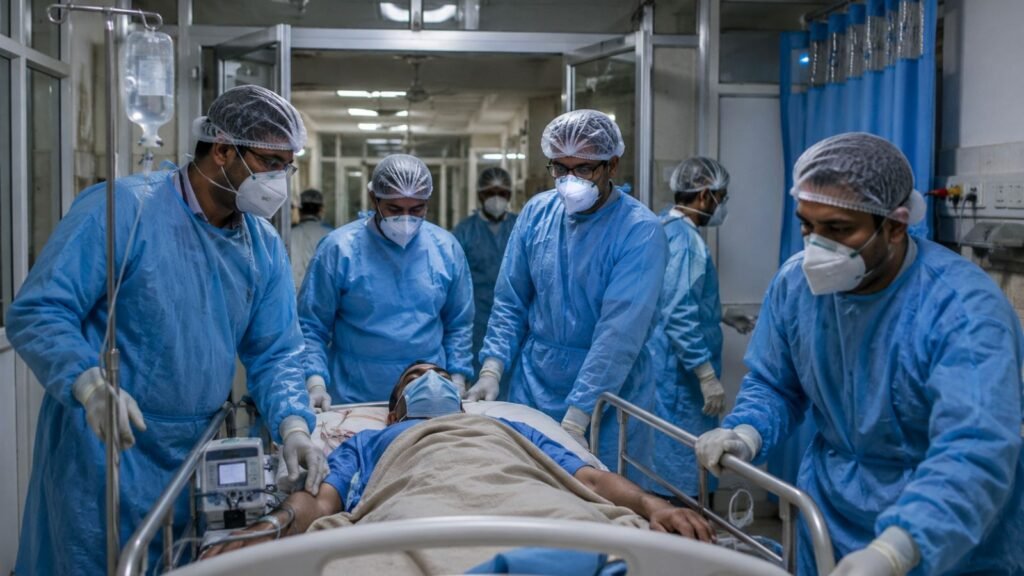
Isolation and Post Arrival Monitoring
The third stage of India Ebola prevention strategy focuses on isolation and long term observation.
- Any passenger identified with fever or suspicious symptoms is immediately diverted to airport isolation rooms, bypassing standard immigration lines
- Suspected cases are transported through dedicated medical channels to designated healthcare facilities such as Ahmedabad Civil Hospital
- Travelers arriving from high risk regions may undergo strict home isolation, daily self monitoring, and health department surveillance for 21 days, matching the known incubation window used in Ebola surveillance practices
Why India Response Was Important
Even though the patient ultimately tested negative for Ebola, the situation demonstrated how rapidly Indian authorities can respond to international infectious disease alerts. Several systems worked simultaneously including hospital isolation, airport screening, laboratory testing, contact tracing, and traveler monitoring. The case became an example of how public health agencies handle suspected international disease threats without creating widespread panic.
Difference Between Ebola and Falciparum Malaria
The case also highlighted how certain diseases may initially appear similar.
| Symptom | Ebola | Falciparum Malaria |
|---|---|---|
| Fever | Yes | Yes |
| Vomiting | Yes | Sometimes |
| Bleeding | Yes | No |
| Chills | Sometimes | Yes |
| Body aches | Yes | Yes |
| Severe weakness | Yes | Yes |
Because of these overlapping symptoms, laboratory testing becomes essential for accurate diagnosis.
Public Health Authorities Urge Calm
Officials have encouraged the public to avoid misinformation and rely only on verified government updates. Authorities emphasized that there is no Ebola outbreak in Gujarat, surveillance systems are functioning effectively, and the patient diagnosis is malaria, not Ebola. Healthcare experts also reminded travelers arriving from international destinations to report symptoms early and cooperate with screening procedures.
Ahmedabad Civil Hospital Remains Prepared
Ahmedabad Civil Hospital played a central role in managing the suspected case. The hospital isolated the patient quickly, coordinated testing procedures, followed infectious disease protocols, and maintained controlled monitoring. The rapid response helped authorities contain concerns while awaiting final laboratory confirmation.
Conclusion
The suspected Ebola scare in Ahmedabad concluded with significant relief after laboratory testing confirmed that the patient was negative for Ebola and instead suffering from Falciparum malaria. Gujarat health officials, airport authorities, and medical teams responded swiftly through isolation, screening, contact tracing, and surveillance measures. The incident also demonstrated the importance of India strengthened international health monitoring systems, especially for travelers arriving from high risk regions. While the patient continues to receive medical treatment and remains stable, officials have firmly reassured the public that there are no confirmed Ebola cases in Gujarat or anywhere in India. The case ultimately highlighted the effectiveness of coordinated public health response systems designed to manage global infectious disease threats responsibly and efficiently.
Frequently Asked Questions
Q1. Did the suspected Ebola patient in Ahmedabad test positive for Ebola?
A1. No, the patient tested negative for Ebola. The National Institute of Virology (NIV), Pune confirmed that the patient was not infected with Ebola.
Q2. What disease was the patient actually diagnosed with?
A2. The patient was diagnosed with Falciparum malaria, a severe form of malaria that causes high fever, chills, body pain, and serious complications if not treated promptly.
Q3. Where did the patient arrive from?
A3. The 36 year old foreign national had arrived from the Democratic Republic of Congo, a region connected to Ebola related health monitoring.
Q4. What screening measures does India have for travelers from high risk regions?
A4. India has multi layered screening including in flight passenger announcements, onboard surveillance, aircraft disinfection, thermal temperature screening, health declaration forms, airport isolation rooms, and 21 day monitoring protocols.
Q5. Are there any confirmed Ebola cases in Gujarat or India?
A5. No, officials have confirmed that there are currently zero confirmed Ebola cases in Gujarat or anywhere else in India.