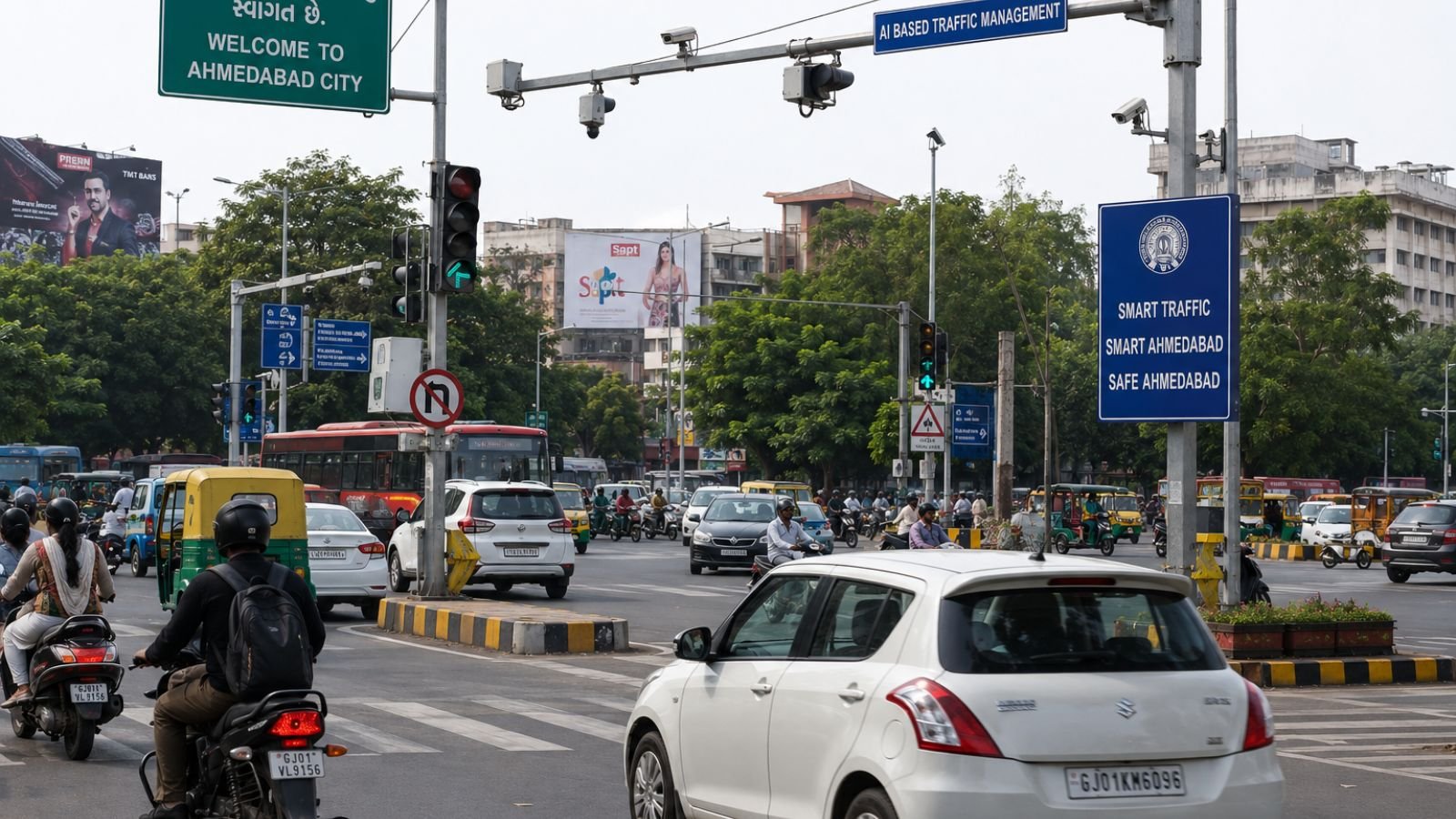
Ahmedabad is witnessing one of the most ambitious urban transportation transformations in India. The Ahmedabad Junction (Kalupur Railway Station) Redevelopment Project is a massive ₹30 billion infrastructure initiative designed to convert the city busiest railway station into India first 16 storey Vertical Multi Modal Transport Hub (MMTH). The project aims to completely redefine how passengers move between trains, metro services, city buses, auto rickshaws, and future high speed rail networks. Managed by the Rail Land Development Authority (RLDA), the redevelopment combines modern transportation engineering with architectural elements inspired by Gujarat heritage, including design influences from the Modhera Sun Temple and Adalaj Stepwell. Alongside the station redevelopment, the Ahmedabad Municipal Corporation (AMC) is implementing its 100 Junctions Program to improve traffic flow around major intersections connected to the railway hub.
Understanding the Ahmedabad Junction Redevelopment Project
Kalupur Railway Station has long served as one of Gujarat most important transportation gateways. However, increasing passenger volumes, expanding public transit systems, and growing urban traffic have placed significant pressure on existing infrastructure. The Ahmedabad Junction Redevelopment Project addresses these challenges by introducing a vertically integrated transportation model where multiple transit systems operate within a single interconnected structure. The primary goal is to eliminate fragmented passenger movement and create a centralized transportation hub capable of handling future travel demand efficiently.
Why Ahmedabad Needed a New Multi Modal Transport Hub
The area surrounding Ahmedabad Junction has historically experienced several transportation challenges that affect both daily commuters and long distance travelers.
| Challenge | Impact |
|---|---|
| Service road congestion | Illegal roadside parking, unregulated vendor activity, unauthorized vehicle movements, traffic bottlenecks |
| Outdated road geometry | Vehicle queuing, slow traffic circulation, peak hour congestion |
| Fragmented public transport systems | Passengers need to navigate busy roadways when transferring between Indian Railways, Ahmedabad Metro, AMTS buses, and BRTS corridors |
The Vertical Multi Modal Transport Hub Concept
One of the most innovative aspects of the project is its vertical transportation design. Instead of expanding horizontally, the new hub organizes transportation services across multiple levels within a single structure.
| Level Type | Facilities |
|---|---|
| Basement and Underground Levels | Ahmedabad Metro connectivity, passenger transfer corridors, underground transport infrastructure |
| Ground and Surface Levels | AMTS bus operations, BRTS connectivity, auto rickshaw zones, passenger pick up and drop off areas |
| Middle Floors | Conventional Indian Railways operations, passenger concourses, ticketing facilities, waiting areas |
| Upper Floors | Mumbai Ahmedabad Bullet Train infrastructure, commercial facilities, office spaces, multi level parking areas |
How the Project Improves Traffic Management
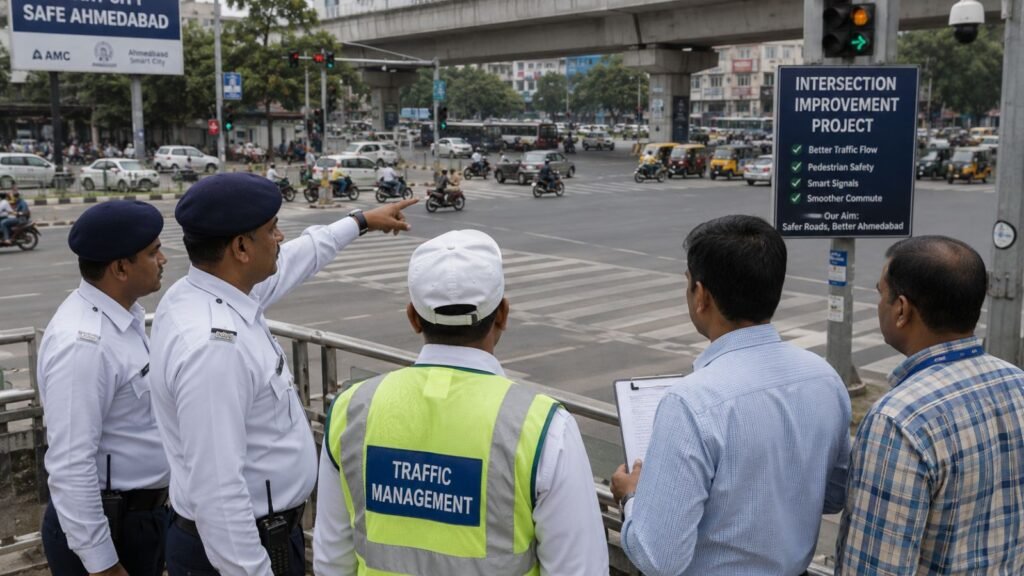
The Ahmedabad Municipal Corporation parallel road improvement initiative complements the station redevelopment by redesigning major junctions and traffic corridors.
- Channelized traffic systems: Structured lane divisions, improved vehicle guidance systems, better traffic circulation patterns to reduce unnecessary vehicle conflicts
- Egg shaped roundabouts: New generation roundabouts to improve traffic distribution and reduce congestion at critical intersections
- Dedicated free left turn lanes: Continuous traffic movement without interrupting signal cycles, significantly reducing waiting times at busy intersections
Major Road Safety Enhancements
Beyond mobility improvements, the redevelopment focuses heavily on road safety.
| Safety Feature | Benefit |
|---|---|
| Controlled access points | Reduced conflict zones, improved traffic discipline, lower accident risk |
| Pedestrian friendly infrastructure | Wide walkways, refuge islands, safer crossing zones |
| Cycling infrastructure | Protected cycling facilities separating non motorized users from high speed traffic corridors |
| AI based traffic monitoring | License plate recognition, automated traffic enforcement, detection of traffic violations, real time surveillance |
Benefits for Daily Commuters
The redevelopment project promises several practical benefits for passengers.
- Airport style passenger experience: Large concourse plazas, climate controlled environments, retail spaces, dining zones, modern waiting lounges
- Seamless transit transfers: Ability to move between metro services, city buses, conventional rail, and high speed rail through integrated pathways and vertical circulation systems
- Enhanced parking capacity: Dedicated multi level parking infrastructure with multiple floors reserved specifically for vehicle parking
Impact on Ahmedabad Public Transport Network
The project serves as a central connector for multiple transportation systems.
- Improved bus operations: Relocated bus bays and dedicated transit lanes allow faster passenger boarding, reduced traffic obstruction, and better schedule reliability
- Metro integration: Strengthened connectivity between Ahmedabad Metro corridors (Blue Line, Red Line, future airport connectivity routes) and conventional rail services
Travel Planning During Construction Phase
Since redevelopment activities are ongoing, passengers may experience temporary disruptions.
- Use metro services whenever possible to bypass congestion around Kalupur area during active construction phases
- Monitor traffic diversions as construction activities may result in temporary lane modifications and road diversions near the station
- Utilize alternate entry routes whenever available to avoid crowded construction zones
Economic Benefits of the Redevelopment
Large infrastructure projects often generate broader economic benefits beyond transportation improvements.
- Increased commercial activity through retail businesses, restaurants, service providers, and commercial investments
- Employment opportunities through construction, operations, maintenance, and commercial activities
- Higher urban efficiency allowing people and businesses to move more efficiently throughout the city
Future Mobility Vision Beyond 2026
The Ahmedabad Junction Redevelopment Project is designed not only for current transportation needs but also for future regional connectivity.
- Sarkhej to Dholera Semi High Speed Rail Integration connecting Ahmedabad to emerging economic zones
- Future Metro and Regional Rapid Transit System (RRTS) corridors may further extend the city transportation reach
- The hub is being developed with sufficient flexibility to accommodate these future transportation networks
Conclusion
The Ahmedabad Junction Redevelopment Project 2026 represents one of Gujarat most transformative transportation initiatives. By converting Kalupur Railway Station into India first 16 storey Vertical Multi Modal Transport Hub, the project aims to create seamless integration between railways, metro services, BRTS, AMTS buses, auto rickshaws, and future high speed transportation systems. Combined with Ahmedabad broader road redesign and traffic management initiatives, the project addresses long standing congestion issues while laying the foundation for a smarter, safer, and more connected transportation network. As construction progresses toward future milestones, the redevelopment is expected to become a defining example of modern urban mobility infrastructure in India.
Frequently Asked Questions
Q1. What is the Ahmedabad Junction Redevelopment Project
A1. It is a ₹30 billion infrastructure initiative to convert Kalupur Railway Station into India first 16 storey Vertical Multi Modal Transport Hub integrating railways, metro, BRTS, buses, and future high speed rail.
Q2. What is the estimated cost of the Ahmedabad Junction redevelopment project
A2. The project has an estimated investment of ₹30 billion (₹3,000 crore).
Q3. What are the key features of the Vertical Multi Modal Transport Hub
A3. The hub features basement levels for metro connectivity, ground levels for buses and autos, middle floors for railway operations, and upper floors for bullet train infrastructure and commercial spaces.
Q4. Which organizations are managing the redevelopment project
A4. The project is managed by the Rail Land Development Authority (RLDA) with the Ahmedabad Municipal Corporation implementing parallel road improvement initiatives.
Q5. What are the future transportation integrations planned for the hub
A5. Future integrations include Sarkhej to Dholera Semi High Speed Rail, Metro expansion, and Regional Rapid Transit System (RRTS) corridors, with the hub being designed for flexibility to accommodate future networks.