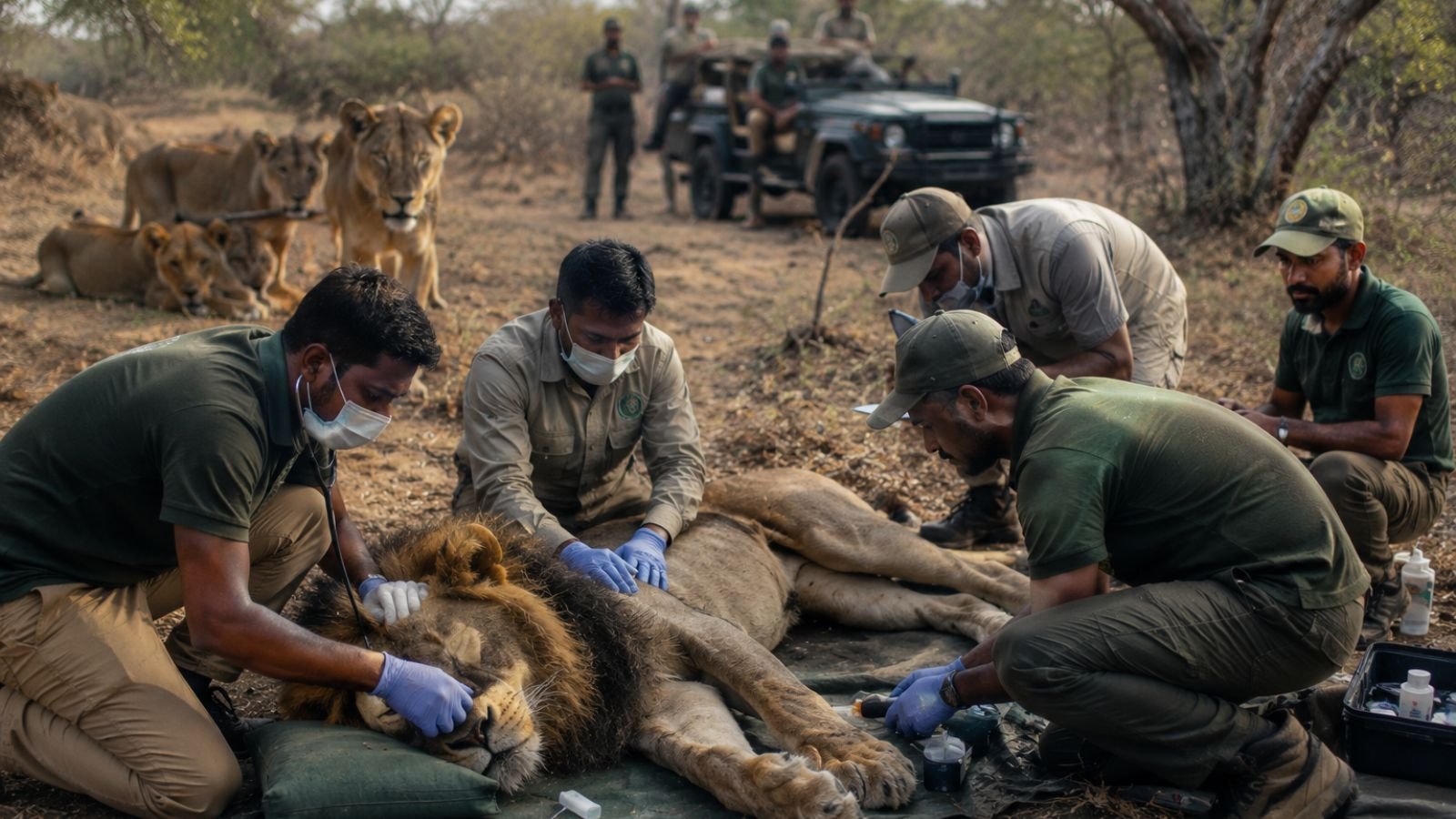
The Gir forest landscape in Gujarat has been placed on high alert after the sudden deaths of eight Asiatic lions, most of them young cubs, within a short period in late May 2026. Wildlife authorities suspect a dangerous tick borne parasitic infection as the primary cause behind the deaths, prompting emergency containment measures across one of the world most important lion habitats. The incident has raised concerns among wildlife experts and conservation authorities because Gir is the only natural home of the Asiatic lion population. In response, the Gujarat Forest Department has launched large scale medical screening, surveillance operations, quarantine protocols, and laboratory investigations to protect the remaining lion population. While officials emphasize that the situation is currently under control, the deaths have triggered one of the most intensive wildlife health monitoring operations seen in recent years.
Gir Lion Deaths Trigger Wildlife Emergency
Authorities confirmed that eight Asiatic lions, predominantly young cubs, died within a span of approximately ten days during late May 2026. The deaths were reported from areas within the broader Gir landscape, prompting immediate veterinary investigations. Given the ecological importance of the Asiatic lion population, officials treated the incident as a high priority wildlife health emergency from the outset. The rapid succession of deaths raised concerns that a potentially infectious disease could be affecting the population, leading to swift intervention by forest and veterinary authorities.
Suspected Cause: Babesiosis Infection
Initial veterinary findings indicate that the lions may have been affected by Babesiosis, a serious tick borne protozoal disease.
| Disease | Babesiosis |
|---|---|
| Type | Tick borne protozoal infection |
| Effect | Attacks red blood cells, causes severe anaemia, weakness |
| High risk group | Young and vulnerable animals |
Babesiosis is a parasitic infection caused by Babesia organisms that attack red blood cells. According to preliminary observations, the parasite destroys red blood cells, it can cause severe anaemia, weakness and physical deterioration may occur, and young and vulnerable animals are generally at higher risk. The disease is transmitted through infected ticks, making wildlife populations particularly vulnerable when environmental conditions support tick activity. Although Babesiosis is currently considered the leading suspected cause, authorities have not yet issued a final confirmation.
Laboratory Testing Underway
To ensure accurate diagnosis, tissue and biological samples have been collected from affected lions. The samples have been sent to the Gujarat Biotechnology Research Centre and other specialized facilities for detailed analysis.
The purpose of testing is to:
- Confirm the exact disease responsible
- Rule out additional infections
- Assess whether multiple pathogens are involved
- Determine the broader risk to the lion population
Wildlife authorities are awaiting final laboratory reports before officially identifying the primary cause of the deaths.
Concern Over Possible Viral Infection
Preliminary screening has produced mixed results, adding another layer of concern for wildlife officials. According to early diagnostic findings, 17 lions have been isolated for observation and 8 of these isolated lions reportedly tested positive for an infectious viral strain during preliminary examinations. This has increased vigilance among veterinary teams.
Authorities are also attempting to rule out Canine Distemper Virus (CDV). The virus is considered a serious threat to big cat populations and remains one of the diseases being examined through molecular testing. Final laboratory confirmation is still pending, and officials have stated that advanced diagnostic procedures may require approximately one week before definitive conclusions can be reached.
Emergency Containment Measures Rolled Out
Following the deaths, the Gujarat Forest Department initiated extensive containment and monitoring protocols. Forest Minister Arjun Modhwadia and senior wildlife officials have directed emergency action across affected zones.
| Measure | Details |
|---|---|
| Quarantine | Up to 22 exposed lions isolated |
| Temporary medical facilities | Established for continuous monitoring |
| CCTV surveillance | 24 hour observation of quarantined animals |
| Health screening | Over 350 lions undergoing physical assessments |
The quarantine process is designed to identify symptoms quickly and prevent possible spread among the population.
Massive Health Screening Across Gir
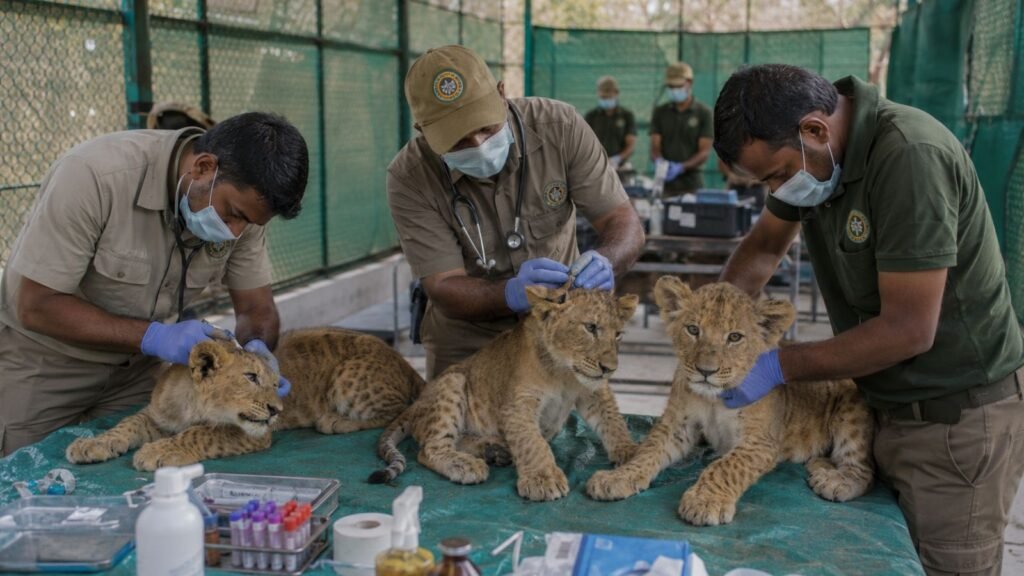
Wildlife authorities have significantly expanded monitoring efforts. Officials reported that over 350 lions are undergoing physical health assessments, veterinary inspections, tick detection procedures, and preventive de ticking treatment. The screening campaign represents one of the largest proactive wildlife health operations undertaken in the Gir ecosystem. The goal is early detection of any illness and rapid medical intervention wherever necessary.
Intensive Surveillance in High Risk Areas
Authorities have established additional monitoring networks around affected regions. Ground teams are maintaining intensive surveillance around the hardest hit zones including Gir Gadhada Taluka and Babariya region of Amreli district. Officials have implemented approximately a 10 kilometre monitoring perimeter around sensitive areas. Field teams continue tracking lion movements, health indicators, and unusual behavioral patterns.
Specialist Veterinary Teams Deployed
To strengthen response capabilities, wildlife authorities have brought in specialized veterinary experts. Veterinary teams from Junagadh Veterinary College have been deployed to assist field operations.
Their responsibilities include:
- Health assessments
- Disease monitoring
- Sample collection
- Emergency treatment
- Scientific guidance for containment efforts
The collaboration aims to ensure rapid response and evidence based decision making during the investigation.
Asiatic Lion Population Context
The outbreak concern comes at a time when Gujarat Asiatic lion population had been celebrating significant growth.
| Year | Population |
|---|---|
| 2020 | 674 lions |
| 2026 | 891 lions |
This represents approximately 32 percent growth. The current population reportedly includes 255 adult males, 405 adult females, and 231 cubs. These figures underline why authorities are responding aggressively to any disease threat affecting the species.
Why the Situation Is Being Taken So Seriously
Unlike many wildlife species spread across multiple regions, the Asiatic lion population is concentrated within a relatively limited geographical landscape. This concentration creates unique conservation challenges. If an infectious disease spreads unchecked, large numbers of lions could be exposed, cubs and vulnerable animals may face increased risks, and conservation gains achieved over years could be affected. For this reason, officials are treating the situation with maximum urgency despite the relatively limited number of confirmed deaths so far.
No Fresh Deaths Reported Recently
One encouraging development is that authorities have not reported new lion deaths during the most recent monitoring period. As of May 30, 2026, no fresh casualties had been recorded in the preceding 48 hours. This has provided cautious optimism that containment measures may be helping stabilize the situation. However, authorities continue to maintain strict surveillance until final laboratory findings become available.
Current Status of Safari Operations
The wildlife health situation has also raised questions among tourists planning visits to Gir.
According to officials, there are currently:
- No emergency viral related safari closures
- No suspension of commercial safari operations
- No declaration of a widespread epidemic within the park
Forest Minister Arjun Modhwadia clarified that the deaths do not currently indicate a large scale epidemic situation. Tourism activities therefore continue under standard operating procedures.
Important Information for Visitors
While emergency closures are not in effect, visitors should be aware of regular administrative schedules.
- Annual Monsoon Closure: Core Gir Jungle Safari routes and wildlife sanctuary areas are scheduled to remain closed from June 16, 2026 to October 15, 2026
- Devalia Safari Park (Gir Interpretation Zone): Closed every Wednesday
- Ambardi Safari Park: Closed every Tuesday
Visitors are advised to secure permits through official government channels before arrival.
What Happens Next?
The next phase of the response depends heavily on laboratory results. Authorities are currently focused on final disease confirmation, monitoring quarantined lions, continued screening operations, tick control measures, and veterinary treatment where necessary. The findings will determine whether the threat is limited to isolated cases or requires broader intervention across the Gir landscape.
Conclusion
The deaths of eight Asiatic lions in Gujarat Gir landscape have triggered a significant wildlife health alert and prompted one of the largest veterinary monitoring exercises in recent years. Preliminary findings suggest Babesiosis, a dangerous tick borne parasitic infection, may be responsible, though authorities are also investigating possible viral involvement including Canine Distemper Virus. In response, wildlife officials have quarantined exposed lions, screened more than 350 animals, deployed specialist veterinary teams, and launched extensive surveillance operations across affected regions. While no new deaths have been reported in the last 48 hours and safari operations remain open, the situation continues to be monitored closely. With Gir serving as the world only natural habitat for Asiatic lions and supporting a record population of 891 individuals, authorities remain focused on protecting one of India most important wildlife conservation success stories.
Frequently Asked Questions
Q1. How many Asiatic lions died in Gujarat in May 2026?
A1. Eight Asiatic lions, most of them young cubs, died within a span of approximately ten days during late May 2026.
Q2. What is the suspected cause of the lion deaths?
A2. Wildlife authorities suspect Babesiosis, a serious tick borne protozoal disease that attacks red blood cells and causes severe anaemia.
Q3. How many lions have been screened by wildlife authorities?
A3. Officials have screened more than 350 lions through physical health assessments, veterinary inspections, and tick detection procedures.
Q4. What is the current Asiatic lion population in Gir?
A4. The lion population increased from 674 in 2020 to 891 in 2026, representing approximately 32 percent growth, including 255 adult males, 405 adult females, and 231 cubs.
Q5. Are Gir safari operations closed due to the lion deaths?
A5. No, officials have confirmed no emergency viral related safari closures. However, routine annual monsoon closure is scheduled from June 16 to October 15, 2026.