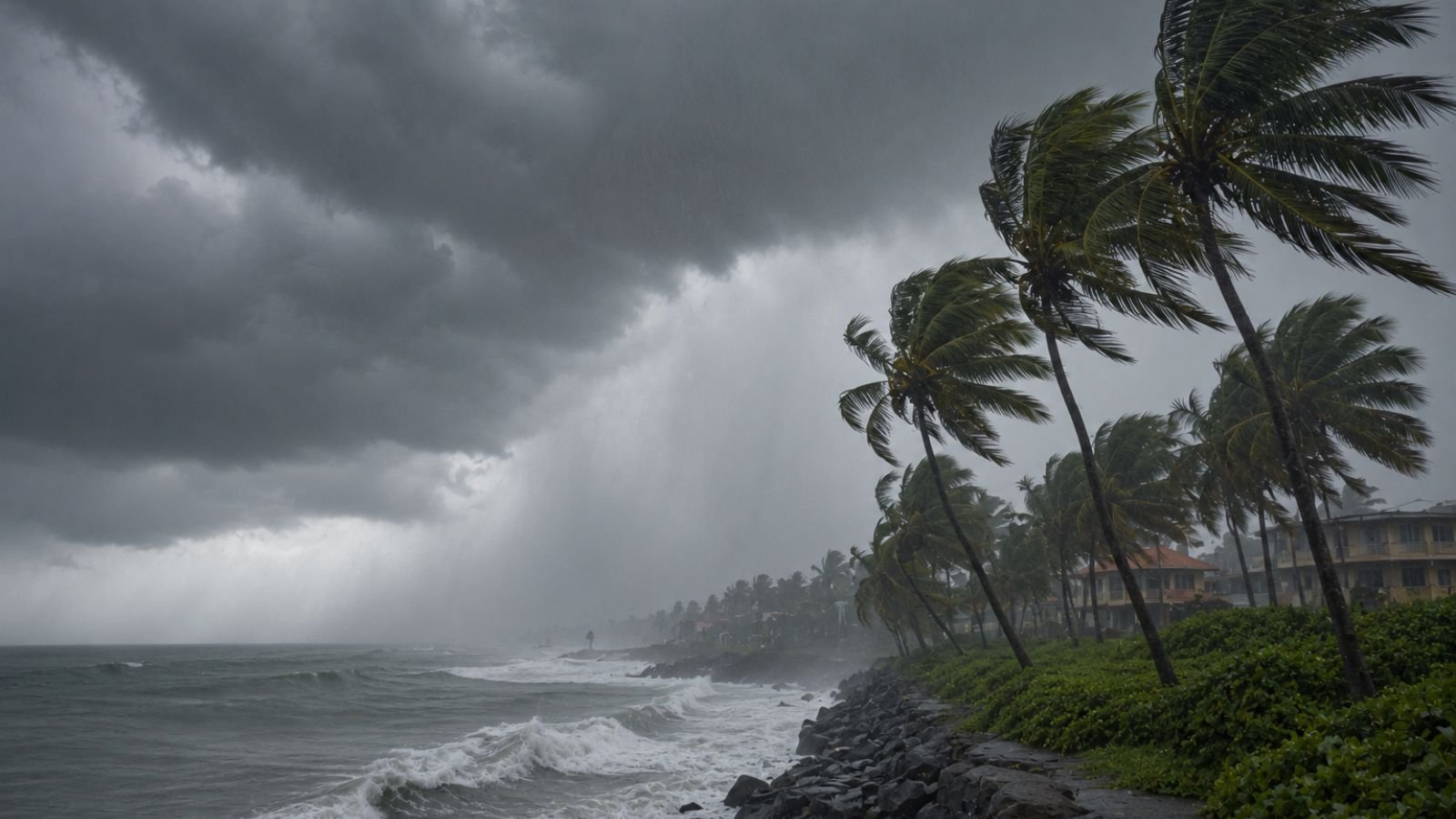
The India Meteorological Department (IMD) has officially forecast that the 2026 Southwest Monsoon will arrive in Kerala on May 26, approximately five to six days earlier than the traditional June 1 onset schedule. The operational forecast released by the IMD suggests that favorable atmospheric conditions are accelerating the early monsoon push over the Bay of Bengal, Andaman Sea, and southern coastal regions. However, despite the early arrival over Kerala, the broader 2026 monsoon season is expected to remain weaker than normal due to developing El Niño conditions. Both IMD and private weather agency Skymet have projected seasonal rainfall at around 92% of the Long Period Average (LPA), placing the season in the “below normal” rainfall category.
IMD Confirms Early Monsoon Arrival in Kerala
Southwest Monsoon expected onset over Kerala is May 26, 2026, compared to the traditional normal onset of June 1. This means the 2026 monsoon may arrive nearly 5 to 6 days earlier than usual. The IMD also clarified that the operational forecast carries a ±4-day uncertainty margin, meaning the actual onset may statistically occur between May 22 and May 30. The department stated that favorable oceanic and atmospheric conditions across the South Bay of Bengal, Andaman Sea, and Andaman & Nicobar Islands are supporting this early advance.
Monsoon Expected to Reach Andaman & Nicobar First
Before entering mainland India, monsoon conditions are projected to reach the Andaman & Nicobar Islands between May 16 and May 20, with Port Blair as a major location. The forecast indicates that this region may receive monsoon activity 2 to 4 days earlier than normal. This early development is often considered one of the key indicators of the broader Southwest Monsoon progression toward mainland India.
2026 Rainfall Forecast: India May Receive Only 92% of LPA
Although the monsoon is expected to arrive early in Kerala, the total seasonal rainfall outlook remains weaker than average. Seasonal rainfall forecast is 92% of Long Period Average (LPA), categorized as below-normal monsoon rainfall. The weaker rainfall projection is largely linked to developing El Niño conditions, which typically reduce monsoon strength across the Indian subcontinent. The forecast further suggests uneven rainfall distribution, slower northward progression, and extended dry spells during later months, especially across western and central India.
IMD Explains the Scientific Indicators Behind the Forecast
The IMD’s early onset calculation relies on six core predictive indicators:
- Minimum temperatures across Northwest India
- Pre-monsoon rainfall peaks in South India
- Wind circulation patterns over the Indian Ocean
- Pacific Ocean atmospheric behavior
- Moisture movement over the Arabian Sea
- Seasonal ocean temperature conditions
State & City Wise Monsoon Arrival Timeline 2026
Kerala Monsoon Arrival 2026
| Key Cities | Expected Arrival | Status |
|---|---|---|
| Trivandrum, Kochi, Munnar | May 22 – May 26 | 5–6 Days Early |
Kerala is expected to witness fast initial monsoon entry and strong early rainfall activity.
Karnataka Monsoon Forecast 2026
| Key Cities | Expected Arrival | Status |
|---|---|---|
| Bengaluru, Coorg | June 1 – June 8 | Normal Onset |
The Western Ghats region may experience stable June rainfall and early-season active spells.
Maharashtra Monsoon Forecast
| Key Cities | Expected Arrival | Status |
|---|---|---|
| Mumbai, Mahabaleshwar | June 10 – June 15 | Normal Onset |
Maharashtra may benefit from early June rainfall activity, but reservoir management will remain critical later in the season.
Central India Monsoon Surge
| Key Cities | Expected Arrival | Status |
|---|---|---|
| Indore, Raipur, Hyderabad | June 13 – June 20 | Stable June Onset |
Initial monsoon activity may remain stable during June, but later-season rainfall deficits could emerge if El Niño strengthens.
Gujarat Monsoon Forecast 2026
| Key Cities | Expected Arrival | Status |
|---|---|---|
| Surat, Ahmedabad | June 23 – June 28 | Delayed by 1–2 Weeks |
Severe early-season westerlies may delay rainfall activity over Gujarat. Dry conditions are expected to persist through mid-June. South Gujarat may receive first active showers around June 23, making Gujarat one of the regions expected to face delayed sowing windows and higher agricultural stress risk during the 2026 monsoon cycle.
North & Northwest India Monsoon Forecast
| Key Cities | Expected Arrival | Status |
|---|---|---|
| Delhi, Jaipur | Late June – July 1 | Normal Onset |
Northern India is expected to receive monsoon rainfall toward the end of June into the first week of July.
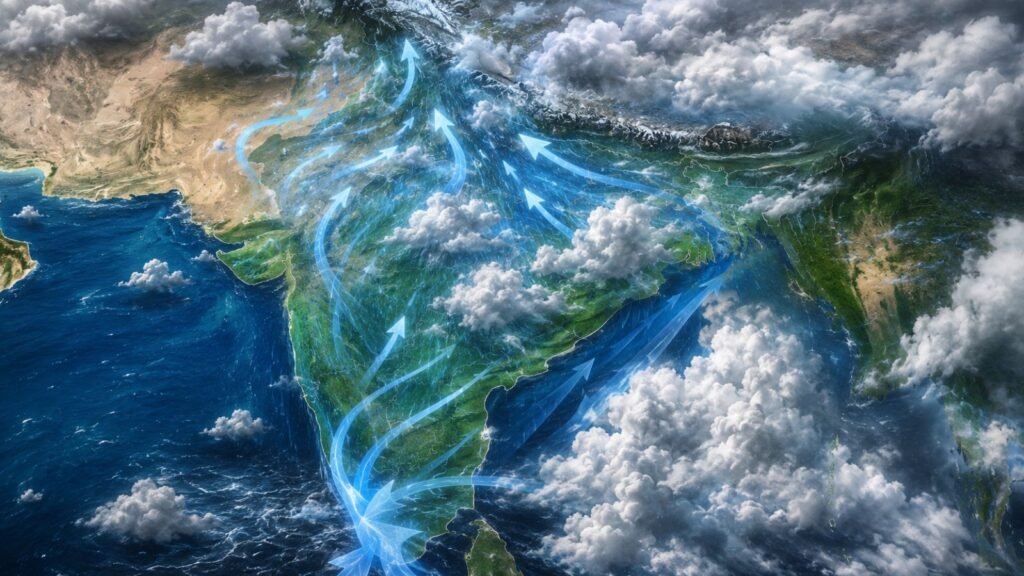
Why the 2026 Monsoon May Become Uneven
Initial monsoon progression may remain swift. However, El Niño conditions could weaken rainfall systems later, leading to uneven rainfall distribution, dry August–September conditions, slower movement toward western India, and delayed rainfall over Gujarat and surrounding regions. The forecast especially warns of weakening rainfall activity after July as El Niño intensifies.
Agricultural Impact Analysis of the 92% LPA Forecast
Since the monsoon contributes over 75% of India’s annual precipitation, a below-normal season can significantly affect Kharif crop cycles, soil moisture, reservoir storage, and irrigation planning.
June–July Rainfall Outlook
June may begin with relatively stable rainfall patterns. Rainfall during early monsoon weeks may remain near-normal, expected to support soil moisture recovery, initial germination, and early crop sowing activity, particularly across Indo-Gangetic plains and Western Ghats regions.
August–September Rainfall Deficit Concerns
El Niño conditions may intensify after July. As a result, September rainfall may fall to around 89% of LPA. This late-season rainfall deficit is especially important because many Kharif crops enter flowering and maturation stages during this period. Reduced rainfall during these stages can lower crop productivity, increase irrigation dependence, and raise agricultural stress.
Impact on Major Kharif Crops
Paddy (Rice)
West Bengal and Indo-Gangetic regions may remain relatively stable early in the season. However, Central India could face late-season dry spells, which may reduce yield levels if supplementary irrigation is unavailable.
Oilseeds & Pulses
Affected crops include soybean, groundnut, and tur (pigeon pea). Regions facing elevated risk include Gujarat, Madhya Pradesh, and Central India. Delayed sowing in Gujarat, possible shorter crop-growth windows, and early monsoon withdrawal risks may create high agricultural stress conditions.
Sugarcane & Cotton
Maharashtra and Karnataka may initially benefit from strong June rainfall. However, crop sustainability during August may depend heavily on reservoir storage and water management systems due to the possibility of weaker late-season rainfall.
Why the Monsoon is Critical for India
The Southwest Monsoon remains the foundation of India’s agriculture economy, rural employment, reservoir systems, drinking water supply, and food production. The seasonal rainfall cycle directly affects Kharif crop sowing, power generation, irrigation systems, inflation trends, and food supply chains. Even a small rainfall deficit can create water shortages, crop stress, and economic pressure in rain-fed regions, particularly when rainfall becomes unevenly distributed.
Key Highlights of IMD Monsoon Forecast 2026
- Kerala monsoon arrival expected: May 26, 2026 (5–6 days earlier than normal)
- Seasonal rainfall forecast: 92% of LPA
- El Niño conditions likely to weaken rainfall later
- Gujarat monsoon may face 1–2 week delay
- Stable rainfall expected during June–July
- Higher dry-spell risk during August–September
Conclusion
The IMD’s 2026 Southwest Monsoon forecast presents a mixed outlook for India. While Kerala is expected to witness an early monsoon onset around May 26, the broader season may remain weaker than normal because of developing El Niño conditions. The forecast suggests that June could begin with relatively healthy rainfall activity across southern and central India, helping early agricultural operations. However, rainfall distribution may become increasingly uneven later in the season, particularly across Gujarat and western India where delayed onset and weaker August–September rainfall may affect crop productivity. The evolving monsoon situation will remain critically important for farmers, water authorities, state governments, agricultural markets, and disaster management agencies as India enters one of its most important weather seasons of 2026.
Frequently Asked Questions
Q1. When is the 2026 Southwest Monsoon expected to arrive in Kerala?
A1. The IMD has forecast that the Southwest Monsoon will arrive in Kerala on May 26, 2026, about 5 to 6 days earlier than the normal June 1 onset.
Q2. What is the expected seasonal rainfall for India in 2026?
A2. India is expected to receive 92% of the Long Period Average (LPA), which falls in the “below normal” rainfall category.
Q3. Why is Gujarat expected to face delayed monsoon?
A3. Severe early-season westerlies may delay rainfall activity over Gujarat, with dry conditions persisting through mid-June and first active showers expected around June 23.
Q4. What is the expected monsoon arrival in Mumbai?
A4. Mumbai is expected to receive monsoon rainfall between June 10 and June 15, with normal onset.
Q5. How might El Niño affect the 2026 monsoon?
A5. El Niño conditions are expected to weaken rainfall systems later in the season, potentially leading to uneven distribution, dry August–September conditions, and delayed rainfall over western India.