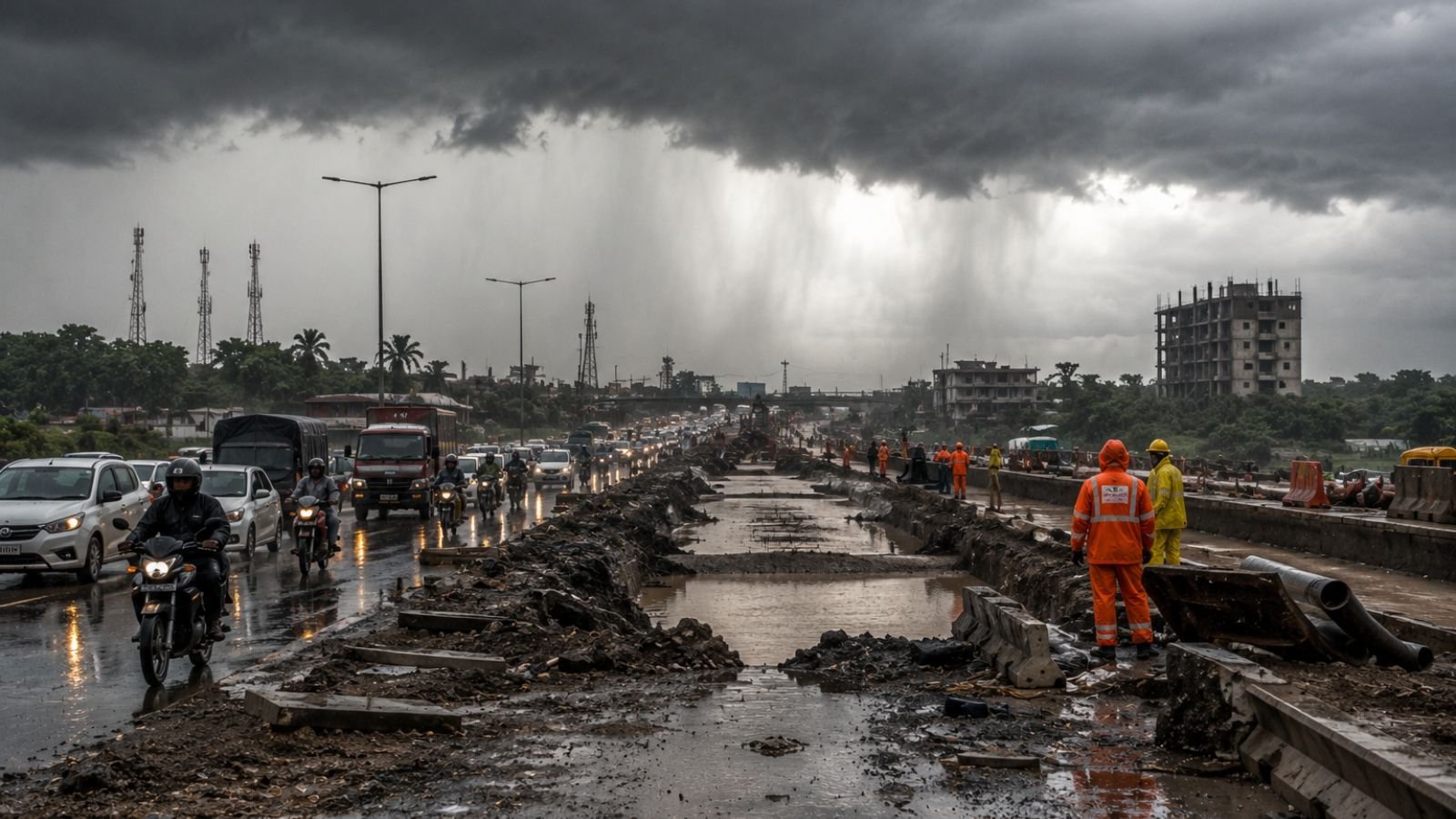
The 776 crore rupee concreting project on the crucial 55 km Manor Wada Bhiwandi highway corridor in Maharashtra has come under intense public scrutiny after severe delays left large stretches of the road incomplete ahead of the 2026 monsoon season. The highway project, covering State Highways 34 and 35, was originally expected to significantly improve connectivity between Manor, Wada, and Bhiwandi. However, local residents, daily commuters, transport operators, and social activists are now raising serious concerns over dangerous road conditions, unfinished excavation zones, waterlogging risks, and the possibility of fatal accidents once heavy rains begin. Reports from May 2026 indicate that despite a 24 month completion target, the contractor has completed only around half of the total roadwork.
Massive Delay Hits Major Maharashtra Highway Project
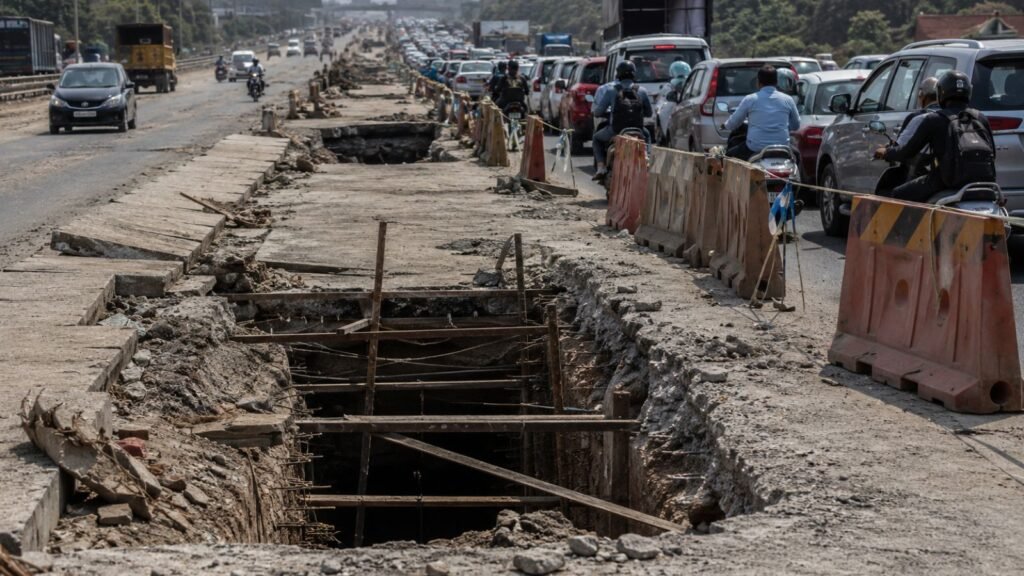
The Manor Wada Bhiwandi highway is considered one of the important regional transport corridors connecting industrial, rural, and commercial zones across parts of Palghar and Thane districts. The ongoing concretization project was expected to improve road durability, reduce pothole formation, enhance transport movement, support freight and logistics operations, and improve monsoon driving conditions. However, the incomplete construction has instead created deep roadside trenches, broken concrete sections, uneven carriageways, dust pollution, sudden barricades, and loose gravel hazards. Commuters now claim the road has become more dangerous during construction than before the project began.
Current Status of the Highway Work
According to the latest project updates, authorities had earlier hoped to complete at least one functional lane before heavy rains arrived. However, several major stretches continue to remain incomplete.
Key Problematic Sections
The following sections are reportedly still heavily damaged or unfinished:
- Ten Naka (Manor) to Wada stretch
- Wada to Dakivali Phata section
- Ambadi to Bhiwandi corridor
Residents traveling through these areas are experiencing broken road surfaces, excavated roadside zones, abrupt traffic diversions, and congested movement during peak hours.
Only Around 50 Percent Work Completed
Despite the project running for over 18 months, reports indicate that only approximately 50 percent of the comprehensive roadwork has been completed so far. The slow progress has become a major public issue because the remaining unfinished portions directly impact thousands of daily commuters. Travelers have reported severe dust accumulation, loose stone piles, poor lane management, traffic confusion at barricaded points, and heavy commercial vehicles moving through incomplete stretches further worsening road conditions.
Administrative and Legal Bottlenecks
Officials have also pointed to multiple administrative hurdles affecting the pace of construction.
| Challenge Type | Details |
|---|---|
| Encroachments | Near highway boundaries |
| Clearance Delays | Various permissions pending |
| Land Complications | Side related issues |
| Forest Clearance | 3.5 km forest linked stretch pending |
These administrative bottlenecks have slowed overall execution and increased pressure on authorities ahead of the monsoon season.
Rising Monsoon Safety Concerns
Local activist groups, including the Bhoomiputra Elgar Sangathan, have warned that the incomplete highway may turn into a major safety disaster during heavy rainfall. Activists claim the current road condition poses severe risks because unfinished construction zones could become hidden under rainwater.
Waterlogged Death Traps Feared
One of the biggest concerns involves deep roadside trenches and unfinished concrete elevation areas. During heavy rainfall, excavated sections may fill with water, craters may become invisible to drivers, two wheelers may skid into pits, and night time driving risks could rise sharply. Residents fear these unfinished portions may effectively become waterlogged death traps once monsoon rains intensify.
Criticism Over Temporary Repairs
The Public Works Department (PWD) has also faced criticism over temporary road repair methods currently being used across some stretches. According to complaints, loose gravel, soil dumping, and temporary patchwork have been used instead of proper asphalt layering. Activists argue that heavy rainfall may wash away these temporary fillings quickly, leaving dangerous slippery zones behind. This may particularly impact motorcyclists, school transport vehicles, rural bus operators, and emergency vehicles.
Fear of Massive Traffic Gridlocks
Residents have also highlighted the history of severe traffic jams during previous monsoon seasons. Continuous rainfall in earlier years reportedly caused kilometre long traffic congestion, vehicle breakdowns, delayed emergency responses, and fatal road accidents. With partial lane blockages still active across the highway, commuters fear monsoon traffic movement may become even worse this year.
Public Anger and Protests Intensify
Frustrated by repeated delays, local residents and students have already staged protest demonstrations demanding immediate intervention.
Protest actions included:
- Rasta roko road block movements
- Public demonstrations at junctions
- Memorandums submitted to authorities
- Complaints against contractor negligence
Social activists have demanded strict action against the contractor and faster implementation of safe travel arrangements before heavy monsoon spells begin.
Demand for Alternate Bypass Routes
Local groups are also requesting temporary bypass arrangements to reduce pressure on incomplete highway sections. Residents argue that safer diversions are urgently needed, traffic management plans must improve, and emergency movement corridors should remain open before continuous rainfall disrupts road connectivity.
Emergency Control Rooms Activated
In response to growing concerns, regional authorities including Public Works Department (PWD) and Mumbai Metropolitan Region Development Authority (MMRDA) have activated 24×7 disaster control rooms for the 2026 monsoon season. These emergency systems are expected to monitor waterlogging, construction accidents, traffic congestion, highway emergencies, and structural road failures.
Emergency Helpline Numbers for Commuters
| Authority | Helpline Number | Purpose |
|---|---|---|
| MMRDA Emergency Control Room | 1800-22-8801, 8657402090 | Hazardous construction reporting, vehicle entrapment, severe traffic blockages, flooded road complaints |
| Thane Collectorate Disaster Cell | 9372338827 | Flooding, landslides, traffic emergencies near Bhiwandi and Ambadi sections |
| Palghar Collectorate Control Room | 02525-297474 | Safety concerns near Manor and Wada stretches, construction related road hazards |
| National Highway Emergency Helpline | 1033 | Ambulance services, crane support, medical emergencies, vehicle towing |
PWD Engineering Contact Desks
Authorities have also listed engineering level complaint contacts for reporting severe road hazards including unbarricaded trenches, washed out gravel sections, dangerous potholes, missing safety railings, and surface depressions.
Key PWD contacts include:
- Thane PWD Division No. 1
- Thane PWD Division No. 2
- Thane Rural Executive Engineer
- Bhiwandi PWD Local Desk
These offices are expected to coordinate emergency repair actions during monsoon emergencies.
Monsoon Safety Measures Ordered
The Thane District Administration and PWD have reportedly issued multiple on site safety directives to the contractor.
| Safety Measure | Details |
|---|---|
| Dewatering Pumps | Heavy duty pumps expected in Wada lowlands and Ten Naka waterlogging zones |
| Structural Audits | Culvert inspections, highway edge inspections, side railing evaluations |
| Punitive Clauses | Strict financial penalties for contractor negligence, unrepaired potholes, poor barricading |
Why This Highway Is Important
The Manor Wada Bhiwandi highway serves as a critical transport route connecting industrial clusters, rural communities, freight movement corridors, and commercial transport zones. Any prolonged disruption during monsoon season could severely affect daily commuters, goods transportation, emergency response movement, and regional logistics activity.
Commuters Advised to Stay Alert
Travelers using the highway during upcoming monsoon weeks are advised to drive cautiously at night, avoid overspeeding in incomplete stretches, monitor traffic advisories regularly, use emergency helplines if required, and avoid flooded sections whenever possible. Two wheeler riders are especially vulnerable in gravel heavy and waterlogged construction zones.
Conclusion
The delayed 776 crore rupee Manor Wada Bhiwandi highway concretization project has now become a major public safety concern just before the 2026 monsoon season. With only partial completion achieved after 18 months of work, commuters continue facing dangerous road conditions across several sections of the corridor. The combination of incomplete trenches, loose gravel, waterlogging risks, and heavy rainfall could create serious travel hazards if emergency repair measures are not accelerated immediately. Authorities have activated disaster control systems and emergency helplines, but residents continue demanding faster execution, stronger accountability, and safer bypass alternatives before monsoon conditions worsen.
Frequently Asked Questions
Q1. What is the cost of the Manor Wada Bhiwandi highway concreting project?
A1. The highway concreting project costs 776 crore rupees covering State Highways 34 and 35.
Q2. How much work has been completed on the highway so far?
A2. Reports indicate that only approximately 50 percent of the total roadwork has been completed despite a 24 month completion target.
Q3. What are the key problematic sections of the highway?
A3. The key problematic sections include Ten Naka (Manor) to Wada stretch, Wada to Dakivali Phata section, and Ambadi to Bhiwandi corridor.
Q4. What emergency helpline numbers are available for commuters?
A4. Commuters can contact MMRDA Emergency Control Room at 1800-22-8801, Thane Collectorate at 9372338827, Palghar Collectorate at 02525-297474, or National Highway Emergency Helpline at 1033.
Q5. What are the main monsoon safety concerns on this highway?
A5. Main concerns include deep roadside trenches filling with water becoming invisible death traps, loose gravel, waterlogging risks, and potential fatal accidents once heavy rains begin.