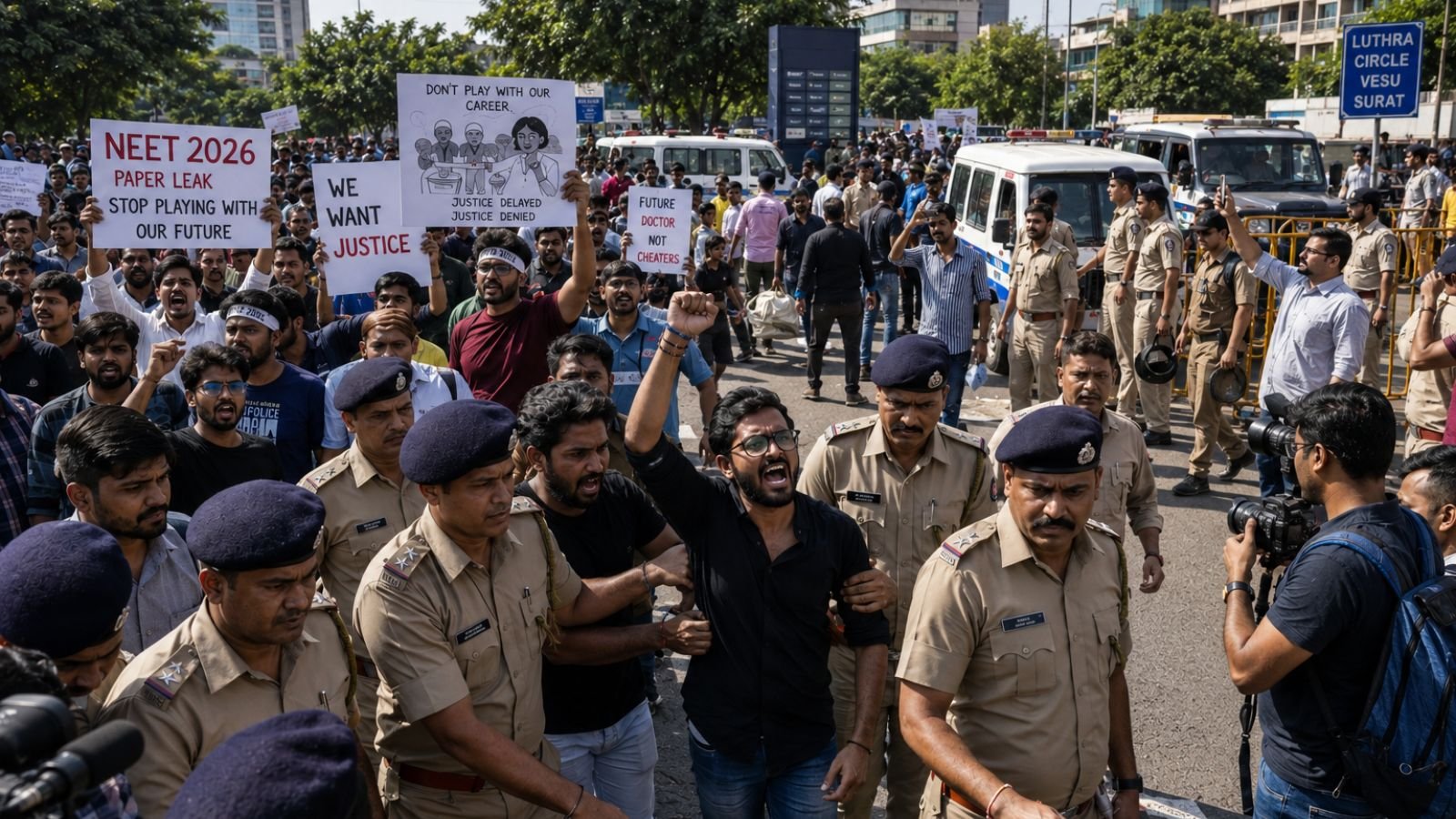
Surat witnessed significant protest activity on July 22, 2026, as supporters of the Cockroach Janta Party (CJP) took to the streets in multiple locations across the city. The demonstrations were organized as part of a coordinated campaign supporting the party’s nationwide “Sansad Chalo” march in New Delhi. The protests were aimed at demanding accountability over recent developments in the education sector, particularly national examination paper leaks, while also expressing solidarity with fasting activist Sonam Wangchuk. The events in Surat reflected the broader national campaign that focused on education-related concerns and support for Sonam Wangchuk’s ongoing movement. Surat Police detained dozens of protesters after gatherings took place at important locations including Luthra Circle, Vesu, and the Surat District Collectorate.
Why the Protests Were Organized
The protest campaign in Surat centered around issues that the demonstrators described as matters of public importance. According to the information available, participants demanded greater accountability for recent education sector irregularities, including national examination paper leaks. At the same time, they extended their support to Sonam Wangchuk, who is continuing a hunger strike. The demonstrations were linked to the CJP’s national “Sansad Chalo” campaign in New Delhi, with local supporters organizing gatherings and marches within Surat. The movement sought to raise awareness about examination-related concerns while highlighting other demands presented by the protesters.
Key Demands of the Protesters
The protest movement in Surat was built around several key demands presented by the demonstrators.
- Testing Accountability: Protesters called for immediate government action regarding the NEET examination paper leaks and systemic flaws within the National Testing Agency
- Support for Sonam Wangchuk: Participants expressed solidarity with the Ladakhi activist and extended support for his ongoing hunger strike
- Release of Detained Students: Protesters raised concerns regarding those who had been detained during demonstrations and demanded the release of student detainees in Surat and New Delhi
- Resignation Demand: Demonstrators demanded the immediate resignation of Union Education Minister Dharmendra Pradhan, linking it to structural failures in national testing
Major Protest Locations in Surat
| Location | Activities | Police Response |
|---|---|---|
| Luthra Circle and Vesu | 400-500 protesters gathered, planned march to Kargil Circle | Police intervened, at least 52 detained |
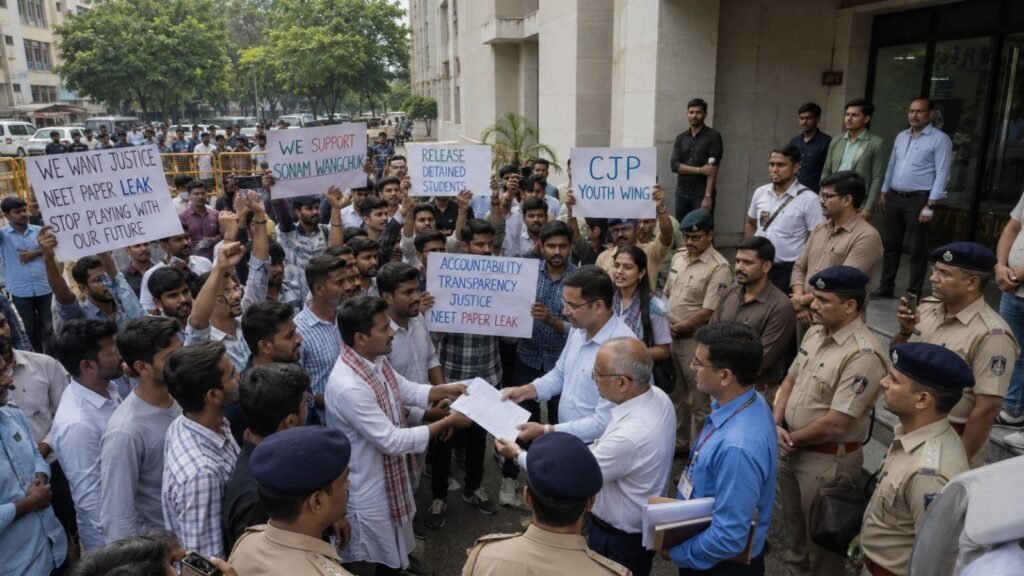
| Surat District Collectorate | Students and CJP youth wing gathered to submit memorandum | Police monitored situation, protesters raised slogans |
Protest at Luthra Circle and Vesu
One of the major protest locations was the Luthra Circle and Vesu area. Around 400 to 500 protesters initially gathered near Luthra Circle on VIP Road with plans to march toward Kargil Circle. The gathering attracted significant attention because of the large number of participants assembled in the area. According to the available information, Surat Police intervened after determining that the rally did not have official permission. Authorities stepped in to prevent the planned march from proceeding. The intervention resulted in the detention of at least 52 people as part of efforts to maintain law and order in the city.
Police action at the Vesu area became one of the most significant developments during the day’s demonstrations. Officials acted to prevent unauthorized movement toward Kargil Circle while ensuring that traffic and public order remained under control. The detentions reflected the administration’s response to the gathering and the lack of official approval for the march.
Protest at Surat District Collectorate
Another important location connected with the demonstrations was the Surat District Collectorate. Students and members of the CJP youth wing gathered at the Collector’s office with the intention of submitting a formal memorandum. Their presence at the Collectorate formed an important part of the protest activities taking place across the city. During the gathering at the Collectorate, protesters raised slogans and presented their concerns regarding the education sector. One of their major demands was the immediate resignation of Union Education Minister Dharmendra Pradhan. The demand was linked to what the demonstrators described as structural failures in national testing. The Collectorate protest focused on placing the demonstrators’ concerns before the administration through the submission of a memorandum.
Police Response and Security Arrangements
Throughout the demonstrations, Surat Police remained actively engaged in monitoring the situation. Law enforcement authorities maintained security at major gathering points and responded to developments as they unfolded. Police intervention at Luthra Circle and other locations aimed to prevent unauthorized rallies and maintain public order. The detentions carried out during the protests were part of the police response to gatherings that officials stated lacked official permission.
High ranking police officials maintained close surveillance over prominent circles in Surat to prevent additional unauthorized gatherings or traffic blockades. Security arrangements remained in place as authorities observed developments connected with the demonstrations. According to the available information, the overall situation in Surat remained tense but under control. Police vigilance continued throughout the city as officials worked to prevent further disruptions. Monitoring at important junctions reflected the administration’s effort to maintain normal public movement while responding to protest activities.
Connection to National Sansad Chalo Campaign
The demonstrations represented Surat’s participation in the broader national campaign linked to the CJP’s “Sansad Chalo” march in New Delhi. Local gatherings, police intervention, detentions and the presentation of protest demands together formed the key developments of the day. The protests highlighted concerns related to education sector accountability, the NEET examination paper leak issue, support for Sonam Wangchuk and the release of detained students. Demonstrations at Luthra Circle, the Vesu area and the Surat District Collectorate became the primary focus of events as police monitored the situation closely.
Conclusion
The Surat protests on July 22, 2026, marked a significant moment of student and youth activism in the city, as CJP supporters took to the streets to demand accountability in the education sector and express solidarity with Sonam Wangchuk. The detention of 52 protesters by Surat Police highlighted the tension between the demonstrators’ right to protest and the administration’s responsibility to maintain public order. As the nationwide “Sansad Chalo” campaign continues, the demands raised by the protesters including action on NEET paper leaks, the release of detained students, and the resignation of the Education Minister are likely to remain at the forefront of public discourse.
Frequently Asked Questions
Q1. Why were protests held in Surat on July 22, 2026?
A1. Protests were held to demand accountability over NEET examination paper leaks, support Sonam Wangchuk’s hunger strike, and participate in the nationwide “Sansad Chalo” campaign.
Q2. How many people were detained by Surat Police during the protests?
A2. At least 52 people were detained by Surat Police after they intervened in unauthorized rallies at Luthra Circle and Vesu areas.
Q3. What were the key demands of the protesters?
A3. Key demands included government action on NEET paper leaks, support for Sonam Wangchuk, release of detained students, and the resignation of Union Education Minister Dharmendra Pradhan.
Q4. Where were the major protest locations in Surat?
A4. Major protest locations included Luthra Circle and Vesu area on VIP Road, and the Surat District Collectorate where students submitted a memorandum.
Q5. What was the police response to the protests?
A5. Surat Police monitored the situation closely, intervened to prevent unauthorized rallies, detained 52 protesters, and maintained high surveillance at important locations to prevent further disruptions.