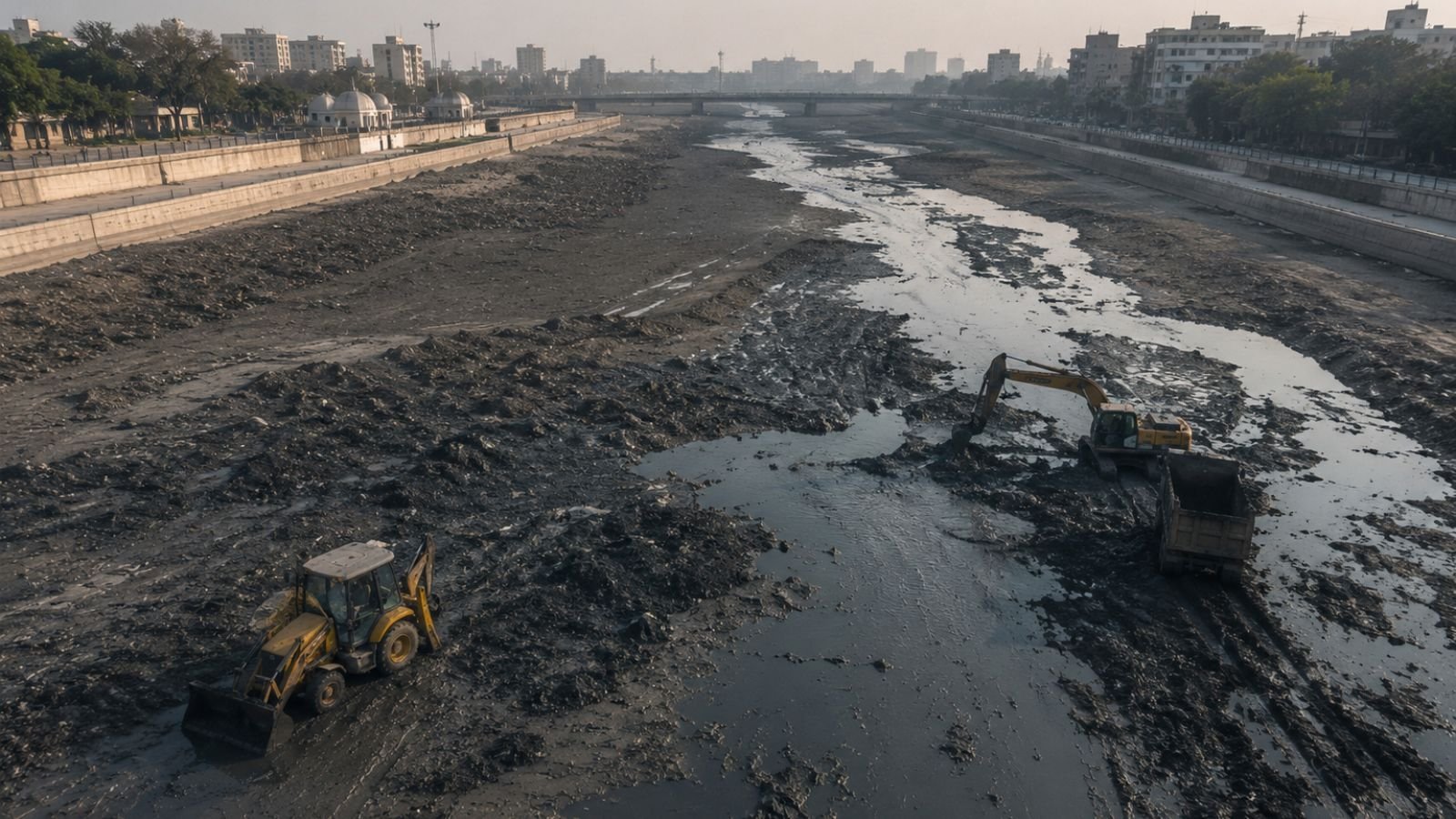
The Sabarmati River in Ahmedabad is currently facing a major environmental and civic crisis as the Amdavad Municipal Corporation (AMC) and the Sabarmati Riverfront Development Corporation Ltd (SRFDCL) struggle to complete their scheduled 2026 pre monsoon cleanup operations. According to the provided information, the river was intentionally emptied to facilitate critical infrastructure repair work and deep cleaning activities. However, logistical complications, stagnant wastewater, sewage inflow, and massive debris accumulation have significantly delayed the waste removal process. The ongoing situation has now started affecting nearby residents, public health conditions, tourism activity, and the overall environmental condition of the Sabarmati Riverfront.
Why the Sabarmati River Was Emptied in 2026
According to the provided information, the river was scheduled to remain dry for approximately 60 days starting from mid April 2026. The shutdown was necessary to support a 9 crore rupee gate replacement project at Vasna Barrage. Authorities expected the temporary drainage of the river to create ideal conditions for mechanized sludge removal, riverbed excavation, debris extraction, and pre monsoon sanitation work. However, the riverbed failed to dry completely, creating serious operational hurdles.
Primary Causes Behind the Cleanup Delays
Several interconnected problems have reportedly slowed the cleanup process across the exposed riverbed areas.
- Persistent Stagnant Water: Stagnant water trapped in low lying riverbed pockets. Although the river flow was halted, several sections failed to drain fully. As a result, heavy machinery cannot enter many portions, sludge excavation has stalled, and waste removal operations remain incomplete
- Continuous Sewage Inflow: Municipal sewage and untreated urban discharge continue entering the exposed riverbed. Even after upstream water flow was stopped, wastewater discharge reportedly continued, sludge accumulation increased, and riverbed drying became nearly impossible
- Infrastructure Debris Accumulation: Large quantities of industrial and construction debris remain buried within the river system. Several major infrastructure projects contributed to the problem including Ahmedabad Metro rail work, Mumbai Ahmedabad bullet train corridor construction, and the Atal Bridge development zone. Construction activity left behind demolition waste, industrial residue, concrete material, and buried debris layers
Environmental Conditions Worsening Near the Riverfront
The delay in waste removal has reportedly started creating visible environmental deterioration across nearby areas.
- Severe Foul Odours Across Residential Areas: Stagnant sewage pockets combined with extreme summer heat have created unbearable foul smells near surrounding residential zones. The combination of exposed sludge, untreated wastewater, and intense summer temperatures has worsened air quality near the riverfront
- Sabarmati Riverfront Tourism Impact: The Sabarmati Riverfront is one of Ahmedabad most visited urban public spaces. However, tourism conditions have deteriorated significantly. Visitors have expressed disappointment over exposed muddy riverbeds, visible garbage accumulation, and damaged visual appeal
- Public Safety Concerns Emerging: The exposed riverbed has also triggered sudden crowd management issues. Local crowds have started scavenging through river mud searching for scrap metal, discarded valuables, and reusable materials. This activity has created safety concerns, unmanaged gatherings, and operational pressure for authorities
Sabarmati River Pollution Concerns
The broader environmental situation surrounding the Sabarmati River remains a major concern. According to the provided information, the Sabarmati River continues to be classified among India most heavily polluted rivers. The report references high biochemical oxygen demand (BOD) levels, untreated wastewater discharge, and severe urban pollution stress. The ongoing cleanup delays have once again highlighted structural weaknesses in Ahmedabad water and sewage management systems.
Missed Bioremediation Deadline
The provided information states that AMC had planned a major bioremediation project to treat 786.49 million litres per day (MLD) of sewage before it entered the river system. However, the project reportedly missed its March 2025 implementation deadline. This delay allowed untreated effluent discharge, sewage buildup, and pollution accumulation to continue worsening into 2026.
When Will Cleanup Resume?
According to the provided information, AMC officials plan to begin mechanized cleaning operations once remaining stagnant water pockets dry naturally or are artificially redirected. Authorities are expected to focus on sludge excavation, debris extraction, and large scale waste transportation before the monsoon season begins.
Historical Sabarmati River Cleanup Drives
The current crisis is not the first major cleanup operation conducted on the Sabarmati River. According to the provided information, AMC and SRFDCL periodically conduct massive river cleaning campaigns to remove accumulated waste and sludge.
Swachh Sabarmati Maha Abhiyan 2025
One of the largest cleanup drives reportedly took place during May to June 2025. The operation lasted 20 days after temporary suspension of river flow. According to the provided information, more than 1,00,000 volunteers, municipal workers, and civil defense personnel participated. The drive removed 945 metric tonnes of waste from a 6 kilometre stretch of riverbed.
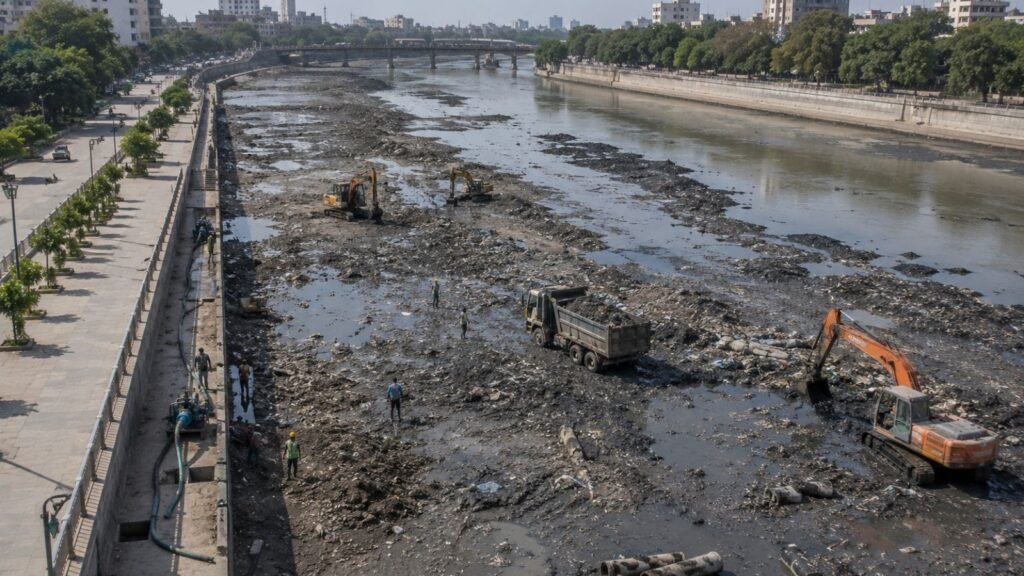
Waste Breakdown During 2025 Cleanup
The provided information details the composition of waste recovered during the campaign.
| Waste Type | Quantity (Metric Tonnes) | Percentage |
|---|---|---|
| Other Mixed Waste (silt, organic sludge, construction debris) | 608 | 64.3% |
| Plastic Waste (bottles, packaging material, single use bags) | 166 | 17.6% |
| Wood and Fabric Waste (household items, timber, religious cloth materials) | 171 | 18.1% |
The report also notes that 76 metric tonnes of garbage were collected on the first day alone.
2019 Sabarmati River Cleanup Campaign
Before the 2025 operation, a major cleanup drive was conducted in June 2019. According to the provided information, approximately 500 tonnes of waste were removed over multiple weeks. A targeted 5 day public cleanup phase reportedly removed 191 tonnes of waste. The waste composition included dry coconuts, ritual materials, plastic bottles, pan wrappers, and religious fabric waste. Authorities found that significant waste entered the river directly from urban bridge zones and public dumping points.
Festival Related Waste Challenges
The report also highlights recurring post festival pollution problems. According to the provided information, environmental groups and NGOs routinely conduct cleanup operations after Ganpati Visarjan, Diwali, and Chhath Puja. These drives reportedly remove 250 to 300 tonnes of floating and riverbed garbage during intensive 60 day cleanup cycles.
Why the Sabarmati River Crisis Matters
The ongoing situation is important because the Sabarmati Riverfront represents one of Ahmedabad largest public urban spaces, a tourism destination, and a symbol of modern riverfront redevelopment. The current delays reveal deeper long term challenges in urban waste management and sewage control. The combination of infrastructure debris, untreated wastewater, seasonal sludge buildup, and delayed sewage treatment systems has created recurring environmental pressure on the river ecosystem.
Conclusion
The 2026 Sabarmati River cleanup delay has exposed serious environmental and logistical challenges for Ahmedabad river management system. According to the provided information, stagnant wastewater pockets, ongoing sewage discharge, buried infrastructure debris, and delayed bioremediation projects have severely impacted pre monsoon cleaning operations. The crisis has already affected residents living near the riverfront, tourism activity, public sanitation conditions, and overall environmental quality. Historical cleanup data also shows that the Sabarmati River requires repeated large scale civic interventions involving massive manpower and extensive waste removal efforts. With mechanized cleaning still pending in multiple sections, authorities are now racing against time to complete critical riverbed restoration work before the arrival of the monsoon season.
Frequently Asked Questions
Q1. Why was the Sabarmati River emptied in 2026?
A1. The river was emptied to support a 9 crore rupee gate replacement project at Vasna Barrage and to facilitate mechanized sludge removal, riverbed excavation, and pre monsoon sanitation work.
Q2. What are the main causes of the cleanup delay?
A2. The main causes include persistent stagnant water in low lying areas, continuous sewage inflow, and infrastructure debris accumulation from metro and bullet train construction.
Q3. How much waste was removed during the 2025 Sabarmati cleanup drive?
A3. The Swachh Sabarmati Maha Abhiyan 2025 removed 945 metric tonnes of waste from a 6 kilometre stretch of riverbed.
Q4. What is the bioremediation project deadline that was missed?
A4. AMC had planned a major bioremediation project to treat 786.49 million litres per day of sewage, but the project missed its March 2025 implementation deadline.
Q5. How has the cleanup delay affected the Sabarmati Riverfront?
A5. The delay has caused severe foul odours near residential areas, deteriorated tourism conditions with exposed muddy riverbeds and garbage accumulation, and created public safety concerns.