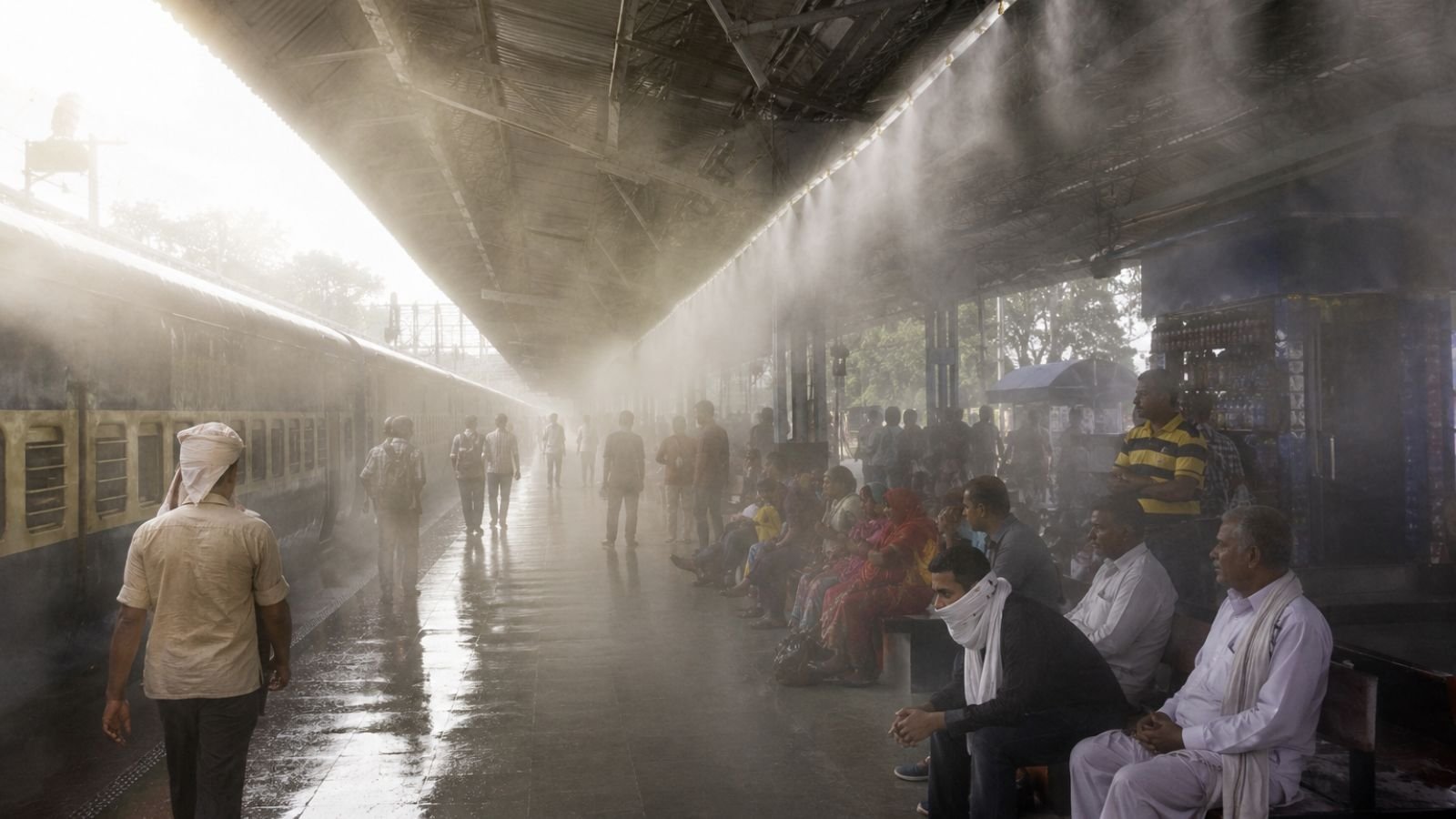
A railway platform at 45°C is not just uncomfortable, it is dangerous. Bilaspur Railway Station in Chhattisgarh was facing exactly this problem until Indian Railways introduced a high pressure water misting system on Platform No. 1. Installed by the South East Central Railway (SECR) zone, the system releases fine water droplets that create a cooling fog like mist, bringing down platform temperatures and reducing heat stress for passengers. The viral video of this initiative has sparked conversations across the country. With heatwave alerts still active in many states, this affordable and practical cooling solution is helping thousands of travelers cope with extreme summer conditions. Authorities say the system operates mainly during peak afternoon hours when the heat is most intense and platforms are crowded with waiting passengers.
Bilaspur Railway Station Viral Cooling System Explained
The viral desi cooling initiative works through a high pressure misting mechanism installed on the station roof.
How the Cooling Mechanism Works
The system releases:
- Ultra fine water droplets
- Fog like cooling spray
- Controlled high pressure mist
Once sprayed into the air, the mist helps reduce the surrounding platform temperature and creates a noticeably cooler environment for commuters. The objective is simple: reduce heat stress, improve passenger comfort, and help travelers survive dangerous summer temperatures. Railway officials introduced the system after Bilaspur began recording extreme daytime temperatures between 43°C and 45°C.
Why the Bilaspur Cooling System Went Viral
The cooling setup quickly became viral on social media because:
- Passengers visibly experienced relief from the heat
- The mist created a unique rain like cooling atmosphere
- Many users praised Indian Railways for practical heatwave management
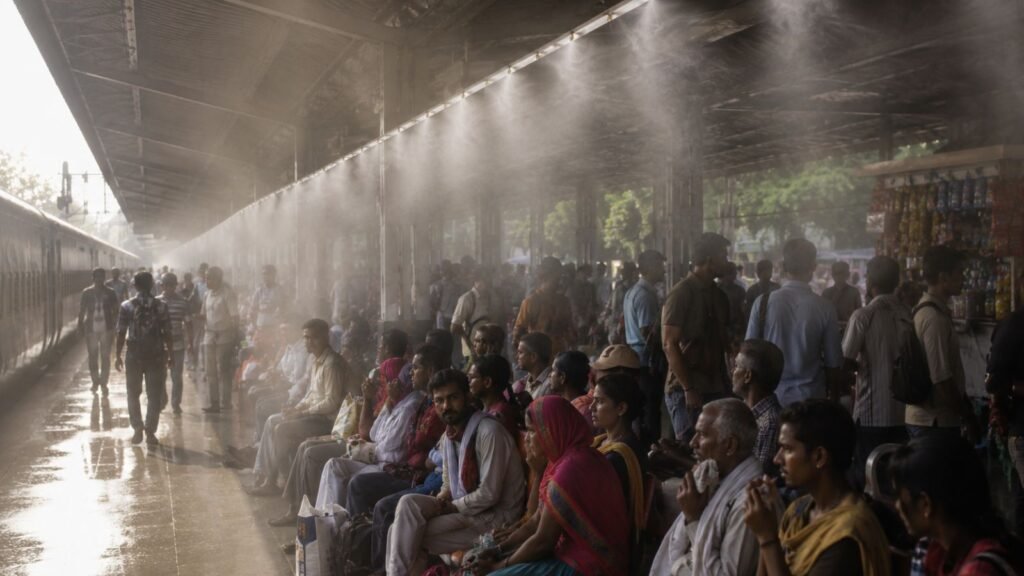
The footage spread rapidly online, with many people calling it a smart public cooling initiative, an affordable heatwave solution, and an innovative railway passenger comfort system. The visual impact of fog like water mist covering crowded platforms especially attracted public attention.
South East Central Railway Heatwave Initiative
The South East Central Railway (SECR) zone implemented the cooling system as part of broader heatwave safety measures.
Additional Passenger Relief Measures
Along with roof misting, authorities also introduced:
- ORS sachet distribution
- Cold drinking water availability
- Improved fan maintenance
- Enhanced passenger cooling arrangements
These steps were specifically designed to reduce the health risks associated with severe heat exposure.
Indian Railways Expands the Cooling Initiative
Following positive public response and online praise, the railway authorities expanded the misting initiative to several nearby stations.
Railway Stations Included in the Expansion
The cooling project was extended to:
- Raipur
- Durg
- Rajnandgaon
- Gondia
This broader rollout highlights how Indian Railways is attempting to improve passenger comfort during prolonged heatwave periods.
IMD Heatwave Alerts Across India
The cooling initiative comes at a time when the India Meteorological Department (IMD) has issued multiple heatwave alerts across different regions of the country.
Red Alert Regions (Take Action)
Severe heatwave conditions are active in East Uttar Pradesh, East Madhya Pradesh, and the Vidarbha region of Maharashtra. These areas are currently facing the most dangerous heat conditions.
Orange Alert Regions (Be Prepared)
The IMD has issued Orange Alerts for Delhi, Punjab, Haryana, Chandigarh, and West Rajasthan. These regions are expected to experience severe daytime heat, warm night conditions, and prolonged heat stress over several days.
Yellow Alert Regions (Be Updated)
Heatwave pocket alerts are active in Chhattisgarh (including Bilaspur), Odisha, Bihar, Jharkhand, and Telangana. Temperatures in many of these regions are currently ranging between 43°C and 46°C.
Current Heatwave Timeline
According to the provided information, the present severe heatwave spell is expected to continue aggressively until May 28, 2026. Meteorological observations indicate that temperatures may gradually fall by 2°C to 5°C near month end, warm nights are increasing overall heat stress, and regular nighttime cooling is being disrupted. This combination creates dangerous conditions, especially for railway passengers, outdoor workers, elderly people, and children.
Warm Night Conditions Increasing Health Risks
One major concern highlighted in the report is the Warm Night phenomenon. Normally, nighttime temperatures help the human body recover from daytime heat exposure. However, many regions are currently experiencing unusually high nighttime temperatures, preventing proper cooling. This results in higher physical exhaustion, increased dehydration risk, greater heatstroke probability, and prolonged body stress.
Monsoon Relief Expected Soon
The IMD is also monitoring the progress of the Southwest Monsoon through the Bay of Bengal. Early projections suggest that monsoon arrival over Kerala may occur around May 26, gradual cooling could begin afterward, and severe heat conditions may slowly reduce across parts of India. However, until then, dangerous temperatures are expected to continue in several states.
Safety Tips for Train Travelers During Heatwaves
With extreme temperatures continuing across India, railway passengers are being advised to follow important heat safety precautions while traveling.
Hydration Is Critical
Passengers should drink water continuously, consume electrolytes regularly, and sip fluids every 20 minutes even without feeling thirsty. Maintaining hydration is considered one of the most important protections against heat related illnesses.
Avoid Dehydrating Drinks
Travelers are advised to avoid excessive tea, coffee, alcohol, and sugary carbonated beverages. These drinks can worsen dehydration during high temperature conditions.
Eat Light Foods
The advisory recommends watermelon, cucumbers, oranges, and other water rich fruits. Heavy oily meals may increase body heat and discomfort.
Focus on Personal Cooling
Travelers should prioritize lightweight clothing, personal cooling towels, staying under shaded areas, and limiting direct sun exposure. These small steps can significantly reduce heat stress during long journeys.
Why Railway Platforms Become Dangerous During Heatwaves
Railway stations become especially vulnerable during extreme summer temperatures because platforms absorb and radiate heat, concrete surfaces intensify thermal conditions, overcrowding increases discomfort, and hot winds reduce natural cooling. Large junctions like Bilaspur witness thousands of daily passengers, making heat management extremely important.
Public Response to the Bilaspur Cooling Initiative
The public reaction to the Bilaspur misting system has been largely positive. Many commuters praised the practical approach, visible cooling effect, and passenger focused infrastructure upgrades. Social media users described the setup as innovative, cost effective, and useful during climate extremes. The viral footage has also triggered discussions about introducing similar systems at bus terminals, metro stations, public waiting zones, and marketplaces.
Could More Indian Railway Stations Get Cooling Systems?
The expansion to Raipur, Durg, Rajnandgaon, and Gondia suggests that Indian Railways may continue implementing similar systems in other heat prone cities if the results remain successful. Given the increasing frequency of extreme summer temperatures across India, such passenger comfort initiatives could become more common in the coming years.
Conclusion
The viral Bilaspur Railway Station cooling system has become a symbol of how public infrastructure can adapt during severe climate conditions. With temperatures touching 43°C to 45°C, the South East Central Railway misting setup is providing visible relief to passengers waiting on crowded platforms. As heatwave alerts remain active across multiple Indian states, the initiative demonstrates the growing importance of passenger safety, hydration support, and innovative cooling systems in public spaces. The combination of roof misting, ORS distribution, cold water availability, and platform cooling measures reflects how Indian Railways is responding to increasingly intense summer conditions in 2026.
Frequently Asked Questions
Q1. What is the Bilaspur Railway Station cooling system?
A1. It is a high pressure water misting system installed on Platform No. 1 by South East Central Railway that releases ultra fine water droplets to reduce platform temperature and provide relief to passengers during extreme heat.
Q2. Why did the Bilaspur cooling system go viral?
A2. The system went viral because passengers visibly experienced relief from the heat, the mist created a unique rain like cooling atmosphere, and many users praised Indian Railways for practical heatwave management.
Q3. What is the temperature in Bilaspur during peak summer?
A3. Bilaspur is recording extreme daytime temperatures between 43°C and 45°C during peak afternoon hours.
Q4. Which other railway stations have received similar cooling systems?
A4. Following the positive response, the cooling initiative was expanded to Raipur, Durg, Rajnandgaon, and Gondia railway stations.
Q5. What safety measures are recommended for train travelers during heatwaves?
A5. Travelers should stay hydrated, consume electrolytes, avoid tea and sugary drinks, eat water rich fruits, wear lightweight clothing, and limit direct sun exposure.