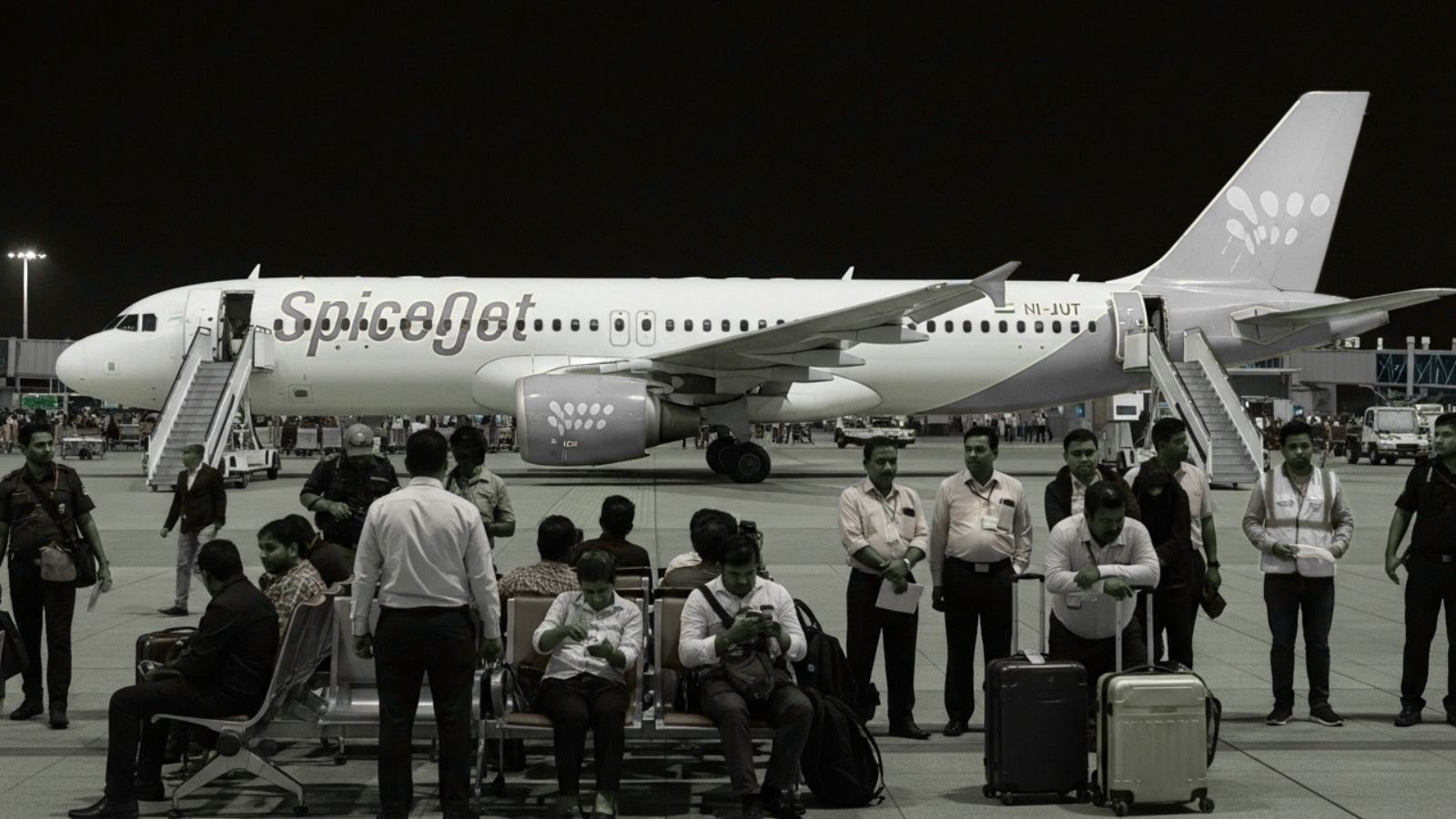
Flight operations by SpiceJet were severely disrupted at Sardar Vallabhbhai Patel International Airport on April 22, 2026, leading to widespread cancellations and passenger unrest. The sudden grounding of multiple flights sparked protests inside the terminal, with stranded travellers demanding answers and immediate assistance.
The disruption created a chaotic situation at one of Gujarat’s busiest airports, leaving passengers frustrated and confused.
What Happened at Ahmedabad Airport?
Key Incident Highlights
- Affected Routes: Flights to major cities like New Delhi, Chennai, and Hyderabad were cancelled
- Primary Cause: The airline cited crew and staff shortages as the main reason
- Passenger Reaction: Long delays turned into cancellations. Stranded passengers staged protests inside the terminal. Security teams were deployed to control the situation
Many travellers reported waiting since early morning hours, some as early as 2:30 AM, before being informed about cancellations.
Passenger Complaints and Refund Issues
The disruption was further worsened by complaints about poor communication and refund complications.
Major Issues Faced by Travellers
- Lack of timely updates from airline staff
- Refund delays and confusion
- Some cancellations were shown as “rescheduled” flights, making refunds harder
- In several cases, passengers received handwritten receipts confirming refunds
This created additional frustration among already stranded passengers.
Flight Availability and Ticket Prices (Post Disruption)
Despite the cancellations, future bookings from Ahmedabad are still visible across platforms.
Sample Fare Trends (Economy – Round Trip)
- Ahmedabad to New Delhi: From ₹12,004
- Ahmedabad to Mumbai: From ₹6,596
- Ahmedabad to Bengaluru: From ₹11,401
- Ahmedabad to Kolkata: From ₹17,943
- Ahmedabad to Bagdogra: From ₹21,512
- Ahmedabad to Hyderabad: From ₹12,239
- Ahmedabad to Srinagar: From ₹20,112
This indicates that while operations were disrupted, booking systems remain active for upcoming dates.
Root Causes Behind the Crisis
The airline’s operational breakdown is not an isolated issue but part of a larger internal crisis.
1. Workforce Reductions
Over 500 employees were placed on unpaid leave from April to September 2026 as part of a “manpower rationalisation” strategy.
2. Salary Delays
Staff, including engineers and senior officials, faced 2 to 3 months of salary delays. Some employees reportedly unpaid since January 2026.
3. Shrinking Fleet Size
The active fleet was reduced to around 13 owned aircraft, down from approximately 50. This increased dependence on wet-leased aircraft (around 14 planes with external crew).
These combined factors directly contributed to staff shortages and operational inefficiencies.

Previous Disruptions Raise Concerns
This is not the first such incident in April. Earlier on April 11, similar disruptions occurred. A cancelled flight to Sharjah triggered passenger protests. This indicates a pattern of instability rather than a one-time issue.
Passenger Rights: What You Can Do
If your flight has been affected, here are your available options:
Rebooking
Passengers can choose an alternate flight at no extra cost. This is applicable for cancellations or delays exceeding 120 minutes.
Full Refund
Eligible passengers can claim full refunds using SpiceJet’s official portal with PNR number and last name.
Real-Time Flight Tracking
Use apps like Adani One or SpiceJet Live Tracker. Checking live status before leaving for the airport is highly recommended.
Bigger Picture: Financial Stress at SpiceJet
The incident highlights ongoing financial and operational challenges within the airline. Continuous fleet reduction, workforce downsizing, and mounting salary delays are now directly impacting passenger experience and reliability.
Conclusion
The SpiceJet flight cancellations at Ahmedabad airport on April 22, 2026, exposed serious cracks in airline operations. While crew shortages were cited as the immediate cause, deeper financial and structural challenges appear to be driving repeated disruptions.
For passengers, the situation underlines the importance of checking flight status before travel, knowing refund and rebooking rights, and keeping alternative travel plans ready.
If the current trend continues, the airline may face increased scrutiny from both regulators and customers in the coming weeks.
Frequently Asked Questions
Q1. What caused the SpiceJet flight cancellations at Ahmedabad airport?
A1. The airline cited crew and staff shortages as the main reason for the mass cancellations on April 22, 2026.
Q2. Which routes were affected by the SpiceJet cancellations?
A2. Flights to major cities including New Delhi, Chennai, and Hyderabad were cancelled.
Q3. What are the refund options for affected passengers?
A3. Passengers can claim full refunds using SpiceJet’s official portal with their PNR number and last name. Rebooking on alternate flights at no extra cost is also available for cancellations or delays exceeding 120 minutes.
Q4. What are the root causes behind SpiceJet’s operational issues?
A4. The root causes include workforce reductions (over 500 employees on unpaid leave), salary delays of 2-3 months, and a shrinking fleet size reduced from around 50 to 13 owned aircraft.
Q5. How can passengers check flight status before travelling?
A5. Passengers can use apps like Adani One or SpiceJet Live Tracker to check real-time flight status before leaving for the airport.