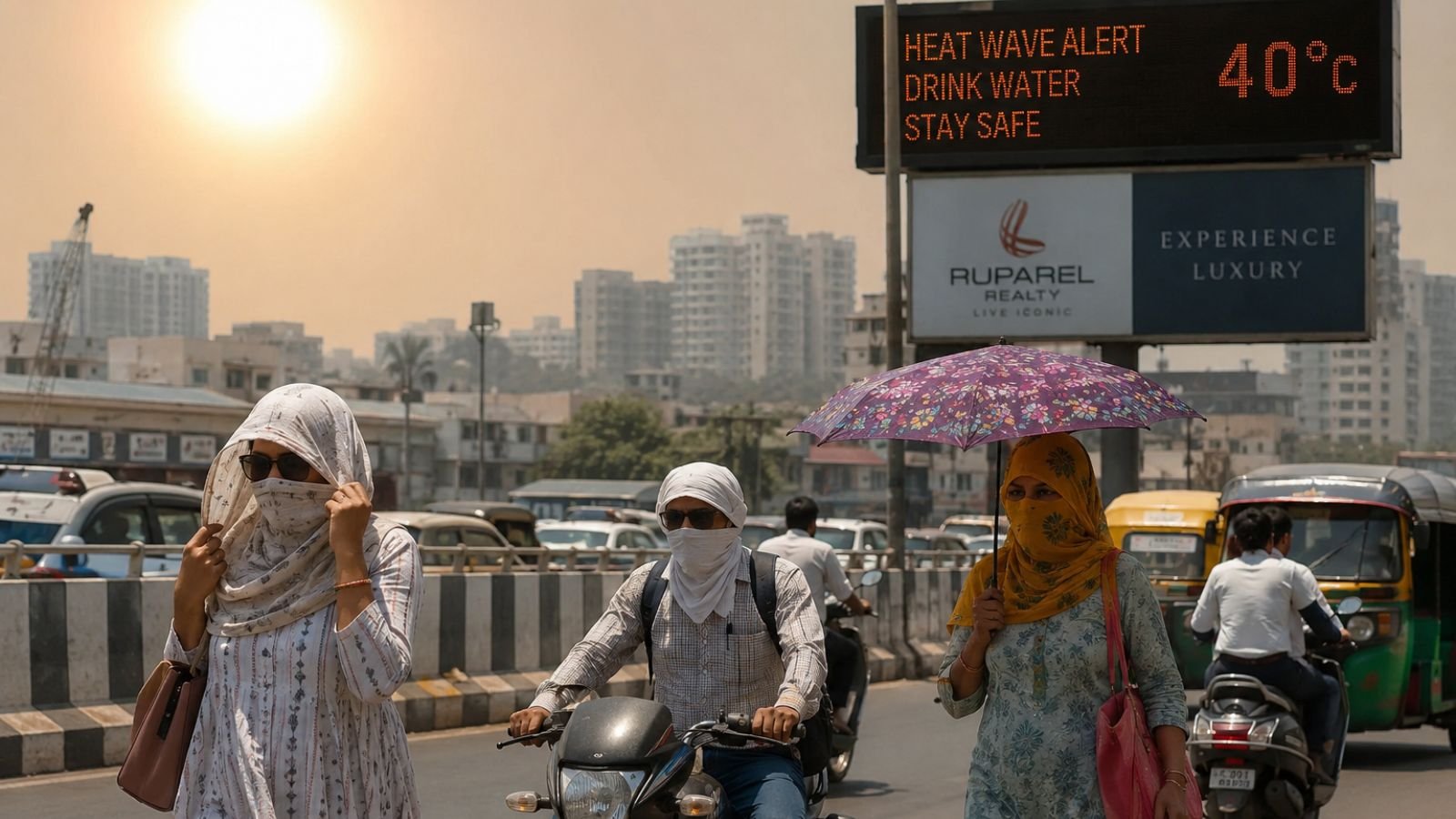
Ahmedabad is currently facing one of its most severe and prolonged heatwave periods in recent years, with temperatures consistently remaining far above seasonal averages. The city has recorded a maximum temperature of 42.5°C, which is approximately 2.8°C above the normal seasonal level. The prolonged stretch of extreme heat has raised public health concerns and prompted authorities to intensify emergency response measures across the city. According to the information provided, Ahmedabad has experienced temperatures above 40°C for 53 out of the last 56 consecutive days leading into mid June 2026. This figure significantly exceeds the historical average of around 35 such extreme heat days annually. The continuing heatwave has affected daily life, public health, outdoor work schedules, and urban infrastructure, making heat management a major priority for local authorities.
Ahmedabad Heatwave 2026: Why the Current Situation Is Significant
The current heatwave is notable not only because of the high daytime temperatures but also because of the unusually long duration of extreme heat. Extended exposure to temperatures above 40°C can increase risks for vulnerable populations, including senior citizens, children, outdoor workers, and individuals with existing medical conditions.
Ahmedabad Water Contamination Incident
The provided information highlights that the city has experienced:
- 53 out of 56 consecutive days with temperatures above 40°C
- Maximum temperatures regularly ranging between 41°C and 43°C
- Peak recorded temperature of 42.5°C
- Night temperatures remaining 1.6°C to 3.0°C above normal
The elevated nighttime temperatures are particularly concerning because they reduce the body ability to recover from daytime heat exposure.
Current Weather Conditions in Ahmedabad
Daytime Temperatures Remain Extremely High
Current daytime temperatures continue to hover between 41°C and 43°C, keeping the city under persistent heat stress conditions. Such temperatures increase surface heating across roads, buildings, and public spaces, making outdoor activities difficult during afternoon hours.
Warm Nights Offering Limited Relief
One of the major challenges this season is the absence of sufficient nighttime cooling. Minimum temperatures are reportedly remaining between 1.6°C and 3.0°C above normal levels. As a result, residents experience warm nights that provide little recovery from the day heat. This prolonged exposure to elevated temperatures can increase fatigue, dehydration risks, and heat related illnesses.
Ahmedabad Yoga Events June 2026
Urban Heat Island Effect Intensifies Conditions
The information provided points to rapid urbanization in western Ahmedabad areas such as Bopal, Gota, and Shela. The expansion of concrete structures and urban infrastructure has strengthened the Urban Heat Island effect, causing surface temperatures to rise further compared to surrounding regions. This phenomenon often results in localized hotspots where temperatures remain higher than city averages.
Ahmedabad Municipal Corporation Heat Action Plan (HAP)
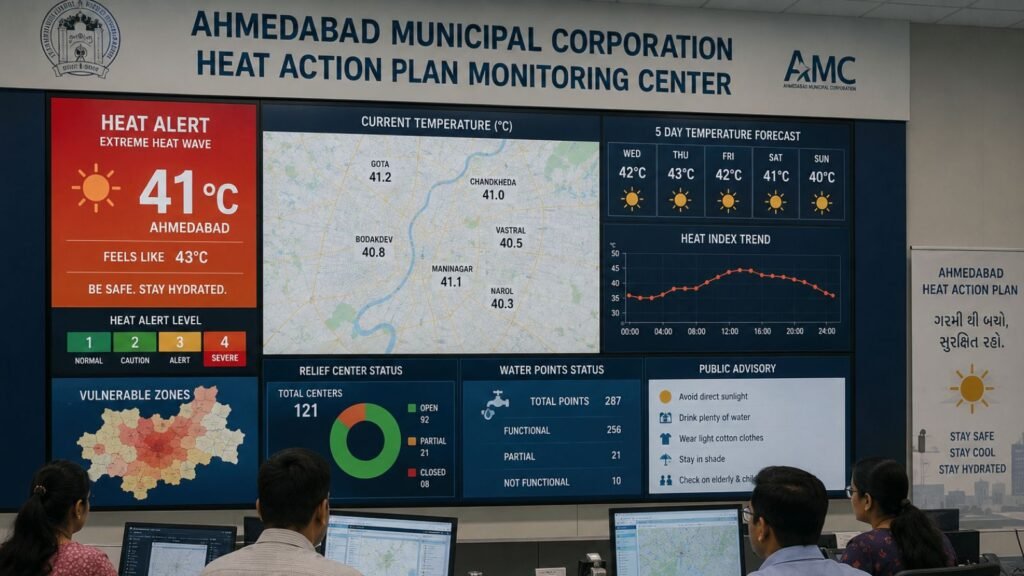
Ahmedabad is recognized for pioneering South Asia first Heat Action Plan (HAP), and authorities have expanded several measures to respond to the ongoing heatwave. The Heat Action Plan focuses on public safety, health monitoring, temperature tracking, and emergency preparedness.
| Initiative | Details |
|---|---|
| Real time temperature monitoring | QR based system providing ward level temperature information |
| Power and water continuity | Special arrangements to prevent scheduled disruptions |
| High risk zone monitoring | 20 high risk urban wards under intensified medical screening |
| Public cooling facilities | Cool roof shelters for homeless, daily wage workers, vulnerable residents |
Public Health Guidelines Issued for Residents
Health authorities have urged residents to modify daily schedules until weather conditions improve.
Avoid Peak Heat Hours
Residents are advised to avoid direct outdoor exposure between 12:00 PM and 4:00 PM. This period typically represents the hottest part of the day and carries the highest risk of heat exhaustion and heat stroke.
Prioritize Hydration
The advisory recommends increased consumption of fluids including plain drinking water, buttermilk, Aam Panna, and ORS solutions. Maintaining hydration is critical during prolonged heatwaves, especially for individuals engaged in outdoor activities.
Gujarat RTO Registration Rules 2026
Outdoor Labor Precautions
Employers have been advised to avoid strenuous outdoor manual labor during midday hours. Reducing physical exertion during peak heat periods can help lower the risk of heat related illnesses among workers.
Warning Signs of Heat Related Illness
Residents are encouraged to seek immediate medical attention if symptoms of heat related illness appear.
| Condition | Symptoms |
|---|---|
| Heat Exhaustion | Heavy sweating, cold or clammy skin, fast pulse, nausea, dizziness, fainting |
| Heat Stroke (Medical Emergency) | Body temperature above 103°F (39.4°C), hot red or dry skin, rapid heartbeat, confusion, loss of consciousness |
How Residents Can Access AMC Heat Monitoring System
The Ahmedabad Municipal Corporation has made temperature information available through multiple channels.
- Direct web access: Residents can access the AMC Heat Alert Portal which combines satellite data, artificial intelligence, and machine learning to generate ward level temperature forecasts and hotspot mapping
- Physical QR code locations: Codes placed at BRTS stations, bus shelters, traffic junctions with cooling shade facilities, civic centers, ward offices, and AMC urban health dispensaries
- Social media updates: Municipal updates through official social media channels with ongoing announcements and alerts
How the QR Based Heat Alert System Works
- Step 1: Scan the QR code using a smartphone camera or QR scanning application
- Step 2: Open the forecast dashboard to access temperature forecast
- Step 3: Identify local hotspots to determine if your area falls within a high temperature zone
The provided information identifies several high risk industrial and urban wards including Vatva, Odhav, Narol, and Shahpur. Monitoring local temperature trends allows residents to take appropriate precautions.
Why the Heatwave Is Becoming More Challenging
The current situation demonstrates how prolonged heat exposure affects both individuals and urban systems. Several factors highlighted in the provided information contribute to the severity:
- Continuous 40°C plus temperatures
- Reduced nighttime cooling
- Expanding urban heat island effect
- High density development in growing urban zones
- Extended duration of the heatwave
Together, these factors increase pressure on healthcare systems, public infrastructure, and daily life across Ahmedabad.
Conclusion
Ahmedabad ongoing heatwave represents one of the city most prolonged periods of extreme summer weather, with temperatures above 40°C recorded for 53 out of 56 consecutive days. Maximum temperatures continue to range between 41°C and 43°C, while warmer than normal nights provide little relief from the heat. In response, the Ahmedabad Municipal Corporation has expanded its Heat Action Plan through real time temperature monitoring, public cooling shelters, healthcare surveillance, and public awareness campaigns. Residents are being encouraged to avoid peak afternoon heat, stay hydrated, monitor local temperature conditions through AMC QR based alert system, and remain alert to signs of heat exhaustion and heat stroke. Until seasonal weather patterns shift and temperatures begin to moderate, following these preventive measures remains essential for protecting public health across the city.
Frequently Asked Questions
Q1. How many days has Ahmedabad recorded temperatures above 40°C in 2026
A1. Ahmedabad has recorded temperatures above 40°C for 53 out of 56 consecutive days leading into mid June 2026, significantly exceeding the historical average of around 35 such days annually.
Q2. What is the peak temperature recorded during the Ahmedabad heatwave
A2. The city has recorded a maximum temperature of 42.5°C, which is approximately 2.8°C above the normal seasonal level.
Q3. Why are nighttime temperatures a concern during this heatwave
A3. Minimum temperatures are remaining 1.6°C to 3.0°C above normal levels, providing little recovery from daytime heat exposure and increasing fatigue, dehydration risks, and heat related illnesses.
Q4. What is the Urban Heat Island effect mentioned in the report
A4. Rapid urbanization in western Ahmedabad areas such as Bopal, Gota, and Shela has expanded concrete structures, strengthening the Urban Heat Island effect and causing surface temperatures to rise further compared to surrounding regions.
Q5. How can residents access real time temperature information in Ahmedabad
A5. Residents can access AMC Heat Alert Portal directly, scan QR codes placed at BRTS stations, bus shelters, traffic junctions, civic centers, and ward offices, or monitor official social media channels for temperature updates and alerts.