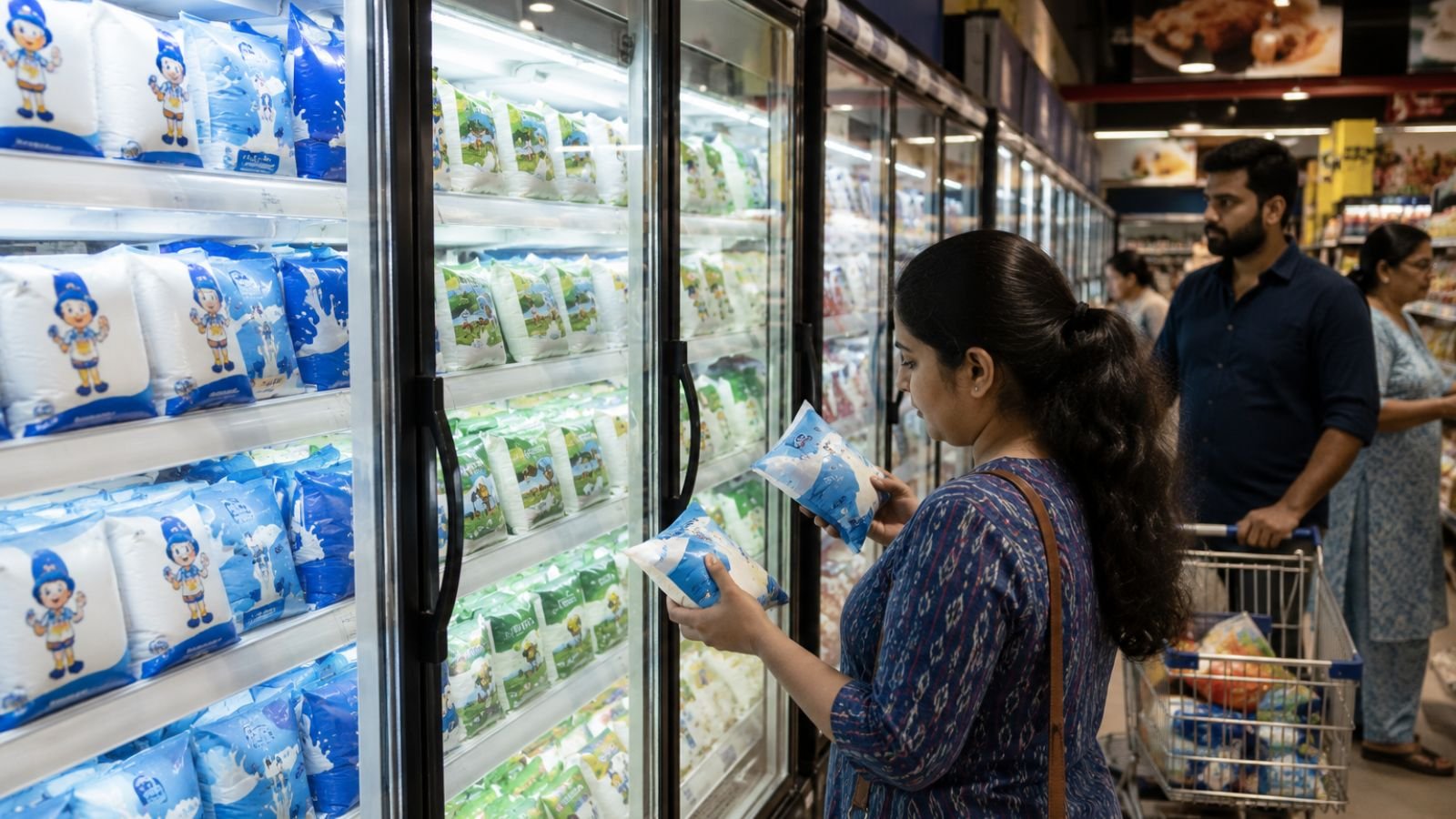
India’s two largest dairy cooperatives, Amul (GCMMF) and Mother Dairy, have increased milk prices by ₹2 per litre nationwide with effect from May 14, 2026. The revision impacts multiple packaged milk variants across major Indian cities and marks a price increase ranging between 2.5% and 3.5% for most products. According to the provided information, the price adjustment comes after a sharp rise in operational costs, higher procurement payouts to farmers, increasing cattle feed expenses, transport inflation, and packaging overheads over the past year. The revision affects consumers across Delhi-NCR, Gujarat, Maharashtra, West Bengal, and several other regions where Amul and Mother Dairy products dominate the retail dairy market.
Amul and Mother Dairy Milk Price Hike Effective Date
The nationwide milk price revision officially became effective on May 14, 2026. The increase applies to packaged milk variants, toned milk, full cream milk, cow milk, double toned milk, buffalo milk, and token milk systems in select cities.
Why Have Milk Prices Increased in India?
- Rising Procurement Costs: Dairy cooperatives are now reportedly paying 6% more to farmers for raw milk procurement to support farmer livelihood expenses, dairy sustainability, and stable milk supply chains.
- Expensive Cattle Feed: Fodder, oil cakes, and maize have all become more expensive, with prices rising by over 10%, increasing daily cattle maintenance costs and dairy farm operating expenses.
- Logistics and Transport Inflation: Rising fuel costs have made temperature-controlled transportation between farms, collection centers, and processing units more expensive.
- Packaging Material Costs: Food-grade plastic pouches and packaging materials have become more expensive due to global supply chain pressures.
- Summer Supply Pressure: Extreme summer temperatures reduce milk yield in cattle, creating supply pressure, procurement competition, and additional operational strain during peak summer months.
New Amul and Mother Dairy Milk Prices 2026
| Milk Variant | Old Price | New Price | 500 ml Price |
|---|---|---|---|
| Bulk Vended / Token Milk | ₹56 | ₹58 | — |
| Amul Taaza / Toned Milk | ₹55 | ₹57 | ₹29 |
| Mother Dairy Toned Milk | ₹58 | ₹60 | ₹30 |
| Cow Milk | ₹60 | ₹62 | ₹31 |
| Amul Shakti | ₹61 | ₹63 | ₹32 |
| Amul Gold / Full Cream | ₹68 | ₹70 | ₹35 |
| Mother Dairy Full Cream | ₹70 | ₹72 | ₹36 |
| Double Toned Milk (Live Lite) | ₹52 | ₹54 | ₹27 |
| Amul Buffalo Milk | ₹76 | ₹80 | ₹39 |
The biggest increase applies to Amul Buffalo Milk, which increased by ₹4 per litre instead of the standard ₹2 revision.
Delhi-NCR Milk Prices After Hike
Delhi-NCR continues to witness some of the highest milk prices due to heavy consumption demand and dependence on outside-state procurement.
- Bulk Vended Token Milk: ₹58 per litre
- Toned Milk Pouch: ₹60 per litre
- Cow Milk: ₹62 per litre
- Full Cream Milk: ₹72 per litre
Gujarat Milk Prices After the Hike
As the home state of Amul, Gujarat continues to maintain slightly lower prices because of local procurement proximity and strong cooperative infrastructure.
- Amul Taaza Homogenised Toned Milk: ₹54 per litre, ₹28 per 500 ml
- Amul Gold Premium Full Cream Milk: ₹66 per litre, ₹34 per 500 ml
- Amul Cow Milk: ₹56 per litre, ₹29 per 500 ml
- Amul Buffalo Milk: ₹76 per litre, ₹38 per 500 ml
Maharashtra Milk Prices 2026
In Maharashtra cities such as Mumbai and Pune, retail pricing has been influenced by transportation expenses and cooperative distribution costs.
- Amul Taaza (Toned): ₹56 per litre
- Amul Gold (Full Cream): ₹68 to ₹70 per litre
- Cow Milk: ₹58 per litre
West Bengal Milk Prices
Kolkata and nearby urban regions continue following standard outward market rates.
- Amul Taaza: ₹56 per litre
- Amul Gold: ₹70 per litre
What Amul Said About the Price Hike
Representatives from the Gujarat Cooperative Milk Marketing Federation (GCMMF) stated that 75% to 80% of every rupee paid by consumers goes directly back to dairy producers. The organization reportedly increased farmer procurement payouts by ₹30 per kg of fat to maintain supply sustainability. The price hike is closely connected to supporting dairy farmers and maintaining long-term procurement stability.
Mother Dairy’s Explanation
Mother Dairy clarified that the ₹2 adjustment is only a partial cost pass-through. The company had already absorbed a significant portion of rising expenses over recent months before implementing the latest revision. The goal is to balance consumer affordability, maintain industry sustainability, and continue operational quality standards.
Impact on Consumers
Consumers may experience slight increases in kitchen budgets, higher tea and cafe prices, and minor changes in food-service rates because milk remains a core ingredient across tea stalls, cafes, sweet shops, restaurants, and household cooking.
Quality and Safety Considerations
The price increase is also linked to maintaining hygiene standards, cold-chain logistics, and food safety systems. Dairy companies are attempting to preserve product quality, safe transportation, and packaging reliability despite rising operational expenses.
State Dairy Cooperatives Response
- Punjab – Verka: Increased procurement payouts to farmers by ₹20 per kg of fat, which may lead to local retail adjustments.
- Odisha – OMFED: Increased basic procurement rates by ₹1 per litre to support dairy suppliers.
- Kerala – Milma: Temporarily retained existing consumer prices, but structural pricing reviews are expected later toward the end of May 2026.
- Goa – Goa Dairy: State procurement subsidies increased by ₹6 to ₹10 per litre for farmers, so consumers currently do not face a local milk price hike.
What Consumers Should Understand
- Supporting Dairy Farmers: A large percentage of consumer spending goes directly toward farmer support, procurement sustainability, and dairy production continuity.
- Partial Cost Absorption by Brands: Dairy companies absorbed rising costs for several months before finally implementing the current ₹2 increase.
- Budget Realignment for Households: Consumers may need to slightly adjust monthly grocery budgets, especially households with high milk consumption, children, daily tea usage, and dairy-heavy cooking habits.
Broader Market Impact
The milk price revision may also indirectly affect tea prices, coffee outlets, sweet shops, ice cream businesses, and dairy-based food products because milk remains a primary raw material across multiple sectors.
Conclusion
The nationwide ₹2 per litre milk price hike announced by Amul and Mother Dairy from May 14, 2026 reflects growing pressure across India’s dairy supply chain. The revision comes amid higher farmer procurement costs, expensive cattle feed, transport inflation, packaging expenses, and seasonal milk supply pressure. While the increase is expected to slightly impact household budgets, dairy cooperatives maintain that the revision is necessary to sustain farmer income, ensure product quality, and maintain long-term supply stability. Different states continue following varied pricing models depending on procurement systems, transport costs, government support, and cooperative structures. As milk remains a daily essential commodity for millions of Indian households, the latest revision is likely to remain an important topic across retail markets, dairy businesses, and consumer discussions throughout 2026.
Frequently Asked Questions
Q1. When did Amul and Mother Dairy increase milk prices?
A1. The milk price revision officially became effective from May 14, 2026, with an increase of ₹2 per litre nationwide.
Q2. What is the new price of Amul Taaza (Toned Milk)?
A2. Amul Taaza (Toned Milk) now costs ₹57 per litre, with 500 ml priced at ₹29.
Q3. Why have milk prices increased in India?
A3. Prices have increased due to higher farmer procurement costs (6% more), expensive cattle feed (over 10% rise), transport inflation, packaging material costs, and summer supply pressure.
Q4. What is the price of Amul Buffalo Milk after the hike?
A4. Amul Buffalo Milk increased by ₹4 per litre to ₹80 per litre, with 500 ml priced at ₹39.
Q5. Which dairy cooperatives in other states have also raised prices?
A5. Punjab’s Verka increased procurement payouts, Odisha’s OMFED raised basic procurement rates, while Kerala’s Milma temporarily retained existing prices and Goa’s Goa Dairy did not increase consumer prices due to state subsidies.