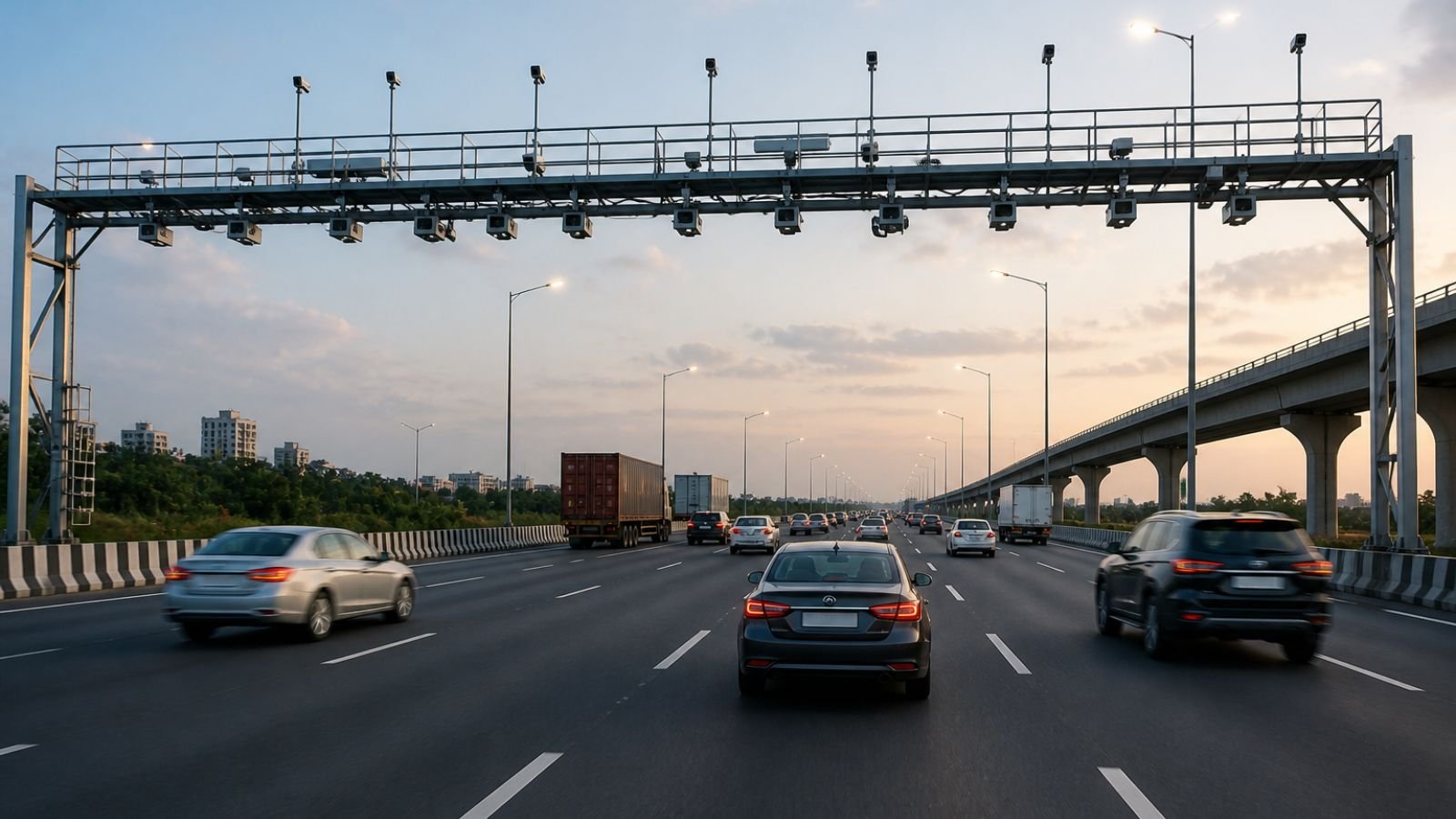
India’s highway system is rapidly transforming with the introduction of barrier-free tolling, also known as Multi-Lane Free Flow (MLFF) technology. This advanced system allows vehicles to pass through toll plazas at high speeds without stopping, making travel faster, smoother, and more efficient.
With the implementation of the National Highways Fee Rules, 2026, new regulations have been introduced to ensure seamless toll collection while enforcing strict compliance. Here is a complete and easy-to-understand guide based entirely on the latest updates.
What is MLFF (Barrier-Free Tolling)?
Multi-Lane Free Flow (MLFF) is a modern toll collection system that enables vehicles to cross toll points at speeds of up to 80 to 100 km/h without slowing down or stopping.
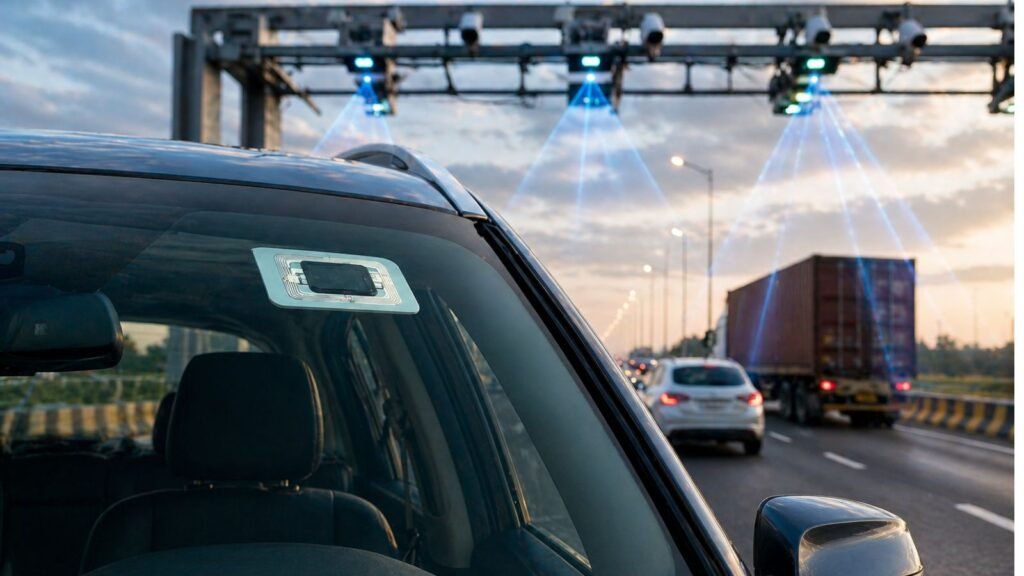
Instead of physical barriers, the system uses advanced digital technologies to automatically detect vehicles and deduct toll charges.
Key Benefits of MLFF Toll System
- Zero Waiting Time: This system removes long queues at toll plazas, allowing uninterrupted travel on highways.
- Cost & Fuel Efficiency: By eliminating idling at toll booths, it reduces fuel consumption and lowers overall transportation costs.
- Environmental Impact: Less congestion means fewer emissions, contributing to a cleaner and greener environment.
- Fairer Charging System: Future upgrades may introduce distance-based tolling, ensuring users pay only for the distance they travel.
- Seamless Transactions: A combination of AI-powered Automatic Number Plate Recognition (ANPR) and FASTag ensures accurate and automated toll deduction.
Important Rules You Must Follow
- Maintain FASTag Balance: Your FASTag wallet or linked bank account must have sufficient balance at all times. Toll charges are deducted instantly as your vehicle passes under the system.
- Valid Number Plate is Mandatory: Since ANPR cameras act as a backup, your number plate must be clean, clearly visible, and follow standard formatting rules.
- Strict 72-Hour Rule: If toll payment fails, you receive an e-notice. You get 72 hours to pay the original amount. After 72 hours, the toll amount doubles.
- One FASTag Per Vehicle: Using multiple FASTags for a single vehicle can lead to errors, duplicate deductions, or blacklisting.
How to Check and Pay E-Notices
If your FASTag fails or has insufficient balance, an electronic notice is generated. Acting quickly is important to avoid penalties.
- Official Portal: You can check and pay pending dues on the NHAI e-notice portal.
- 72-Hour Payment Window: Paying within 72 hours ensures you only pay the base toll amount without any extra charges.
- Raise Complaint if Needed: If you believe the notice is incorrect, you can file a complaint within the same 72-hour window.
FASTag Verification via VAHAN Database
The system is now fully integrated with the VAHAN database, allowing automatic identification of vehicles and owners.
- Centralized Status Check: You can check whether your FASTag is active, blacklisted, or pending KYC through official portals.
- KYV (Know Your Vehicle): Ensure your vehicle registration number is properly linked with your FASTag. Verification may require uploading a clear image of your number plate.
- 15-Day Risk Rule: If an e-notice remains unpaid for more than 15 days, it is recorded in the VAHAN database, which may block services like insurance renewal or fitness certificates.
Common Mistakes to Avoid
- No Cash Payments: As of April 2026, cash payments are no longer accepted at national highway toll plazas. FASTag or digital payments are mandatory.
- UPI Surcharge: While UPI can be used as a backup option, it may attract an additional 25% surcharge.
- Incorrect FASTag Placement: Your FASTag must be properly affixed to the windshield. Loose or handheld tags may result in blacklisting.
How to Update Mobile Number on VAHAN (RC)
Keeping your mobile number updated is essential for receiving alerts and notifications related to tolls and vehicle services.
Step-by-Step Process
- Visit the VAHAN mobile update portal
- Select your state
- Enter vehicle details like registration number, chassis number, and engine number
- Complete Aadhaar authentication by entering Aadhaar details
- Verify using OTP sent to your registered mobile number
- Submit and confirm your update
Once completed, your new mobile number will be updated in the central database.
Important Things to Keep in Mind
- Aadhaar Linkage: Your mobile number must be linked with Aadhaar for successful online verification.
- Data Accuracy: Ensure your name and details on VAHAN exactly match your Aadhaar information to avoid errors.
- Offline Option Available: If online updates fail, you can visit your nearest RTO or Common Service Centre (CSC) for manual assistance.
Conclusion
The FASTag Rules 2026 and MLFF toll system mark a major shift towards a fully digital and efficient highway infrastructure in India. While the new system offers speed, convenience, and environmental benefits, it also comes with strict compliance requirements.
By maintaining proper FASTag balance, following the 72-hour payment rule, and ensuring correct vehicle details, users can avoid penalties and enjoy a seamless travel experience.
Frequently Asked Questions
Q1. What is the MLFF toll system?
A1. Multi-Lane Free Flow (MLFF) is a barrier-free toll collection system that allows vehicles to pass through toll plazas at speeds of 80 to 100 km/h without stopping.
Q2. What is the 72-hour rule for toll payments?
A2. If toll payment fails, users receive an e-notice and have 72 hours to pay the original amount. After 72 hours, the toll amount doubles.
Q3. Are cash payments still accepted at toll plazas?
A3. No, as of April 2026, cash payments are no longer accepted at national highway toll plazas. FASTag or digital payments are mandatory.
Q4. What happens if an e-notice remains unpaid for more than 15 days?
A4. It is recorded in the VAHAN database, which may block services like insurance renewal or fitness certificates.
Q5. How can I update my mobile number on VAHAN?
A5. You can update it online through the VAHAN mobile update portal using Aadhaar authentication, or visit your nearest RTO or CSC for manual assistance.