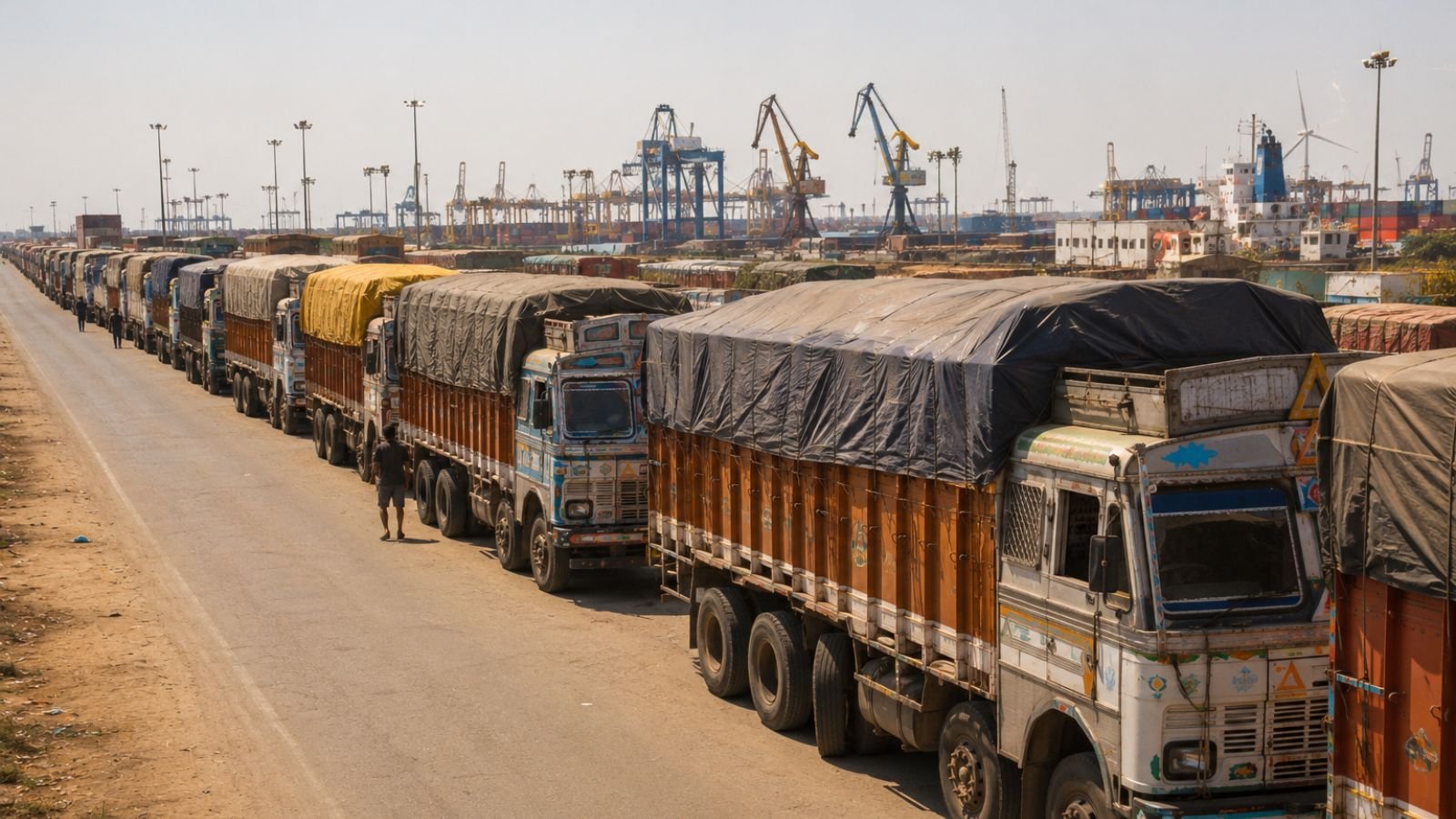
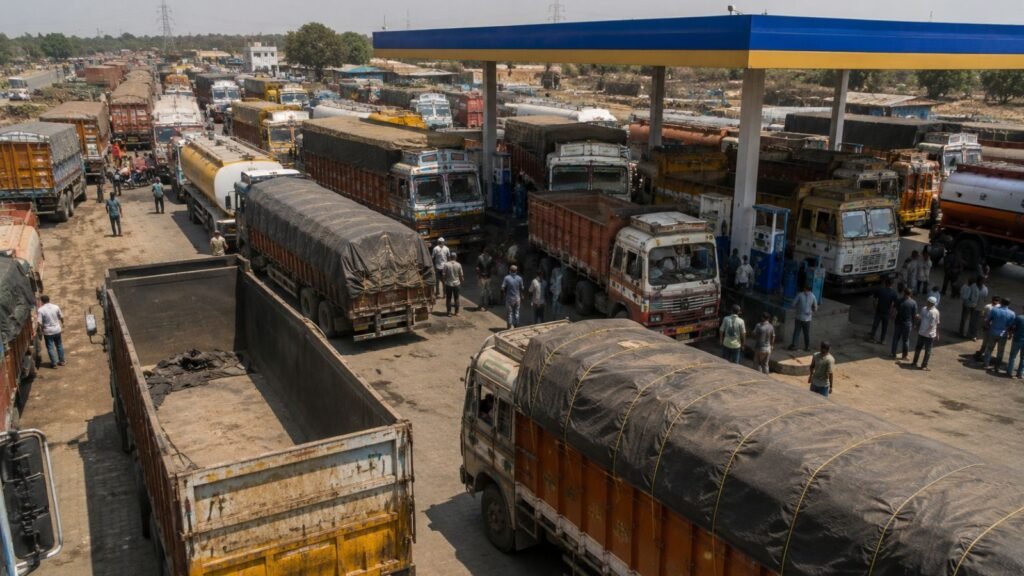
Gujarat is witnessing a major diesel supply disruption after severe shortages triggered emergency intervention by the state government. According to the provided information, the Gujarat state cabinet stepped in after the All Gujarat Truck Transport Association formally highlighted worsening fuel shortages that have begun affecting logistics, agriculture, and commercial transportation across multiple regions. The ongoing diesel crisis has especially impacted major transport and industrial zones including Saurashtra, Kutch, Banaskantha, and North Gujarat. Commercial hubs such as Gandhidham, Mundra, and Kandla are reportedly facing large scale logistics paralysis as thousands of cargo trucks remain stranded due to irregular fuel supply.
Gujarat Government Deploys Emergency Fuel Supply Measures
According to the provided information, the Gujarat cabinet initiated emergency supply measures following rising concerns over diesel availability across transport corridors and rural industrial regions. The report states that Chief Minister Bhupendra Patel chaired a high level cabinet meeting during which the food and civil supplies department was instructed to coordinate immediate fuel logistics, round the clock supply movement, and monitoring of diesel inventories. The state administration has reportedly begun closely tracking distribution patterns to stabilize the ongoing shortage situation.
Regions Most Affected by the Diesel Shortage
The shortage has heavily affected logistics movement and agricultural operations in several parts of Gujarat. According to the provided information, the most affected regions include Saurashtra, Kutch, Banaskantha, and North Gujarat. These regions depend significantly on diesel powered transportation, agricultural machinery, and cargo movement.
Major Logistics Hubs Facing Disruption
The provided information highlights serious operational slowdowns in Gandhidham, Mundra, and Kandla. Thousands of cargo trucks are reportedly stranded in these commercial hubs because of irregular fuel availability and rising diesel prices. Transport unions have warned of possible strike action if fuel supply normalization does not happen soon. This has created growing concern across supply chain networks connected to ports and export corridors.
Core Reasons Behind the Gujarat Diesel Crisis
The provided information outlines multiple factors contributing to the ongoing diesel shortage situation.
- International Crude Price Volatility: Rising international crude oil volatility driven by ongoing tensions in the Middle East has pushed industrial and bulk diesel prices to 112 to 121 rupees per liter
- Commercial Buyers Shifted to Retail Pumps: Large transport fleets and industrial consumers began purchasing diesel directly from retail petrol pumps instead of bulk industrial channels because bulk diesel prices became too expensive
- Panic Buying and Demand Surge: Fear of supply dry outs triggered a 35 to 40 percent surge in localized retail diesel demand, rapidly exhausting inventories at several fuel stations
- Credit Policy Changes by Oil Companies: Oil Marketing Companies (OMCs) reportedly reduced traditional 5 day rolling credit systems, requiring fuel dealers to make upfront payments, causing supply fulfillment delays especially during weekends and banking holidays
Government Current Position on Fuel Availability
Despite the ongoing shortage reports, state authorities and the Indian Oil Corporation (IOCL) maintain that overall Gujarat buffer fuel stocks remain adequate. According to the provided information, the government is warning against speculative hoarding, monitoring daily inventory flow, and taking action against dealers intentionally shutting operational pumps. A dedicated monitoring cell has reportedly been deployed to oversee stock movement, distribution efficiency, and supply stabilization.
Freight Charges Surge Across Gujarat Transport Corridors
The diesel shortage has significantly impacted freight pricing across Gujarat and nearby transport routes. According to the provided information, freight rates have increased between 3 percent and 20 percent. This increase comes after fuel price hikes, supply disruptions, and rising commercial operational costs. The report states that fuel accounts for nearly 40 to 50 percent of trucking operating costs. As a result, logistics companies are directly passing additional expenses into supply chains.
Kandla Mundra Freight Rates Rise by 20 Percent
The Kandla Mundra Container Transport Welfare Association (KMCTWA) reportedly implemented an immediate 20 percent freight rate increase. The provided information states this increase was triggered by localized diesel dry outs, volatile industrial diesel pricing, and advance fuel payment requirements. The association also noted that transport operators now require 24 hour advance payment arrangements.
Nationwide Transport Rate Increase
According to the provided information, the All India Transporters Welfare Association (AITWA) implemented a 3 to 3.5 percent national freight rate increase. The increase reportedly followed a 3.09 rupee per liter diesel price hike and rising operational pressure on major commercial routes. The report highlights that Ahmedabad Mumbai export corridors are among the heavily affected logistics lines.
Regional Truck Associations Considering Further Hikes
Regional truck operator associations in areas such as Indore and Madhya Pradesh linked corridors are reportedly considering freight hikes of up to 20 percent. The provided information states this is driven by 25 to 30 percent commercial fleet idling and rapidly rising spare parts and tire replacement costs.
Ahmedabad to Mumbai Truck Rental Rates Increase
The diesel shortage has also impacted truck rental pricing on major routes. According to the provided information on the Ahmedabad to Mumbai route covering 524 kilometers, standard 14 foot truck rentals have climbed to 10,000 to 14,000 rupees.
Delhi Mumbai and Mumbai Chennai Corridors Impacted
| Route | Rate Increase | Current Rate |
|---|---|---|
| Delhi Mumbai Delhi corridor | 1.8% | Approximately 1.73 lakh rupees (roundtrip) |
| Mumbai Chennai Mumbai corridor | 1.8% | Approximately 1.72 lakh rupees (monthly) |
This indicates that the Gujarat diesel crisis is beginning to affect wider national logistics networks.
Economic Impact of the Diesel Crisis
The ongoing fuel shortage is already creating downstream economic consequences across supply chains.
- Export and Port Delays: Delays at Kandla and Mundra ports are increasing the risk of missing cargo vessel connections and facing heavy demurrage charges, creating pressure on exporters, importers, logistics firms, and shipping operators
- Rising Prices of Essential Goods: Transportation cost increases are likely to raise prices of edible oil, dairy products, fresh vegetables, and fertilizers, potentially causing essential commodity inflation for consumers
- Pressure on E Commerce and Quick Commerce: E commerce and quick commerce companies may face a 5 to 7 percent increase in delivery operation costs, affecting delivery timelines, operational margins, and logistics efficiency
Why the Situation Is Important
The Gujarat diesel shortage has become significant because the state plays a major role in cargo movement, exports, industrial transportation, agriculture, and national freight connectivity. Ports such as Mundra, Kandla, and Gandhidham are among India major logistics gateways. Any extended disruption in diesel supply can therefore impact supply chains, commodity pricing, transport costs, and interstate trade operations.
Conclusion
Gujarat is currently facing a major diesel supply crisis after sharp fuel price volatility, panic buying, and commercial demand pressure disrupted logistics and transportation systems across several regions. Areas including Saurashtra, Kutch, Banaskantha, Gandhidham, Mundra, and Kandla are among the worst affected as cargo movement slows and freight costs continue rising. According to the provided information, the Gujarat government has launched emergency fuel supply coordination measures while monitoring inventory flow and warning against hoarding. However, the shortage has already triggered freight hikes ranging from 3 to 20 percent, increased truck rental prices, and created concerns regarding inflation in essential goods and export logistics. If fuel supply normalization is delayed further, the crisis could continue impacting transportation corridors, agricultural activity, supply chains, and retail commodity pricing across Gujarat and nearby states.
Frequently Asked Questions
Q1. Which regions in Gujarat are most affected by the diesel shortage?
A1. The most affected regions include Saurashtra, Kutch, Banaskantha, North Gujarat, and commercial hubs like Gandhidham, Mundra, and Kandla.
Q2. How much have freight rates increased due to the diesel crisis?
A2. Freight rates have increased between 3 percent and 20 percent, with the Kandla Mundra route seeing an immediate 20 percent hike.
Q3. What caused the diesel shortage in Gujarat?
A3. The shortage was caused by international crude price volatility, commercial buyers shifting to retail pumps, panic buying causing 35 to 40 percent demand surge, and credit policy changes by oil companies.
Q4. What is the current truck rental rate on the Ahmedabad to Mumbai route?
A4. Standard 14 foot truck rentals on the Ahmedabad to Mumbai route have climbed to 10,000 to 14,000 rupees.
Q5. How has the central government responded to the diesel crisis?
A5. State authorities and IOCL maintain that buffer fuel stocks remain adequate, with a dedicated monitoring cell deployed to oversee stock movement, distribution efficiency, and supply stabilization while warning against hoarding.