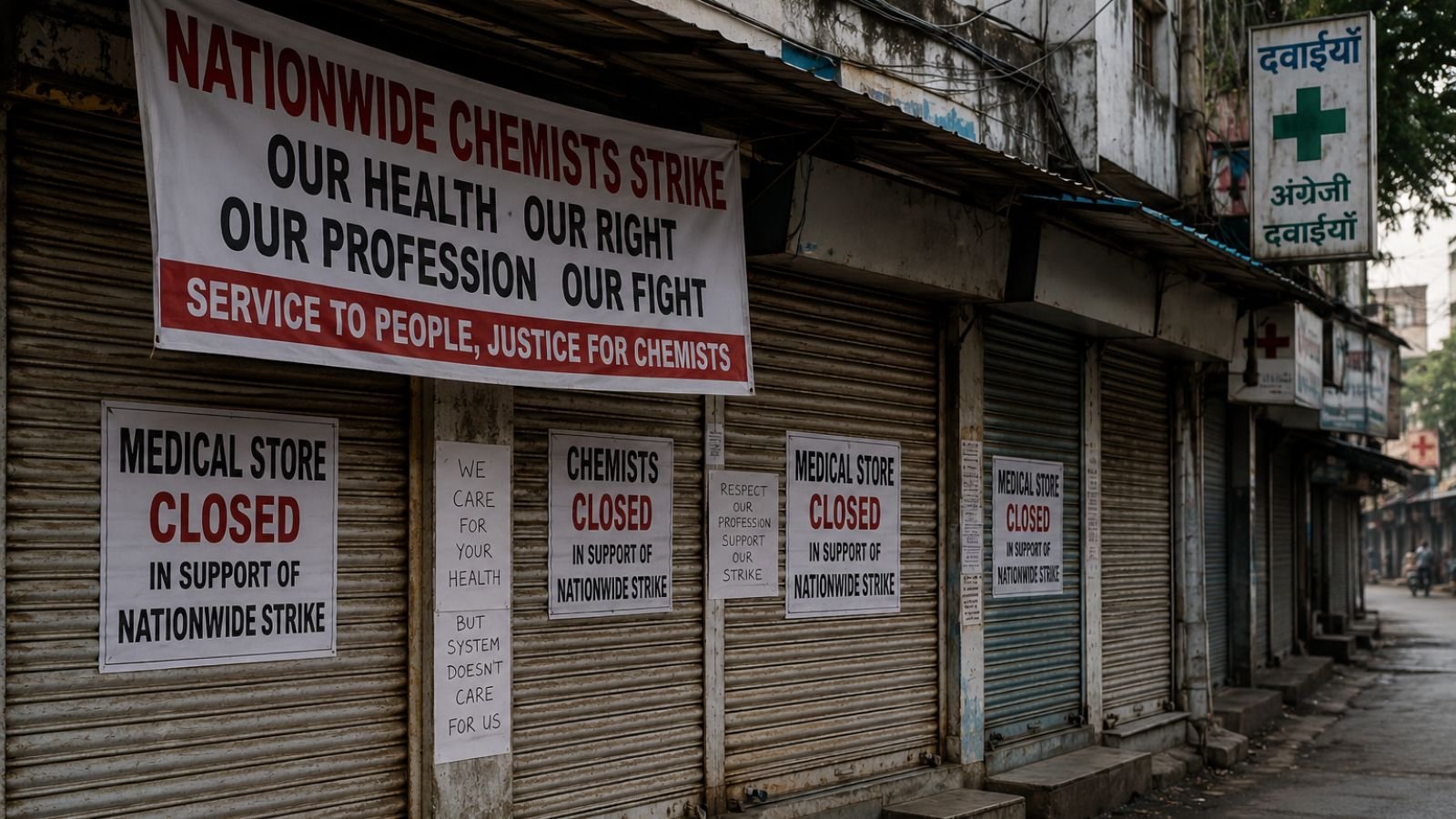
The nationwide chemists strike on May 20, 2026, organized by the All India Organisation of Chemists and Druggists (AIOCD), has triggered one of the biggest disruptions in India’s pharmaceutical retail sector in recent years. Over 15 lakh private medical stores across the country are participating in the shutdown to protest what traditional chemists describe as regulatory loopholes, unfair pricing competition, and growing safety concerns linked to online pharmacy platforms. The protest reflects a widening conflict between traditional brick and mortar pharmacies and India’s rapidly expanding digital healthcare ecosystem. Despite the strike, hospital pharmacies, Jan Aushadhi Kendras, AMRIT outlets, and several organized pharmacy chains remain operational.
Why Are Chemists Across India on Strike?
According to the provided information, the AIOCD claims the strike is aimed at demanding uniform legal standards, stronger patient safety safeguards, better prescription verification systems, and economic protection for offline pharmacies. Traditional chemists argue that physical medical stores are forced to follow strict documentation and compliance rules under the Drugs and Cosmetics Act, while online platforms allegedly bypass several operational requirements. The protest has become a nationwide issue because neighborhood pharmacies form a major part of India’s medicine distribution system, particularly in semi urban and rural regions.
The Core Conflict: Rules vs Loopholes
Traditional Chemists vs E-Pharmacy Platforms
The biggest issue highlighted in the provided information is the alleged legal grey zone surrounding online medicine delivery systems. Offline chemists claim that physical pharmacies must maintain detailed prescription records, verification of doctor signatures is mandatory, and restricted medicines require strict compliance tracking. However, traditional retailers allege that many e-pharmacy platforms continue supplying medicines with weak digital verification systems.
Concerns Over AI Generated Fake Prescriptions
One of the strongest warnings raised by the AIOCD involves AI generated fake prescriptions. According to the provided information, weak digital screening systems may allow misuse of fake prescriptions. Antibiotics and narcotic medicines could be distributed without proper checks. Schedule H drugs remain vulnerable to misuse. The protest organizers argue that this creates direct patient safety risks and may increase illegal medicine circulation.
The Cold Chain Medicine Delivery Problem
Another major issue highlighted is temperature sensitive medicine handling. Traditional distributors claim that many life saving medicines require controlled storage temperatures. Multi day courier systems may compromise medicine quality. This concern mainly applies to specialized injections, sensitive biological medicines, and cold storage pharmaceutical products. According to the provided information, offline chemists believe long distance app based delivery models may weaken quality assurance standards.
Pandemic Era Relaxations Still Under Scrutiny
The protest also targets temporary COVID era relaxations introduced during the pandemic. The provided information mentions GSR 817(E) and GSR 220(E). These notifications originally allowed door to door medicine delivery during emergency conditions. However, protesting chemists argue that temporary emergency rules are still being heavily used years later. E commerce firms continue leveraging these relaxations for large scale expansion. The AIOCD is demanding rollback or stricter review of these provisions.
The Economic Battle Against Heavy Discounting
Deep Discounts Creating Pressure on Small Pharmacies
According to the provided information, independent chemists are also facing severe financial stress due to 20 to 50 percent discounting by online platforms, instant delivery systems, and corporate backed pricing strategies. Neighborhood pharmacies argue that they operate on smaller profit margins, face higher rental and operating expenses, and cannot sustain aggressive discount wars. The report states this issue is particularly affecting rural medicine networks, small town pharmacies, and family owned medical stores. Many retailers fear that long term discount wars could permanently damage traditional medicine distribution systems.
What Will Remain Open During the Strike?
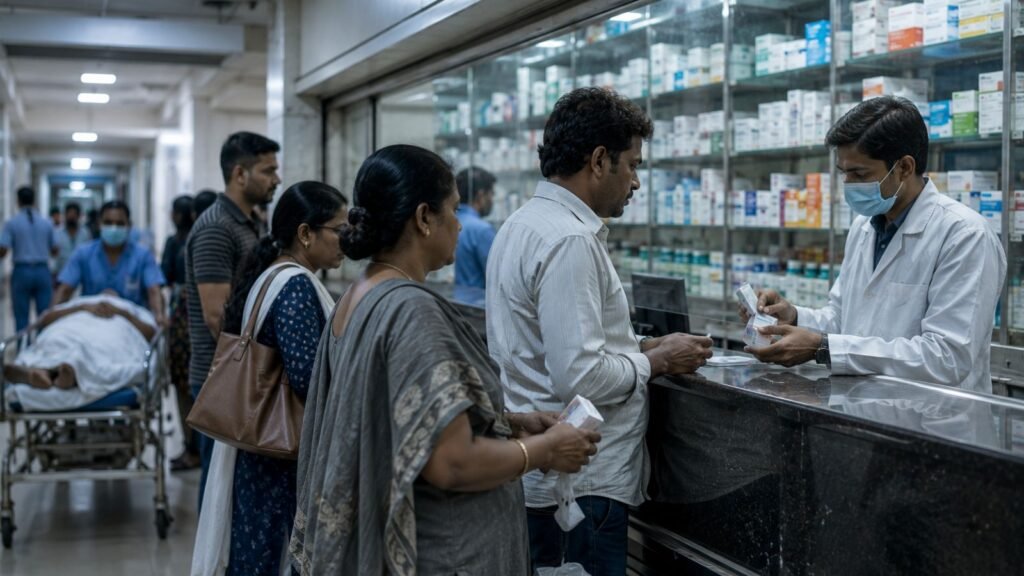
Although the shutdown is widespread, the government has introduced alternative measures to avoid a public health emergency.
- Hospital Pharmacies: Pharmacy counters inside government hospitals will stay open. Private hospital medicine counters will also function normally.
- Jan Aushadhi Kendras and AMRIT Stores: According to the provided information, Jan Aushadhi Kendras and AMRIT pharmacies will continue operating during the strike.
- Organized Pharmacy Chains: The report mentions that organized pharmacy chains and retail associations in at least 12 states have withdrawn from the strike to ensure uninterrupted public medicine access.
Government and CDSCO Response
According to the provided information, the Ministry of Health and the Central Drugs Standard Control Organisation (CDSCO) are reviewing the concerns raised during the strike. Authorities are reportedly working toward balanced legal frameworks, stronger prescription monitoring systems, patient safety protections, and fair competition standards. The objective is to create regulations that support both public healthcare access and proper pharmaceutical compliance.
Emergency Medicine Helplines During the Strike
The Government of India has activated centralized support systems during the disruption.
- National Generic Medicine Locator: Patients can call 1800-180-8080 for Pradhan Mantri Bhartiya Janaushadhi Pariyojana support, nearby Jan Aushadhi Kendras, and operational affordable medicine outlets.
- National Consumer Grievance Helpline: Consumers can report medicine hoarding, artificial shortages, and excessive pricing at 1915 or 1800-11-4000.
- National Medical Grievance Contact: For urgent pharmacy related grievances, call 011-65218900 to connect with the Pharmacy Council of India (PCI).
State Wise Emergency Pharmacy Helplines
| State | Helpline Numbers | Managing Authority |
|---|---|---|
| Gujarat | 1800-233-0222, 079-22681012 | Gujarat State Pharmacy Council |
| Maharashtra | 1800-2222-62, 022-25684291 | Maharashtra State Pharmacy Council |
| Delhi | 011-23890385 | Delhi Pharmacy Council |
| Karnataka | 1800-425-9339, 080-23404000 | Karnataka State Pharmacy Council |
| Kerala | 1800-425-1550, 0471-2470951 | Kerala State Pharmacy Council |
| Tamil Nadu | 044-4728747 | Tamil Nadu Drugs Control Department |
| Uttar Pradesh | 0522-2257518 | UP Pharmacy Council |
| West Bengal | 033-22249800 | West Bengal Pharmacy Council |
| Rajasthan | 0141-2221014 | Rajasthan Pharmacy Council |
| Punjab | 0172-2661181 | Punjab Pharmacy Council |
What Patients Should Do During Medical Emergencies
- Visit government medical facilities, district hospitals, and AMRIT pharmacies as these facilities are legally required to remain operational during the strike.
- Contact state drug control authorities if any local store creates artificial shortages, refuses emergency medicine supply, or charges excessive rates.
How the Strike Could Impact India’s Healthcare Ecosystem
The May 20, 2026 chemists strike highlights a much larger debate within India’s healthcare and retail medicine sector. The conflict is no longer limited to pricing alone. According to the provided information, the issues now involve prescription authenticity, AI misuse, narcotic medicine controls, digital regulation gaps, rural medicine access, and survival of traditional pharmacies. At the same time, consumers increasingly rely on instant delivery, app based ordering, digital prescriptions, and discount driven medicine purchases. This creates a complex balance between innovation, patient safety, regulatory compliance, and fair market competition.
Conclusion
The nationwide chemists strike on May 20, 2026 has become one of India’s largest healthcare retail protests, involving over 15 lakh private medical stores. Organized by the AIOCD, the protest reflects growing tension between traditional pharmacies and digital medicine delivery platforms over legal compliance, patient safety, prescription monitoring, and aggressive discounting practices. While hospital pharmacies, Jan Aushadhi Kendras, AMRIT outlets, and several organized chains remain operational, the strike has raised serious questions about India’s evolving pharmaceutical ecosystem. The Ministry of Health and CDSCO are now reviewing the demands while attempting to maintain uninterrupted access to essential medicines nationwide.
Frequently Asked Questions
Q1. Why are chemists on strike on May 20, 2026?
A1. Chemists are striking over regulatory loopholes, unfair pricing competition, and safety concerns linked to online pharmacy platforms, including weak prescription verification and AI generated fake prescriptions.
Q2. How many medical stores are closed during the strike?
A2. Over 15 lakh private medical stores across India are participating in the nationwide shutdown.
Q3. What remains open during the chemists strike?
A3. Hospital pharmacies, Jan Aushadhi Kendras, AMRIT outlets, and organized pharmacy chains in at least 12 states remain operational.
Q4. What helpline numbers can patients call during the strike?
A4. Patients can call 1800-180-8080 for generic medicine locator, 1915 or 1800-11-4000 for consumer grievances, and 011-65218900 for Pharmacy Council of India support.
Q5. Are state wise helplines available during the strike?
A5. Yes, state wise helplines are available for Gujarat, Maharashtra, Delhi, Karnataka, Kerala, Tamil Nadu, Uttar Pradesh, West Bengal, Rajasthan, and Punjab.