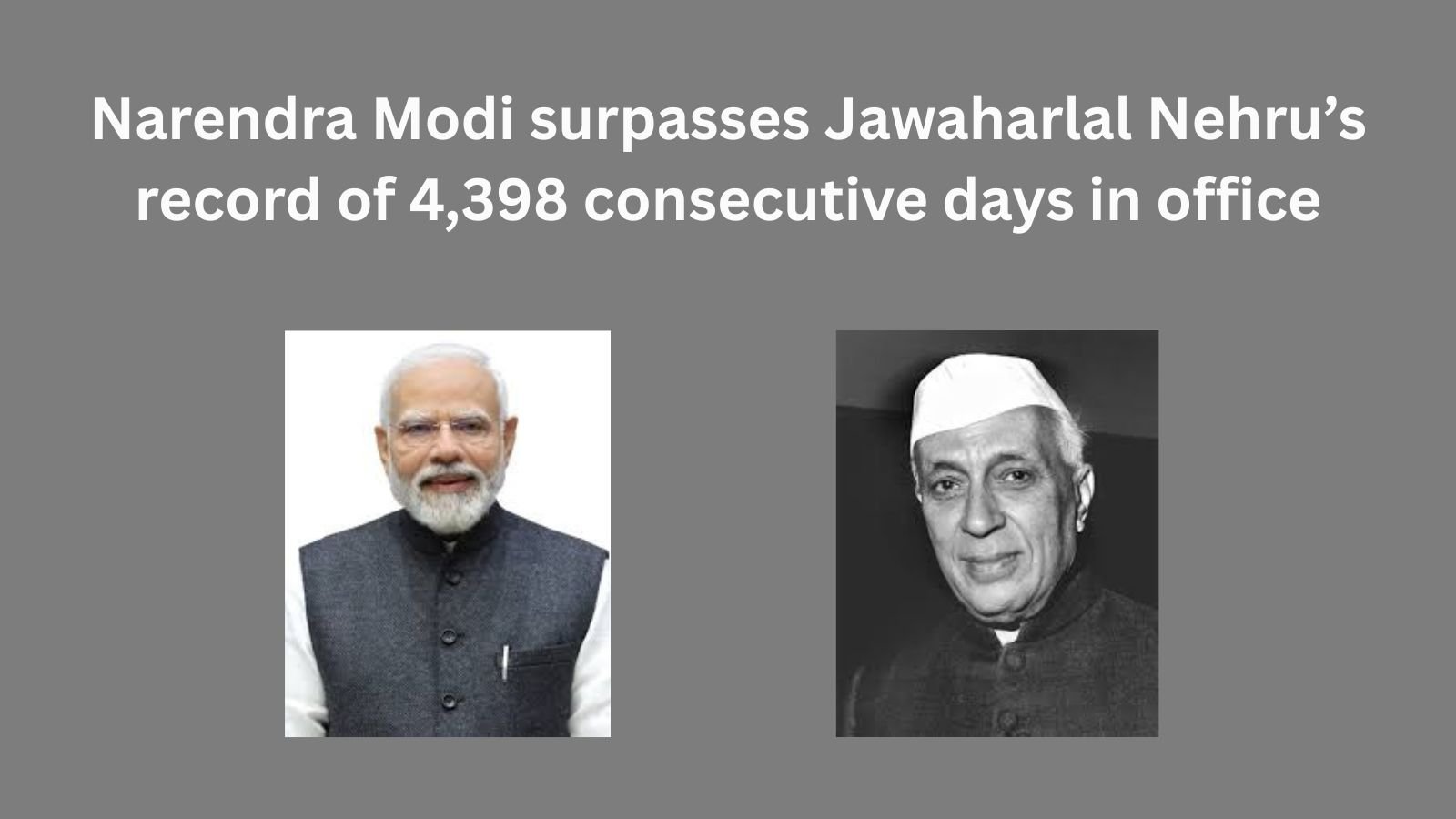
India is set to witness a significant political milestone on June 10, 2026, when Prime Minister Narendra Modi is scheduled to become the country longest continuously serving democratically elected Prime Minister. According to the information provided, Modi will complete 4,399 consecutive days in office, surpassing the previous record of 4,398 consecutive days held by India first Prime Minister, Jawaharlal Nehru. The achievement marks an important moment in India democratic journey and has sparked discussions about leadership longevity, electoral mandates, governance models, and the evolution of Indian politics since Independence. While the record specifically relates to uninterrupted service as a democratically elected Prime Minister, it also brings renewed attention to the political legacies of both Narendra Modi and Jawaharlal Nehru.
Narendra Modi to Break Historic Consecutive Service Record
On June 10, 2026, Prime Minister Narendra Modi is expected to complete 4,399 consecutive days in office since taking his first oath as Prime Minister on May 26, 2014. According to the provided information, this achievement will place him ahead of Jawaharlal Nehru in terms of uninterrupted consecutive service following a democratic electoral mandate.
| Leader | Consecutive Days in Office | Total Cumulative Tenure |
|---|---|---|
| Narendra Modi (as of June 10, 2026) | 4,399 days | To be completed |
| Jawaharlal Nehru | 4,398 days | Approximately 17 years (6,130 days) |
The distinction is important because the comparison focuses on continuous tenure following electoral mandates rather than cumulative years served across an entire political career.
Understanding the Significance of the Record
The upcoming record is specifically related to uninterrupted service as a democratically elected Prime Minister. The distinction is important because the comparison focuses on continuous tenure following electoral mandates rather than cumulative years served across an entire political career. For many observers, the achievement highlights political stability and sustained voter support across multiple election cycles.
Total Years in Office: A Different Record
While Narendra Modi is set to surpass Nehru in consecutive days served after democratic elections, the provided information notes that Jawaharlal Nehru continues to lead in total cumulative time spent as Prime Minister. Nehru served approximately 17 years and 6,130 cumulative days. He led the country from Independence in August 1947 until his death in 1964. As a result, while Modi is poised to lead in uninterrupted democratically elected service, Nehru remains ahead in overall cumulative tenure as Prime Minister.
Other Major Political Milestones Achieved by Narendra Modi
The upcoming record adds to several significant milestones already associated with Modi political career.
| Milestone | Date | Detail |
|---|---|---|
| Surpassed Indira Gandhi record | July 25, 2025 | 4,077 consecutive days in office |
| Three consecutive national election victories | 2014, 2019, 2024 | Joins Jawaharlal Nehru among leaders with three consecutive mandates |
| Combined leadership tenure | 2001-2026 | Nearly 24 years as Chief Minister (2001-2014) and Prime Minister (2014-2026) |
The Democratically Elected Distinction
One of the most discussed aspects of the comparison relates to the nature of electoral mandates. According to the provided information, Jawaharlal Nehru assumed office on August 15, 1947, as head of the interim government before India first general election process concluded in 1952. As a result, the comparison emphasizes uninterrupted service following direct democratic electoral mandates.
The provided content highlights that Nehru initial years in office occurred before the first general elections, while Modi entire tenure as Prime Minister has been under electoral mandates obtained through Lok Sabha elections. This distinction forms the basis of discussions surrounding the record for continuously serving democratically elected Prime Ministers.
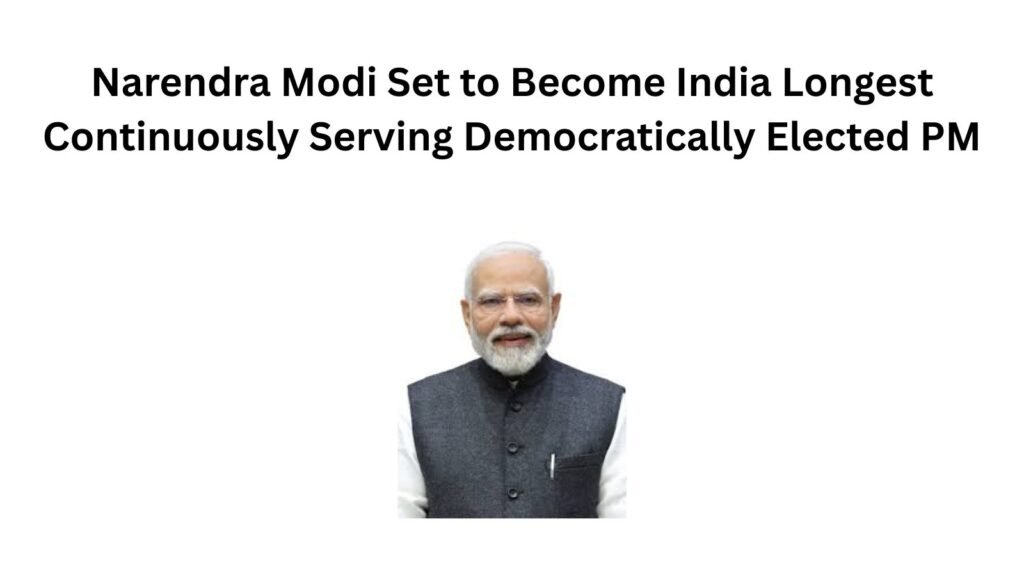
A Broader Executive Leadership Record
The information also points to a wider perspective beyond the Prime Minister Office alone. Before becoming Prime Minister, Modi spent more than a decade serving as Chief Minister of Gujarat from 2001 to 2014. When both periods are considered together, the result is nearly 24 years of continuous leadership within elected governments. This broader perspective places the upcoming milestone within a larger context of public administration and governance experience.
PM Narendra Modi Inaugurates NAMO Airport Terminal in Daman
Contrasting Historical Contexts
The article information notes that direct comparisons between Modi and Nehru should also consider the vastly different national and global circumstances during their respective tenures.
| Aspect | Jawaharlal Nehru Era | Narendra Modi Era |
|---|---|---|
| National context | Newly independent nation, aftermath of Partition | Nuclear armed nation, growing middle income economy |
| Institutional status | Building democratic institutions from ground up | Increasingly influential global player |
| Foreign policy | Non Aligned Movement during Cold War | Strategic multi alignment, economic growth |
| Communication method | Open press interactions, public political debates | Digital platforms, social media, direct to citizen communication |
| Economic model | State controlled planning, Five Year Plans | Digital economy, privatization efforts, welfare measures |
Institutional Legacy
According to the provided information, the Nehru era contributed to the development of major industrial institutions, establishment of IITs, and strengthening scientific infrastructure. The Modi era has focused on expansion of digital public infrastructure, unified tax reforms, connectivity projects, and digital payment systems. These differences illustrate how leadership priorities evolve according to national requirements and global conditions.
Why This Milestone Matters
Political records often represent more than numerical achievements. The upcoming milestone reflects electoral continuity, political longevity, governance stability, sustained national leadership, and historical significance within Indian democracy. Regardless of political viewpoints, surpassing a record held for decades by India first Prime Minister represents a notable chapter in the country democratic history.
Conclusion
June 10, 2026, is expected to become a landmark date in India political history as Prime Minister Narendra Modi completes 4,399 consecutive days in office and surpasses Jawaharlal Nehru record for uninterrupted service following democratic elections. The milestone not only highlights Modi political longevity but also renews discussion about the different eras, leadership styles, governance models, and national priorities represented by both leaders. While Nehru continues to hold the record for overall cumulative years as Prime Minister, Modi achievement in continuous democratically elected service adds a new chapter to India evolving democratic journey. As India approaches this historic date, the milestone serves as an opportunity to reflect on leadership, governance, electoral mandates, and the changing nature of Indian politics across generations.
Frequently Asked Questions
Q1. When will Narendra Modi become India longest continuously serving democratically elected Prime Minister?
A1. Narendra Modi will complete 4,399 consecutive days in office on June 10, 2026, surpassing Jawaharlal Nehru record of 4,398 days.
Q2. What is the distinction between consecutive service and total cumulative tenure?
A2. Consecutive service refers to uninterrupted days in office following electoral mandates. Jawaharlal Nehru continues to hold the record for total cumulative tenure as Prime Minister with approximately 17 years and 6,130 days.
Q3. What major records has Narendra Modi already surpassed?
A3. Modi surpassed Indira Gandhi record of 4,077 consecutive days on July 25, 2025, and has led his party to three consecutive national election victories in 2014, 2019, and 2024.
Q4. Why is the democratically elected distinction important?
A4. Jawaharlal Nehru assumed office in 1947 before India first general elections concluded in 1952, while Modi entire tenure has been under electoral mandates obtained through Lok Sabha elections.
Q5. What is Narendra Modi combined leadership tenure as Chief Minister and Prime Minister?
A5. Modi served as Gujarat Chief Minister from 2001 to 2014 (over a decade) and as Prime Minister from 2014 to 2026, resulting in nearly 24 years of continuous leadership within elected governments.