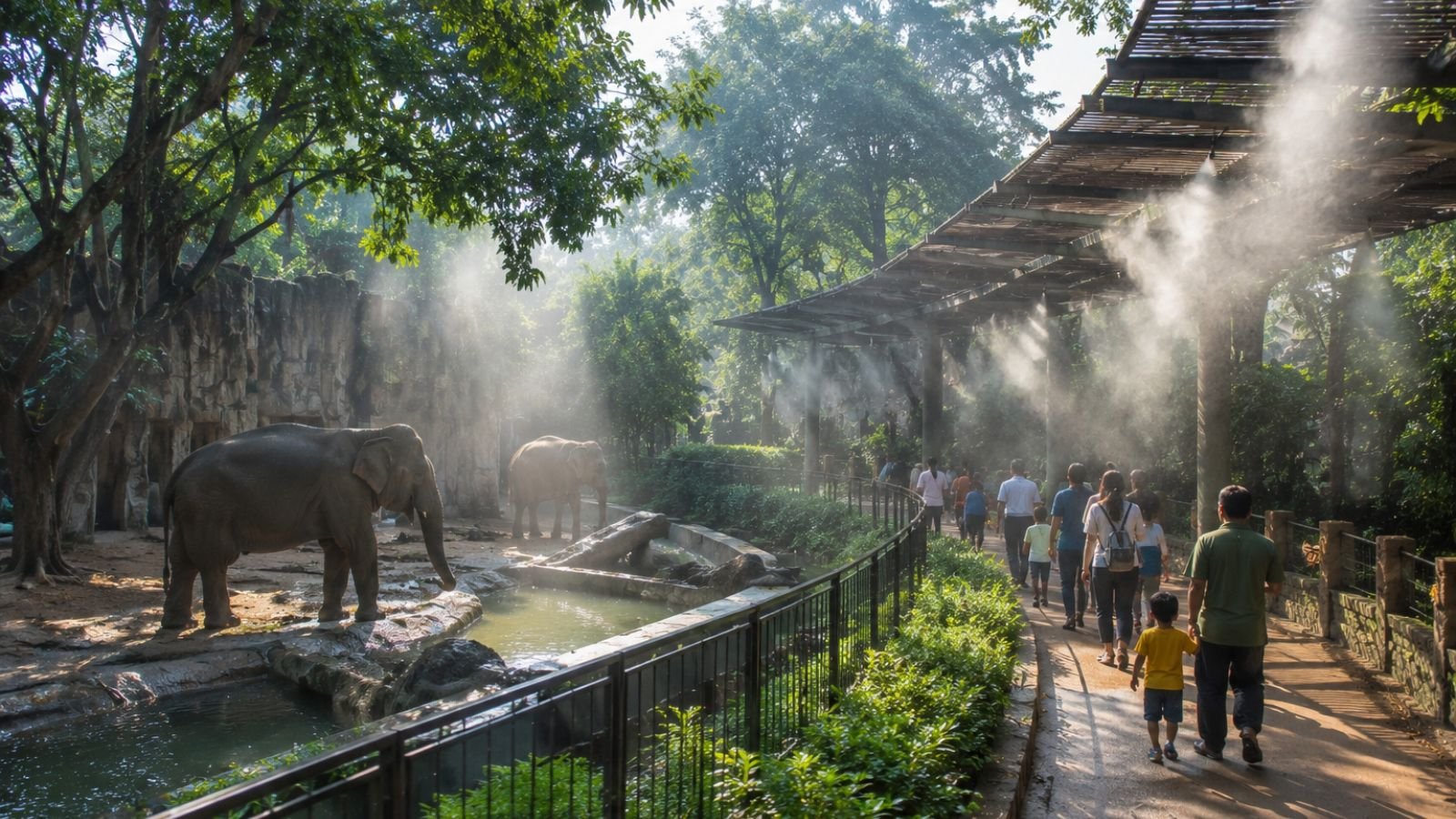
Nehru Zoological Park in Hyderabad has implemented an extensive summer management plan to protect more than 2,100 animals representing over 190 species from extreme heat conditions. As temperatures continue to rise during the summer season, zoo authorities have introduced a combination of modern cooling systems, traditional temperature control methods, specialized diets, veterinary monitoring, and visitor comfort upgrades. The comprehensive initiative highlights how one of India largest zoological parks is adapting to challenging weather conditions while ensuring the well being of animals and improving the experience for visitors. Alongside heatwave protection measures, the zoo has also streamlined visitor facilities, online ticket booking systems, transportation options, and attraction services to accommodate seasonal tourist traffic.
Nehru Zoological Park Summer Protection Plan
Summer can be particularly challenging for animals living in captivity, especially during periods of prolonged heatwaves. To address this issue, Nehru Zoological Park has rolled out a carefully planned strategy designed to reduce heat stress and maintain comfortable living conditions for its animal population. The initiative combines cooling infrastructure, hydration management, dietary modifications, veterinary supervision, and habitat improvements. By implementing these measures across different animal categories, the zoo aims to ensure that species with varying environmental requirements remain healthy throughout the hottest months of the year.
Cooling Infrastructure Installed Across Animal Enclosures
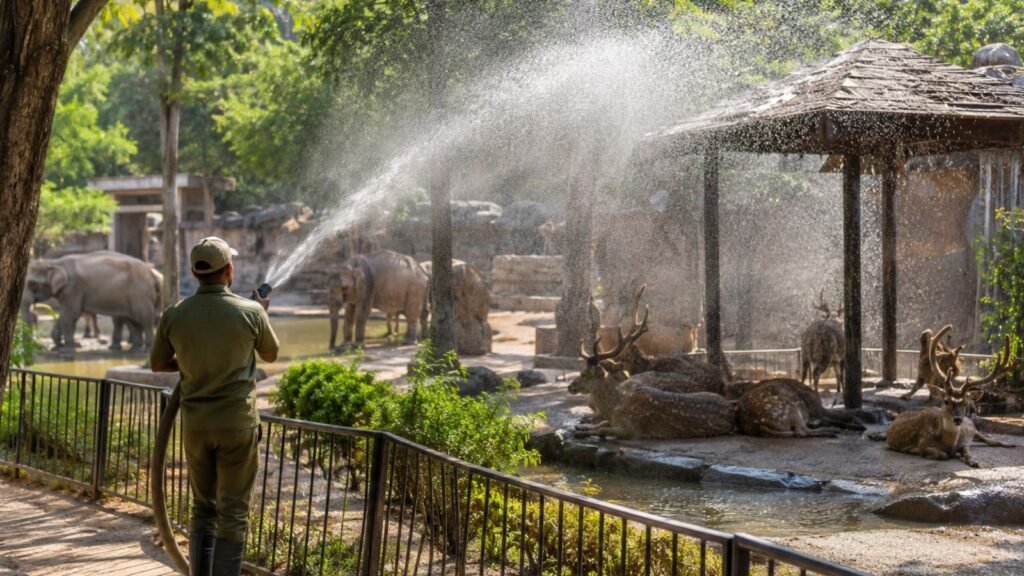
One of the most significant aspects of the summer action plan is the deployment of specialized cooling equipment throughout the zoo. Authorities have installed extensive cooling systems to maintain lower temperatures across multiple habitats.
| Cooling Measure | Details |
|---|---|
| Industrial air coolers | More than 80 units in carnivore, omnivore, and primate enclosures |
| Air conditioned facilities | Nocturnal animal house and cub rearing center |
| Sprinklers, mist dispensers, mini rain guns | Nearly 200 units across herbivore enclosures |
| Fogger systems | Installed in reptile house and bird aviaries |
These systems help circulate cooler air, reduce heat buildup, and lower ambient temperatures during peak daytime hours.
Traditional Cooling Techniques Continue to Play an Important Role
While modern technology forms a major part of the heat relief plan, traditional cooling methods are also being used effectively.
- Vetiver Mats and Natural Thatching: Zoo authorities have covered open enclosures, windows, and doors using natural materials such as Kashkash (vetiver) mats, Thunga grass, and jute screens. These coverings are soaked several times each day to generate natural cooling effects
- Shade Nets for Birds and Water Habitats: Large green shade nets have been installed over bird aviaries, duck ponds, and stork ponds to reduce direct sunlight exposure and prevent excessive heating of open habitats
Special Summer Diet Plan for Animals
Cooling infrastructure alone is not sufficient during intense summer weather. Dietary adjustments form another major component of the zoo heat management strategy.
| Dietary Measure | Details |
|---|---|
| Hydration supplements | Glucon D, Electral powder, Vitamin C supplements, B complex supplements, thermo care liquids added to drinking water |
| Water rich fruits | Watermelons, muskmelons, citrus fruits |
| Frozen treats | Provided to primates and bears to lower body temperature |
| Buttermilk | Provided to select species to reduce core body temperature naturally |
These additions help animals maintain hydration levels, reduce the risk of heat related complications, and support overall health during hot weather.
Veterinary Monitoring and Health Surveillance
Maintaining animal health requires continuous observation, particularly during heatwave conditions.
- Specialized Veterinary Teams: A dedicated veterinary team remains on active monitoring duty throughout the season, tracking signs of heat exhaustion, lethargy, dehydration, behavioral changes, and reduced activity levels
- Preventive Healthcare Approach: Rather than responding only after problems occur, the zoo summer strategy focuses heavily on prevention through routine checks and observation programs
Wildlife Rescue and Rehabilitation Services
Beyond caring for resident animals, Nehru Zoological Park also operates a wildlife rescue and rehabilitation facility. The Nehru Zoological Park Wildlife Hospital functions as a rescue center for injured wild animals, orphaned wildlife, birds requiring treatment, and reptiles needing medical care. Animals rescued from various locations across the city receive treatment and care within dedicated hospital facilities. The hospital follows isolation procedures to prevent disease transmission between rescued wildlife and the zoo permanent animal population.
Ahmedabad Yoga Events June 2026
Visitor Comfort Improvements During Summer
The summer action plan extends beyond animal welfare. The zoo has also introduced several measures designed to improve visitor comfort.
- Additional shelters and rest areas including palm leaf shelters, sit out areas, pagodas, and resting zones
- Cold drinking water facilities placed across key visitor pathways on the 380 acre campus
Nehru Zoological Park Timings
| Timing Detail | Information |
|---|---|
| Zoo operating hours | 8:30 AM to 4:00 PM |
| Ticket counter closing | 4:00 PM |
| Weekly holiday | Monday |
| Safari and internal ride timings | 9:30 AM to 3:30 PM |
Nehru Zoological Park Ticket Prices 2026
| Attraction | Adult Fee | Child Fee |
|---|---|---|
| Main entry | ₹100 | ₹50 (3–12 years) |
| Lion and Tiger Safari | ₹100 | ₹100 |
| Toy Train Ride | ₹80 | ₹40 |
| Road Train / BOV Buggy Ride | ₹120 | ₹70 |
| Fish Aquarium | ₹20 | ₹20 |
| Nocturnal Animal House | ₹20 | ₹10 |
Additional Visitor Rules
- Visitors carrying still cameras must pay an additional fee of ₹150
- Single use plastic water bottles are prohibited inside the zoo
- Guests are encouraged to carry water in reusable steel or copper containers
Online Ticket Booking Process
The zoo provides a digital ticket booking system for convenience.
- Visit the official Nehru Zoological Park platform or Hyderabad Zoo mobile application
- Select Citizen Booking
- Enter mobile number, visit date, and visitor details
- Choose optional attractions if desired
- Complete payment using UPI, net banking, or card services
- Receive a QR code based digital ticket for entry
Online booking allows visitors to bypass long queues and enjoy faster access.
Conclusion
Nehru Zoological Park Hyderabad has implemented a comprehensive and well structured summer management plan to protect its 2,100 plus animals from extreme heat conditions. Through a combination of air coolers, sprinklers, foggers, traditional cooling methods, hydration supplements, veterinary supervision, and specialized summer diets, the zoo is taking significant steps to ensure animal welfare. At the same time, visitor comfort has been enhanced through shelters, cold water stations, transportation services, and streamlined online ticket booking options. These efforts demonstrate a balanced approach that prioritizes both wildlife care and visitor experience during the peak summer season.
Frequently Asked Questions
Q1. What are the ticket prices for Nehru Zoological Park Hyderabad?
A1. Adult entry fee is ₹100, child entry fee (3–12 years) is ₹50. Additional charges apply for safaris, toy train, road train, fish aquarium, and nocturnal animal house.
Q2. What are the zoo timings?
A2. The zoo remains open from 8:30 AM to 4:00 PM. Ticket counters close strictly at 4:00 PM. The zoo is closed every Monday.
Q3. How many animals are protected under the summer management plan?
A3. The zoo protects more than 2,100 animals representing over 190 species through cooling infrastructure, specialized diets, and veterinary monitoring.
Q4. What cooling measures have been installed for animals?
A4. More than 80 industrial air coolers, nearly 200 sprinklers and mist dispensers, fogger systems in reptile house and bird aviaries, plus traditional cooling methods like vetiver mats and shade nets.
Q5. What is the online ticket booking process?
A5. Visitors can book tickets through the official Nehru Zoological Park platform or Hyderabad Zoo mobile application by selecting Citizen Booking, entering details, making payment, and receiving a QR code based digital ticket.