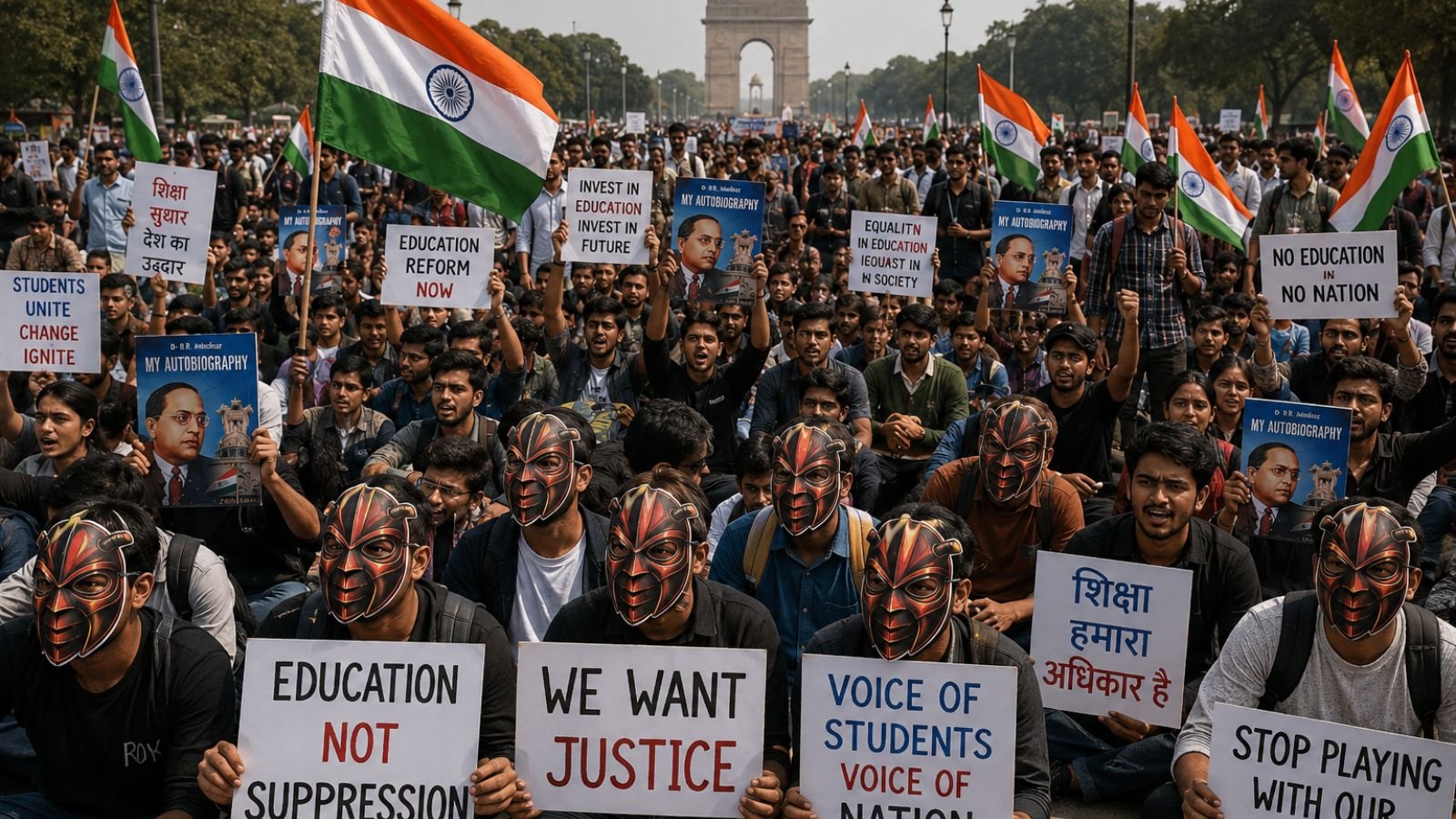
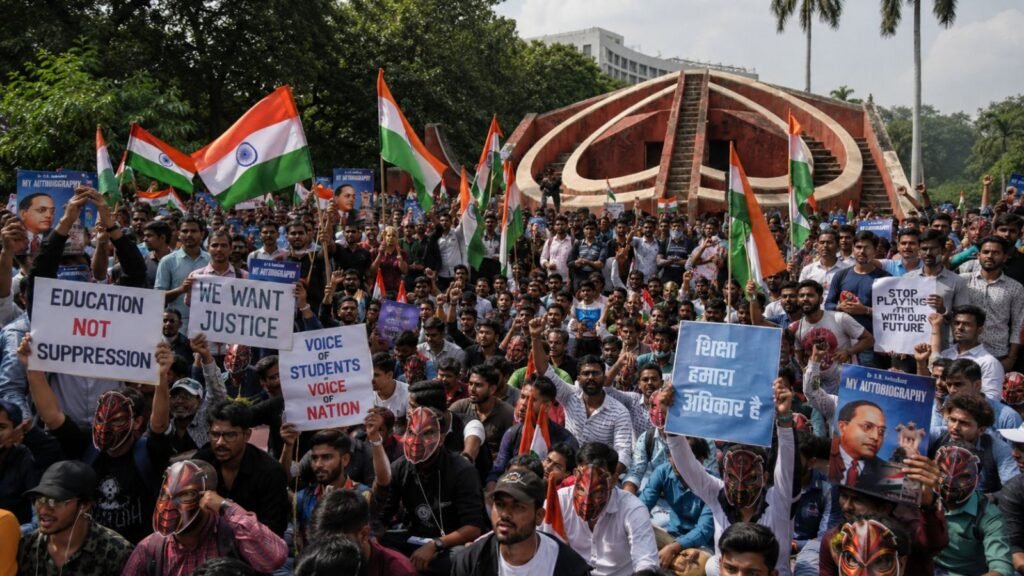
The Cockroach Janta Party (CJP) protest held at Delhi Jantar Mantar on June 6, 2026, concluded peacefully after drawing thousands of students, young professionals, and supporters from across the country. The youth led demonstration focused on concerns surrounding alleged examination irregularities, including NEET-UG paper leak allegations and CBSE revaluation related discrepancies. The event emerged as one of the most discussed student led public gatherings of recent months, bringing together activists, education reform supporters, and students seeking greater transparency and accountability in examination systems. Throughout the day, participants gathered at Jantar Mantar carrying symbolic props, books, flowers, and national flags while emphasizing peaceful protest and democratic participation. As the permitted demonstration period ended, security agencies supervised an orderly dispersal of attendees, allowing the event to conclude without any major incidents.
Why the Protest Was Organized
According to the information provided, the demonstration was centered on demands related to examination transparency and accountability.
Participants called attention to:
- Alleged NEET-UG examination paper leak issues
- Concerns regarding examination management
- CBSE revaluation discrepancies
- Demands for stronger oversight mechanisms
- Calls for accountability within the education system
The protest sought to highlight student concerns through a peaceful and highly visible public gathering in the national capital. The event attracted significant attention due to its unique branding, youth driven participation, and focus on issues affecting students across India.
Delhi Weather Forecast June 2026
Thousands Gather at Jantar Mantar
The protest witnessed participation from a large number of students and young professionals. Organizers emphasized peaceful assembly, democratic expression, and disciplined conduct throughout the demonstration. Participants reportedly used symbolic cockroach themed masks as part of the movement visual identity while carrying educational materials and national symbols to reinforce their message. The gathering remained orderly for the duration of the permitted protest period.
Prominent Supporters Who Joined the Protest
Several well known personalities and public figures extended support to the demonstration.
| Supporter | Role | Contribution |
|---|---|---|
| Sonam Wangchuk | Climate activist, innovator, educator | Expressed solidarity, urged peace and discipline |
| Abhijeet Dipke | Movement founder | Traveled from United States to lead demonstration |
| Rohit Pawar | NCP (Sharadchandra Pawar) MLA | Extended support, criticized handling of examination issues |
Sonam Wangchuk clarified that he was not a registered member of the movement but expressed solidarity with participating youth. His participation attracted considerable attention and further amplified public discussion surrounding the protest. Abhijeet Dipke played a central role in organizing and coordinating the event. Rohit Pawar participation added another dimension to the discussion surrounding examination reforms and accountability.
Student Community Forms the Core of the Movement
The largest segment of attendees consisted of students and young professionals. Participants reportedly gathered from multiple regions and educational backgrounds. Many attendees viewed the protest as an opportunity to voice concerns about examination systems and educational processes affecting their academic futures. The student presence remained the defining feature of the demonstration.
Protest Concludes Peacefully
One of the most notable aspects of the event was its peaceful conclusion.
| Security Arrangement | Details |
|---|---|
| Delhi Police personnel | More than 1,000 deployed |
| Rapid Action Force (RAF) | Teams present |
| Preventive detentions | Six individuals taken into custody |
The demonstration ended after the expiration of the permitted timeline, which extended until 5:00 PM. Security personnel oversaw the orderly dispersal of participants and ensured that the venue was cleared without significant disruptions. The conclusion marked the successful completion of the gathering while maintaining public order.
Despite preventive detentions, the event proceeded without major security challenges and concluded smoothly.
What Happens Next for the Movement
Although the physical protest has ended, organizers have outlined several future initiatives.
- Legal action and Supreme Court petitions: Legal representatives are preparing fresh petitions related to examination discrepancies to present concerns through established judicial processes
- National student registry initiative: Organizers plan to launch an online platform to document examination related complaints, aggregate student feedback, and create a centralized record of reported issues
- Expansion into state level demonstrations: Future efforts may include peaceful sit ins, student awareness campaigns, localized demonstrations, state capital gatherings, and educational outreach initiatives
- Increased digital campaigns: Digital initiatives may include virtual discussions, social media campaigns, educational content, awareness programs, and public engagement activities
Narendra Modi Longest Serving Prime Minister
Why the Protest Gained National Attention
Several factors contributed to the visibility of the event.
- Student centered focus: Issues related to examinations directly impact millions of students and families, so concerns regarding transparency and fairness naturally attract public attention
- Symbolic and youth driven identity: The movement unique branding and symbolic protest style helped distinguish it from conventional demonstrations, increasing public curiosity
- Participation from public figures: Support from educators, activists, political leaders, and students elevated the profile of the protest
Impact on Public Discussion
Regardless of future developments, the demonstration has already succeeded in bringing examination related concerns into wider public conversation. The event generated discussions around educational accountability, examination transparency, student participation in democratic processes, reform related expectations, and public engagement in education policy issues. The coming weeks may determine whether these discussions translate into policy responses, legal outcomes, or broader public initiatives.
Conclusion
The Cockroach Janta Party (CJP) protest at Delhi Jantar Mantar concluded peacefully on June 6, 2026, after attracting thousands of students and supporters concerned about examination related issues. The demonstration remained orderly throughout its duration, supported by extensive security arrangements and participation from activists, educators, political figures, and students. While the physical protest has ended, organizers have indicated that the movement will continue through legal efforts, digital campaigns, student grievance documentation, and decentralized demonstrations across various states. As examination transparency and accountability remain important public issues, the next phase of the movement is likely to continue generating attention in the education sector.
Frequently Asked Questions
Q1. What was the CJP protest at Jantar Mantar about
A1. The protest focused on concerns surrounding alleged NEET-UG paper leak allegations, CBSE revaluation discrepancies, and demands for greater transparency and accountability in examination systems.
Q2. Did the CJP protest conclude peacefully
A2. Yes, the protest ended peacefully after the permitted timeline expired at 5:00 PM, with security agencies supervising orderly dispersal of participants.
Q3. Who participated in the CJP protest
A3. Thousands of students, young professionals, activists, educator Sonam Wangchuk, movement founder Abhijeet Dipke, and NCP MLA Rohit Pawar participated or extended support.
Q4. What security arrangements were made for the protest
A4. More than 1,000 Delhi Police personnel, Rapid Action Force (RAF) teams, and crowd management systems were deployed. Six individuals were reportedly taken into preventive custody.
Q5. What are the future plans of the CJP movement
A5. Future plans include legal petitions in Supreme Court, a national student registry for grievances, state level demonstrations, and increased digital campaigns through social media and virtual discussions.